
An article generated by AI does not require a label, while your proofread email does.
Begin by explaining what the mark actually is, as it is not a mere stamp on the page. When a model generates text, it selects words from a pool of reasonable choices. A watermark discreetly divides these options into two categories using a secret key, subtly guiding the model towards one of the groups. A single word doesn’t indicate much, but when analyzing 500 or 1,000 words, a detector equipped with the key can identify the pattern.
On August 2, Anthropic started marking Claude's output globally, rather than solely in Europe. They have not disclosed the algorithm or launched a detection tool. The mark indicates what Claude interacted with, not what Claude actually wrote. This key detail has been overlooked in much of the coverage, although Anthropic clearly states it in its support documentation. A detected mark implies the content “may have been processed by Claude,” but it does not confirm that Claude authored it. If you ask the model to proofread, translate, or summarize your writing, the output will still bear the mark.
Conversely, the absence of a mark does not imply that no AI was involved. Short texts, significant paraphrasing, older models, and stripped metadata can all yield clean text despite AI assistance. Thus, the signal can fail in both directions, a fact that the company openly admits.
The law exempted grammar corrections. Here's where things become peculiar. The EU AI Act does not mandate marking when a system engages in an assistive role for standard editing, with grammar correction cited as a key example by the Commission. Despite this, Anthropic still applies marking. Ars Technica characterized this approach as "nuke it from orbit." The reasoning is based on structural limitations rather than philosophy: a watermark applied at the model level cannot differentiate between a complete draft and a single punctuation mark. It marks the output, and that’s all it perceives.
Consequently, a mark can appear on precisely the type of content that the law aimed to exempt. Now consider the other aspect of Article 50, which dictates what publishers must disclose to readers. This requirement is much narrower than many assume. An AI-generated novel does not require a label. AI-produced marketing material is also exempt. However, text that communicates information to the public on significant issues does necessitate a label unless it has been reviewed by a named and accountable human editor.
Combine these two components, and a contradiction arises. Every keystroke is watermarked at the model level, while a purely synthetic article can be presented to readers without a label, provided it has been reviewed by an editor. The EU has been developing this framework for some time. It has already implemented mandatory labels for synthetic content and granted itself the authority to inspect and fine models directly, with penalties reaching €15 million or 3% of global annual revenue.
Objections emerged quickly. Investor Bill Gurley argued that if only Anthropic can interpret the mark, it places them in the role of "judge, jury, and prosecutor." In response, Anthropic informed Business Insider that they plan to release a free detection API so anyone can verify it. Former Microsoft executive Steven Sinofsky raised another concern regarding “data retention and your right to private thoughts free of a digital trail.” Simon Smith, who leads generative AI at the health agency Klick, questioned whether the grammar check would be flagged as AI-generated. Anthropic clarified that the mark indicates processing rather than authorship. Software trainer John Crickett posed a pertinent question regarding code: If AI-generated code is marked, does that complicate copyright claims that require proof of human contribution?
The rationale for proceeding with marking persists despite the objections. Developer Donn Felker noted that marking prevents models from training on their own outputs, a phenomenon he described as a “snake eating itself.” Aadit Sheth of The Narrative Company emphasized the users' perspective, asserting that audiences should know if the text they are reading reflects a person's thoughts. The Commission's reasoning is even more extensive, wanting people to assess their trust levels, citing risks such as fraud, impersonation, and deception as critical concerns.
Anthropic positions this as a compliance measure rather than a philosophical stance, stating they are implementing marking “to comply with the EU AI Act, with other labs taking similar actions.” The company also claims that the watermark does not alter the meaning, quality, or readability of Claude’s outputs. However, some questions remain unresolved. Ars Technica inquired about the timeline for detection, any tests regarding false positives and negatives, and how the marks align with the standard editing exemption. Anthropic provided a statement but did not address these concerns. The false positive rate is particularly significant because it determines how much credence educators or editors should assign to the mark.
The uncomfortable reality is that the mark may capture the honest usage but overlooks the intentional misuse. If you paste watermarked text into a different model and ask for a rewrite, the signal likely vanishes. File-based provenance is even weaker
Other articles
 Omdia reports that smartphone prices will remain elevated even after the supply shortage concludes.
In the first quarter of 2026, refurbished phones accounted for 298 million display panels, surpassing the 289 million shipped to manufacturers of new phones. Omdia refers to this shift as a structural repricing.
Omdia reports that smartphone prices will remain elevated even after the supply shortage concludes.
In the first quarter of 2026, refurbished phones accounted for 298 million display panels, surpassing the 289 million shipped to manufacturers of new phones. Omdia refers to this shift as a structural repricing.
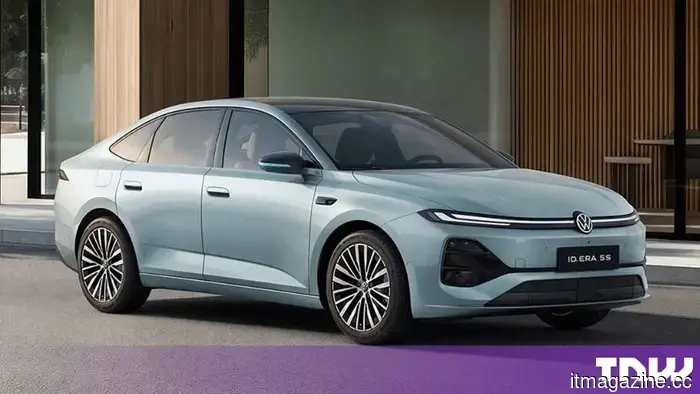 Volkswagen can manufacture a car priced at $17,175, but not within Europe.
China's electric vehicle price competition: Volkswagen started taking orders for a plug-in hybrid priced at $17,175, while BYD responded with an offering at $16,100. Meanwhile, the most affordable electric car in the United States costs $28,995.
Volkswagen can manufacture a car priced at $17,175, but not within Europe.
China's electric vehicle price competition: Volkswagen started taking orders for a plug-in hybrid priced at $17,175, while BYD responded with an offering at $16,100. Meanwhile, the most affordable electric car in the United States costs $28,995.
 Cloudflare and Trail of Bits are now reviewing the identities of those Signal claims you are communicating with.
Automatic key verification enables Signal users to confirm they possess the correct key, with Cloudflare and Trail of Bits serving as independent auditors of the log.
Cloudflare and Trail of Bits are now reviewing the identities of those Signal claims you are communicating with.
Automatic key verification enables Signal users to confirm they possess the correct key, with Cloudflare and Trail of Bits serving as independent auditors of the log.
 An article generated by AI doesn't require a label. However, your reviewed email does.
The Claude watermark indicates text that the model has only proofread, which is exempt under the EU AI Act. In contrast, a completely AI-generated article can be published without any labeling.
An article generated by AI doesn't require a label. However, your reviewed email does.
The Claude watermark indicates text that the model has only proofread, which is exempt under the EU AI Act. In contrast, a completely AI-generated article can be published without any labeling.
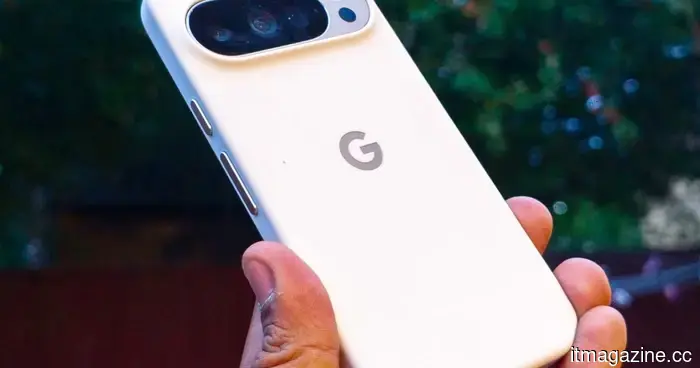 As a Google Pixel user, I’m fed up with being an unpaid quality assurance tester.
Unboxing a flagship smartphone once felt like a straightforward experience. You coughed up a significant amount of cash, handed over your credit card, and received a well-crafted device that could handle everyday tasks without overheating. Last month, in the blazing sun with temperatures hitting 45 degrees, my partner was holding her $1,000 Pixel 10 Pro [...]
As a Google Pixel user, I’m fed up with being an unpaid quality assurance tester.
Unboxing a flagship smartphone once felt like a straightforward experience. You coughed up a significant amount of cash, handed over your credit card, and received a well-crafted device that could handle everyday tasks without overheating. Last month, in the blazing sun with temperatures hitting 45 degrees, my partner was holding her $1,000 Pixel 10 Pro [...]
 According to Omdia, smartphone prices are expected to remain elevated even after the shortage concludes.
In the first quarter of 2026, refurbished phones accounted for 298 million display panels, surpassing the 289 million delivered to manufacturers of new phones. Omdia describes this as a structural repricing.
According to Omdia, smartphone prices are expected to remain elevated even after the shortage concludes.
In the first quarter of 2026, refurbished phones accounted for 298 million display panels, surpassing the 289 million delivered to manufacturers of new phones. Omdia describes this as a structural repricing.
An article generated by AI does not require a label, while your proofread email does.
The Claude watermark indicates text that the model has merely proofread, which is exempt under the EU AI Act. In contrast, a completely AI-generated article can be published without any labeling.