
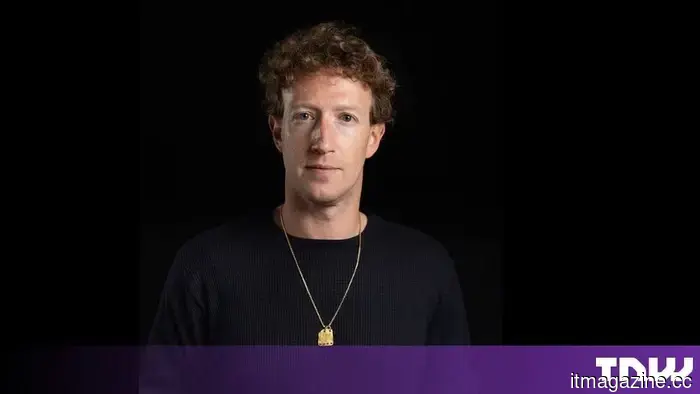
Mark Zuckerberg’s concept of 'personal superintelligence' serves as a Rorschach test.
In a recent essay of about 6,500 words, Meta's CEO Mark Zuckerberg articulated a vision of "personal superintelligence," portraying an artificial intelligence designed for the masses rather than a centralized system that displaces workers. The narrative was broad and occasionally idealistic, serving more as a Rorschach test than a concrete manifesto.
The central assertion is that Meta plans to provide a capable personal assistant to billions of individuals at little to no cost, equipped with a fully private mode. Zuckerberg envisions it aiding users with their health, careers, finances, and relationships—an intimate assistant that understands you and works silently in your favor.
He strongly rejects the notion that superintelligence will diminish job opportunities, describing it instead as "a tool of invention" that enhances human ambition rather than replacing it. In his view, a state of radical abundance will emerge without significant job losses—an ambitious claim considering that much of the current discourse around AI focuses on potential job displacement.
An open-source theme permeates his vision, with Zuckerberg stating that Meta will soon "resume releasing some open-source models," including a model named Muse Glimmer and an open-weight version of its Muse Spark coding framework. This aligns with his previous stance advocating against the U.S. blocking Chinese AI models.
To mitigate the local effects of Meta's expansion, he announced a $1 billion "Future is for Everyone Fund" aimed at supporting data-center communities by covering electricity expenses and worker training. This comes in the context of a 2026 capital budget of approximately $145 billion, predominantly allocated for the data centers that superintelligence necessitates. Meta is also set to produce its own AI chip to enhance its computing capacity.
This extensive investment is paralleled by a vigorous search for talent, with Meta’s Superintelligence Labs actively recruiting rival researchers, including a systematic acquisition of talent from Mira Murati’s Thinking Machines Lab.
Zuckerberg also hinted at a few tempered approaches, proposing that Meta might share "intermediate training checkpoints" with governments and collaborate with law enforcement to address severe misuse concerns.
Despite these assurances, the reactions were sharply polarized, leaning towards skepticism. Critics suggested the essay was rich in utopian rhetoric but lacking in concrete details—a common critique of ambitious AI proclamations that hint at future abundance while remaining vague on practical implementations. A more pressing concern is the identity of the entity making these promises.
A personal assistant intertwined with your health, finances, and relationships is inherently a powerful data-gathering and dependency tool, emerging from the company that operates Facebook and Instagram. To skeptics, "personal superintelligence" seems like a rebranding of the existing engagement-and-advertising model, presented in empowering terminology. They argue that promises of both radical abundance and no job displacement raise doubts.
The tension here extends beyond reputation: as we've noted, the primary challenge in AI now revolves around capital and consent, which is particularly crucial for a company with Meta's history. Therefore, the essay serves more effectively as a Rorschach test than as a clear blueprint. Interpreted one way, it can be seen as a sincere effort to democratize technology that could otherwise be monopolized. Viewed another way, it is a deeply monitored segment of the internet seeking access to your health records and personal relationships. Both interpretations could hold true simultaneously, and this ambiguity is an aspect that Zuckerberg must address.
Other articles
 The AI Sales Engineer Is Entering the Meeting.
As voice agents and photorealistic avatars are incorporated into enterprise software, the sales call is emerging as a key example of whether AI can go beyond merely summarizing a conversation once it has concluded. The pressure is something anyone who has participated in a software demonstration understands well: a buyer inquires about a security assessment, integration nuances, [...]
The AI Sales Engineer Is Entering the Meeting.
As voice agents and photorealistic avatars are incorporated into enterprise software, the sales call is emerging as a key example of whether AI can go beyond merely summarizing a conversation once it has concluded. The pressure is something anyone who has participated in a software demonstration understands well: a buyer inquires about a security assessment, integration nuances, [...]
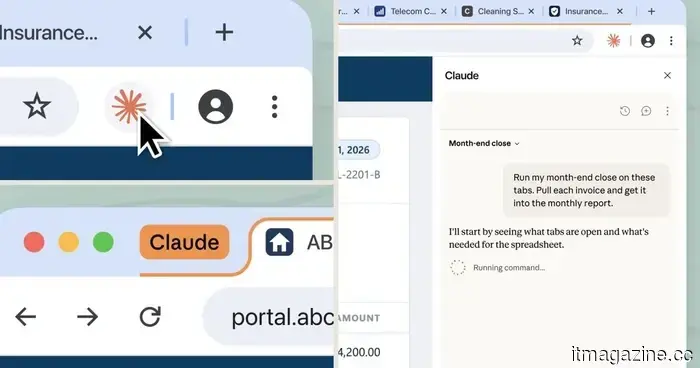 Claude is now able to retrieve data from your browser tabs and continue working on your desktop.
Anthropic has updated Claude in Chrome, allowing conversations, skills, and connectors to now transfer between your browser and other Claude applications.
Claude is now able to retrieve data from your browser tabs and continue working on your desktop.
Anthropic has updated Claude in Chrome, allowing conversations, skills, and connectors to now transfer between your browser and other Claude applications.
 A billion-dollar game removed a character in just 8 days, which led to its worst month ever.
Infold annulled Valko, limited its own roadmap, and issued two apologies. Revenue for Love and Deepspace dropped from $38 million to $10 million in just one month.
A billion-dollar game removed a character in just 8 days, which led to its worst month ever.
Infold annulled Valko, limited its own roadmap, and issued two apologies. Revenue for Love and Deepspace dropped from $38 million to $10 million in just one month.
 A billion-dollar game removed a character in just 8 days, leading to its worst month ever.
Infold canceled Valko, limited its own roadmap, and issued two apologies. Love and Deepspace revenue dropped from $38 million to $10 million in just one month.
A billion-dollar game removed a character in just 8 days, leading to its worst month ever.
Infold canceled Valko, limited its own roadmap, and issued two apologies. Love and Deepspace revenue dropped from $38 million to $10 million in just one month.
 Quantifying a founder's voice
INPUT Global has released a personal branding framework featuring an open formula called the Voice Index, which assigns a score from 0 to 100 based on median reach and five quality indicators. The calculations are intriguing, as are the underlying details.
Quantifying a founder's voice
INPUT Global has released a personal branding framework featuring an open formula called the Voice Index, which assigns a score from 0 to 100 based on median reach and five quality indicators. The calculations are intriguing, as are the underlying details.
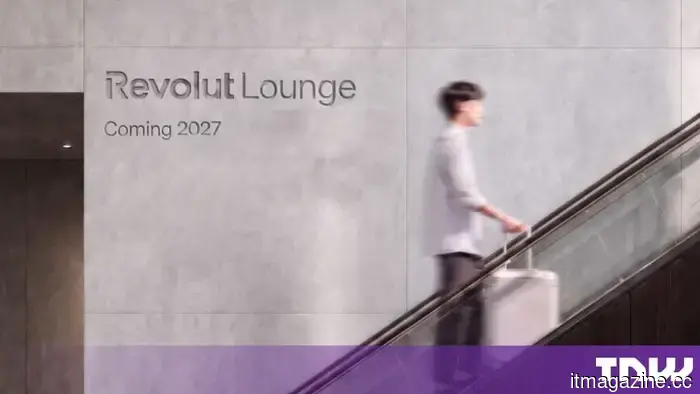 Revolut is set to establish its own airport lounges, with the first one located in Copenhagen in 2027.
Revolut is set to launch its own premium airport lounges in Europe, starting with Copenhagen in 2027 in partnership with Plaza Premium, as the $115 billion neobank transforms its subscription tiers into a terminal benefit.
Revolut is set to establish its own airport lounges, with the first one located in Copenhagen in 2027.
Revolut is set to launch its own premium airport lounges in Europe, starting with Copenhagen in 2027 in partnership with Plaza Premium, as the $115 billion neobank transforms its subscription tiers into a terminal benefit.
Mark Zuckerberg’s concept of 'personal superintelligence' serves as a Rorschach test.
Mark Zuckerberg’s essay promotes superintelligence as something personal, private, and democratizing; however, this message clashes with Meta’s own history regarding privacy and user attention.