

As a Google Pixel user, I’m fed up with being an unpaid quality assurance tester.
Unboxing a flagship smartphone used to be a straightforward experience. You paid a premium price, swiped your credit card, and received a fully functional device capable of managing daily tasks without overheating.
Last month, in blazing 45-degree heat, my partner had to hold her $1,000 Pixel 10 Pro up to my car’s air conditioning vent to prevent Google Maps from crashing mid-journey. It wasn't generating high-end graphics or processing 8K videos; I was merely following GPS directions and listening to a podcast—a routine task that my three-year-old iPhone 15 managed effortlessly. To top it off, Google Maps ultimately directed us to the wrong location.
The need to hold a smartphone against a dashboard vent to avoid thermal shutdown highlights an uncomfortable reality about Google’s mobile strategy: early adopters are not purchasing finished products. As Pixel owners, it feels like we are funding Google’s live experiments with silicon without any compensation.
The thermal cost of being on the cutting edge
I would call this a cost. Those individuals in Silicon Valley love to tout the advantages of on-device intelligence. AI this, AI that. They claim that local neural processing units and custom system-on-chip designs are the future of personal computing. Yet, in users' hands, this ambition results in smartphones that often exceed 43°C (109°F) while merely browsing social media over Wi-Fi or using the camera.
Community discussions on Reddit and Google’s official support channels consistently highlight widespread thermal issues across different hardware generations.
Three years ago, u/Initial-Ad-672 mentioned their Pixel 7 became “so hot even while doing normal stuff,” while u/xXxRMxXx noted their 6a heated up “absolutely doing nothing in my pocket.” A year later, u/TvFarisTheGamerYT complained that “even just going on Instagram makes my phone overheat,” and u/Jamie4242 experienced their Pixel 9 Pro XL getting “damn hot” during a simple 10-minute Google Meet call.
This trend continues with modern devices and chipsets. u/Basic_Entertainer184 reported temperatures “above 43°C during normal Wi-Fi use,” leading u/dennis77 to suggest: “how about finally fixing overheating issues instead of adding all the useless AI stuff?” After the Android 17 update, u/GuideHour2749 described their Pixel 10 Pro as “extra hot and constantly thermal throttling” while u/r3d_d3v1l7 found their Pixel 9 Pro XL “randomly overheated immediately after a software update on a cloudy day and fried its board.”
Leaked internal documents shared by Android Authority previously indicated that overheating and related battery drain accounted for nearly 28% of all negative buyer feedback and product returns. Another user testing the Pixel 9 Pro XL reported thermal throttling resulting in over a 50% performance loss. The question then becomes, Google, what are you doing?
When a phone continuously shuts down camera recording, dims the display to unreadable levels, or disables mobile data outdoors due to internal safety limits, the hardware design has not succeeded in its main goal. These issues are not just anecdotal; I experienced them with my Pixel 9a and subsequently observed them on the Pixel 10 Pro.
Major software updates have become a game of chance
Hardware limitations are only part of the issue. The secondary disadvantage of owning a Pixel arises every few months with system updates. What should feel like a software refresh with major operating system upgrades instead often resembles a gamble regarding system stability on Tensor hardware.
After the Android 17 update, users on r/GooglePixel documented significant thermal throttling within just 30 minutes of casual gaming, black-screen freezes, and stuttering frame rates on high-end devices like the Pixel 10 Pro priced at over $1,000. User u/r3d_d3v1l7 reported their Pixel 9 Pro XL's logic board completely fried after a software update, resulting in a $600 repair and driving them to switch to Samsung.
Community members frequently advise exasperated owners to turn off Gemini background tasks, disable Bluetooth/Wi-Fi scanning, or downgrade network settings to 4G/LTE merely to keep surface temperatures manageable. When the suggested workaround for an AI-focused 5G phone entails switching off 5G and turning off ambient background features, the product philosophy becomes ludicrous.
The excuse of “not a gaming phone” has grown tiresome
In any discussion thread about Tensor throttling, the familiar line appears: “Just a reminder that Google Pixel devices are NOT gaming phones.” This is where I see an issue—misleading consumer expectations. No one purchasing a premium flagship anticipates performance akin to a high-end desktop workstation.
However, when a device costing $1,000 struggles with frame rates during games like PUBG and Call of Duty, loses cellular reception in warm weather, or becomes unusable following an over-the-air

Other articles
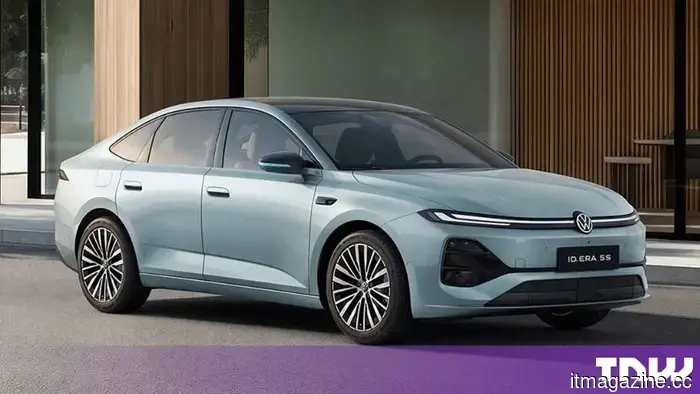 Volkswagen can manufacture a car priced at $17,175, but not within Europe.
China's electric vehicle price competition: Volkswagen started taking orders for a plug-in hybrid priced at $17,175, while BYD responded with an offering at $16,100. Meanwhile, the most affordable electric car in the United States costs $28,995.
Volkswagen can manufacture a car priced at $17,175, but not within Europe.
China's electric vehicle price competition: Volkswagen started taking orders for a plug-in hybrid priced at $17,175, while BYD responded with an offering at $16,100. Meanwhile, the most affordable electric car in the United States costs $28,995.
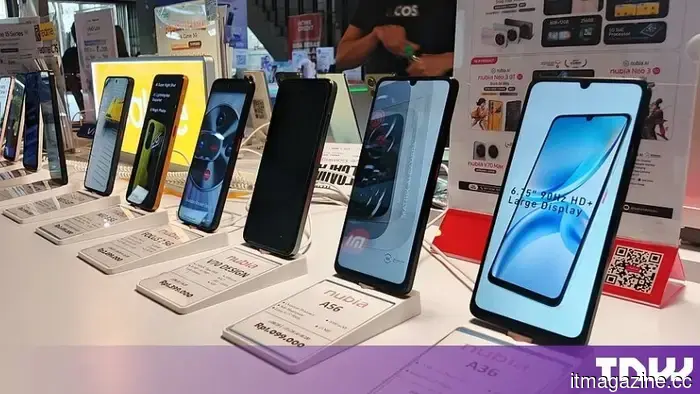 Omdia reports that smartphone prices will remain elevated even after the supply shortage concludes.
In the first quarter of 2026, refurbished phones accounted for 298 million display panels, surpassing the 289 million shipped to manufacturers of new phones. Omdia refers to this shift as a structural repricing.
Omdia reports that smartphone prices will remain elevated even after the supply shortage concludes.
In the first quarter of 2026, refurbished phones accounted for 298 million display panels, surpassing the 289 million shipped to manufacturers of new phones. Omdia refers to this shift as a structural repricing.
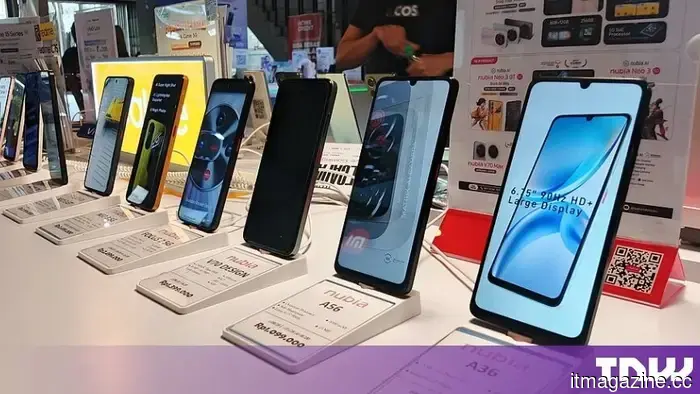 According to Omdia, smartphone prices are expected to remain elevated even after the shortage concludes.
In the first quarter of 2026, refurbished phones accounted for 298 million display panels, surpassing the 289 million delivered to manufacturers of new phones. Omdia describes this as a structural repricing.
According to Omdia, smartphone prices are expected to remain elevated even after the shortage concludes.
In the first quarter of 2026, refurbished phones accounted for 298 million display panels, surpassing the 289 million delivered to manufacturers of new phones. Omdia describes this as a structural repricing.
 An article generated by AI does not require a label, while your proofread email does.
The Claude watermark indicates text that the model has merely proofread, which is exempt under the EU AI Act. In contrast, a completely AI-generated article can be published without any labeling.
An article generated by AI does not require a label, while your proofread email does.
The Claude watermark indicates text that the model has merely proofread, which is exempt under the EU AI Act. In contrast, a completely AI-generated article can be published without any labeling.
 An article generated by AI doesn't require a label. However, your reviewed email does.
The Claude watermark indicates text that the model has only proofread, which is exempt under the EU AI Act. In contrast, a completely AI-generated article can be published without any labeling.
An article generated by AI doesn't require a label. However, your reviewed email does.
The Claude watermark indicates text that the model has only proofread, which is exempt under the EU AI Act. In contrast, a completely AI-generated article can be published without any labeling.
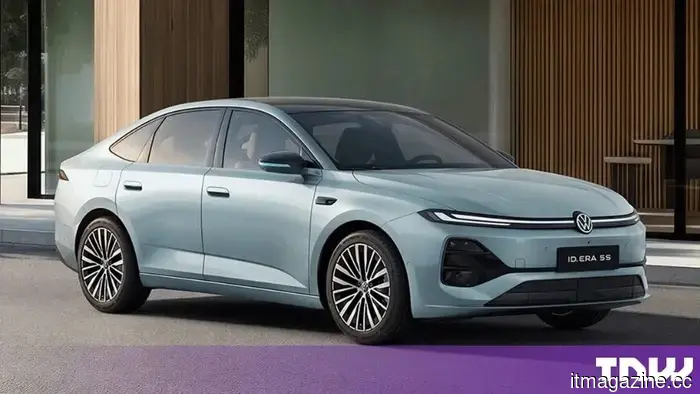 Volkswagen is capable of producing a car for $17,175, but not in Europe.
China's electric vehicle price competition: Volkswagen has begun taking orders for a plug-in hybrid priced at $17,175, while BYD has responded with a model available for $16,100. In contrast, the most affordable electric car in the United States costs $28,995.
Volkswagen is capable of producing a car for $17,175, but not in Europe.
China's electric vehicle price competition: Volkswagen has begun taking orders for a plug-in hybrid priced at $17,175, while BYD has responded with a model available for $16,100. In contrast, the most affordable electric car in the United States costs $28,995.
As a Google Pixel user, I’m fed up with being an unpaid quality assurance tester.
Unboxing a flagship smartphone once felt like a straightforward experience. You coughed up a significant amount of cash, handed over your credit card, and received a well-crafted device that could handle everyday tasks without overheating. Last month, in the blazing sun with temperatures hitting 45 degrees, my partner was holding her $1,000 Pixel 10 Pro [...]