
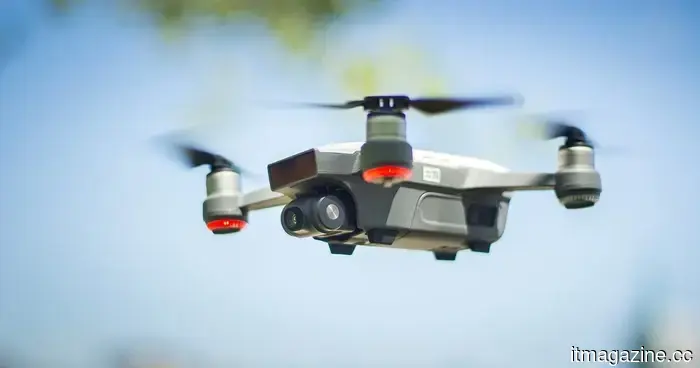
The FCC intends to prohibit certain drones that it has previously authorized. This situation is becoming quite complex.
FCC is contemplating expanding drone restrictions to include previously approved DJI models
The US Federal Communications Commission is considering an action that could create complications for drone purchasers. The agency aims to broaden its current restrictions to include specific drones equipped with features like LiDAR sensing, thermal imaging, and aerosol-dispersing systems. Interestingly, some of these drones have already been authorized for sale in the US.
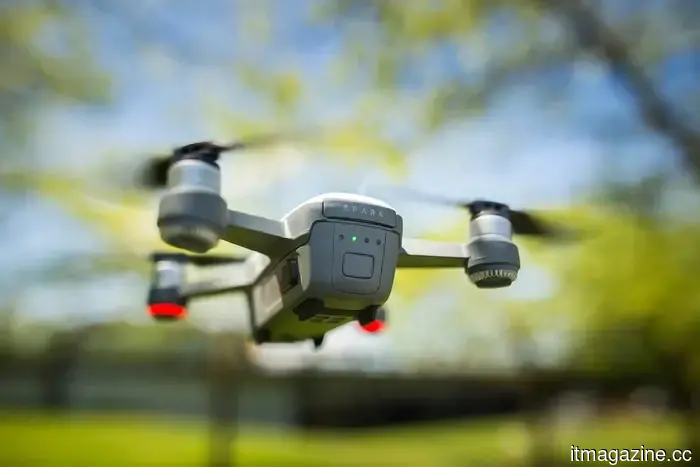
A report from DJI's blog highlights that this new proposal affects several DJI models, including the Air 3S, Avata 360, and Mini 5 Pro. Under the new plan, these drones might be removed from the US market, despite having been cleared by the FCC before. However, if you already own one, there’s no need to worry; the government won't take it from you.
What exactly is the FCC proposing?
The FCC indicates that it is considering extending its drone restrictions to products it believes may have military applications or could pose specific national security threats. Currently, the agency is soliciting public feedback on the proposal.
This move is part of an ongoing campaign that began in December 2025 when the FCC included foreign-made drones and their essential components on its Covered List. Initially, this only impacted upcoming products, while older drones that had already gained FCC approval could still be sold.
Things have since expanded. Last month, the FCC broadened the restrictions to include products sold by companies suspected of rebranding DJI hardware. Now, the agency is looking to regulate specific drone capabilities as well. This represents a significant shift, as the focus now shifts from merely asking "Who manufactured this drone?" to also considering "What capabilities does this drone possess?"
If you already own one, there's no need to panic just yet.
The good news is that current owners are not being targeted by this proposal. The FCC assures that a ban would not apply to drones already in consumers' possession. The less reassuring aspect is the potential future implications. If manufacturers cannot sell further units in the US, obtaining replacement parts might eventually become challenging, and software updates might face difficulties if ongoing support is hindered by these restrictions.
Moreover, this issue extends beyond consumer concerns. DJI's commercial drones are utilized for applications such as agricultural spraying and search-and-rescue missions, which means these restrictions could impact businesses and public agencies as well. DJI has expressed its dissatisfaction with the situation, characterizing the FCC's latest proposal as a “complete reversal” of its earlier stance, according to an official statement. The FCC is accepting comments until September 2.
For the time being, your DJI drone is not illegal. However, the US is steering toward a scenario where a drone that was previously permissible for sale could become prohibited the next day. That dynamic is certainly noteworthy.
Moinak Pal has been covering technology, focusing on consumer tech and automotive innovations for…
I discovered an unusual MelGeek lighting feature and transformed my keyboard into Tetris
MelGeek’s GIF Lighting feature allowed me to convert the MADE68 Ultra V2 into a mini Tetris board.
I have been reviewing the MelGeek Made68 Ultra V2 for the past few weeks, and surprisingly, one of the standout features has nothing to do with gaming. Make no mistake, this is a genuine gaming keyboard and a high-end one at that. It utilizes Hall effect switches, provides adjustable actuation, and includes all the standard features one would expect from a modern keyboard. I've particularly enjoyed its performance in Rainbow Six Siege, where peeking and strafing are noticeably quicker than with the mechanical keyboards I typically use.
Lenovo’s next ThinkBook might extend sideways into a portable ultrawide layout
Your upcoming ThinkBook could literally offer more screen space when your workload increases.
Lenovo appears to still be exploring how much screen can fit into a laptop bag. A recent report from WindowsLatest suggests a Lenovo ThinkBook design featuring a display that can expand horizontally, potentially offering users significantly more desktop space without permanently enlarging the laptop's size. This design seems linked to a Lenovo patent for a laptop computer demonstrated in various configurations. This patent was filed in August 2024 and granted in the US on March 10, 2026, with Lenovo Beijing as the assignee.
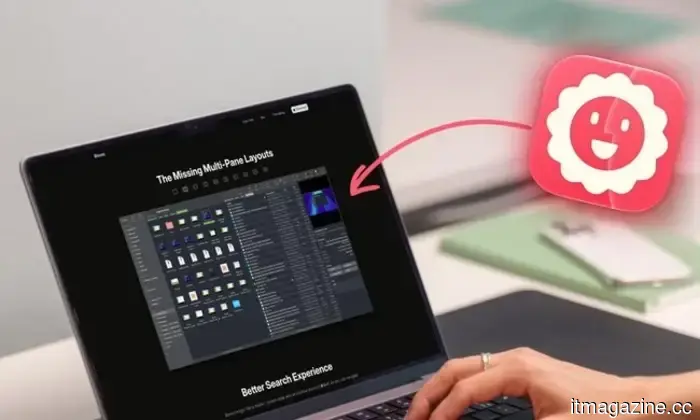
I didn’t realize how much Finder was hindering my productivity until I switched to Bloom
Turns out, my file manager was the hidden drain on my efficiency.
I have used Finder for as long as I've owned a Mac, and for most of that time, I didn't give it much thought. You open a window, sift through folders, drag a file where it needs to go, and continue with your day. That’s just how it is, right? But it shouldn’t be that way. Constantly opening new windows to transfer a file from one folder to another, waiting for searches that comb through my entire drive when I only want results from a specific folder, and resizing columns repeatedly because they never save their width (this is particularly frustrating) should not be the norm.




Other articles
 Users of Google Play in the US can now use Venmo for payments.
Google Play is introducing Venmo in the United States, enabling users to make payments for apps, games, subscriptions, and various digital content using their Venmo accounts.
Users of Google Play in the US can now use Venmo for payments.
Google Play is introducing Venmo in the United States, enabling users to make payments for apps, games, subscriptions, and various digital content using their Venmo accounts.
 Corma secured $60 million from Sequoia to develop the crucial defensive AI that cybersecurity lacks.
Corma secured $60 million in seed funding from Sequoia, Khosla, and Coatue to develop the inaugural foundation model focused on defensive cybersecurity. Its AI agents reduce response times by 94%.
Corma secured $60 million from Sequoia to develop the crucial defensive AI that cybersecurity lacks.
Corma secured $60 million in seed funding from Sequoia, Khosla, and Coatue to develop the inaugural foundation model focused on defensive cybersecurity. Its AI agents reduce response times by 94%.
 The Minimal Phone 2 features an AMOLED screen and 5G connectivity while still retaining its vintage appeal.
Minimal's second-generation phone replaces its distraction-resistant E Ink display with an OLED screen and 5G capabilities, housed in a curved aluminum design that eliminates the headphone jack completely.
The Minimal Phone 2 features an AMOLED screen and 5G connectivity while still retaining its vintage appeal.
Minimal's second-generation phone replaces its distraction-resistant E Ink display with an OLED screen and 5G capabilities, housed in a curved aluminum design that eliminates the headphone jack completely.
 Ford's new AI assistant spares you the trouble of searching for that dashboard warning light online.
Ford's latest AI assistant, now available in the Ford and Lincoln apps, responds to actual inquiries about your individual vehicle using real-time telemetry, with a comprehensive in-car version expected to launch in 2027.
Ford's new AI assistant spares you the trouble of searching for that dashboard warning light online.
Ford's latest AI assistant, now available in the Ford and Lincoln apps, responds to actual inquiries about your individual vehicle using real-time telemetry, with a comprehensive in-car version expected to launch in 2027.
 The specifications for the Galaxy S26 FE have been released, and Samsung is following its usual pattern.
The Galaxy S26 FE may feature a more upscale design along with an older chipset, familiar camera setups, and retain the same 4,900mAh battery capacity as the previous model.
The specifications for the Galaxy S26 FE have been released, and Samsung is following its usual pattern.
The Galaxy S26 FE may feature a more upscale design along with an older chipset, familiar camera setups, and retain the same 4,900mAh battery capacity as the previous model.
 Valve is alerting Steam Machine purchasers that scammers may have access to their addresses.
A cyberattack targeting the logistics company CEVA revealed the names, addresses, and phone numbers of purchasers of European Steam Machines and Controllers.
Valve is alerting Steam Machine purchasers that scammers may have access to their addresses.
A cyberattack targeting the logistics company CEVA revealed the names, addresses, and phone numbers of purchasers of European Steam Machines and Controllers.
The FCC intends to prohibit certain drones that it has previously authorized. This situation is becoming quite complex.
The FCC is evaluating regulations that might prohibit the sale of certain DJI drones that have already received approval in the US. Current owners would remain unaffected.