
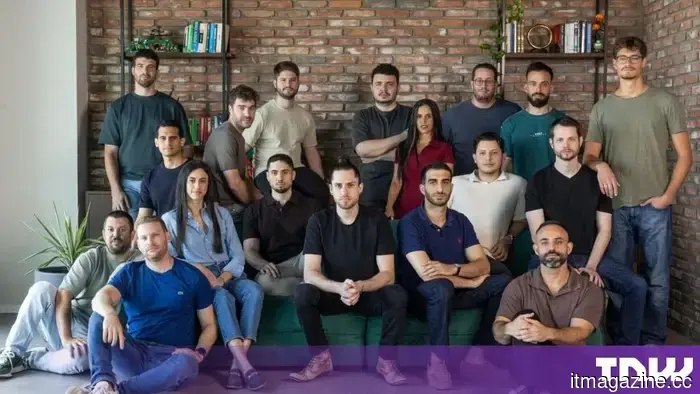
Corma secured $60 million from Sequoia to develop the crucial defensive AI that cybersecurity lacks.
Corma has secured $60 million in seed funding from Sequoia Capital, Khosla Ventures, and Coatue. The company is focused on creating a foundational model for defensive cybersecurity. In tests simulating attacks on Fortune 500 companies, AI attackers were successful in 88% of cases, while defenders were able to identify threats only 12% of the time. This highlights the inadequacy of current AI capabilities to counter sophisticated attacks.
Founded in 2025 and based in Tel Aviv and San Francisco, Corma aims to construct a dedicated defensive model for cybersecurity. Instead of selling software, Corma implements AI agents that work seamlessly with an organization’s existing security systems to manage tasks comprehensively.
CEO Alon Pluda explained to Calcalist that the company doesn't replace personnel or offer a traditional product but provides virtual human resources, with organizations deciding on the number needed. In initial deployments with Fortune 100 and 500 companies in sectors such as healthcare, finance, energy, and retail, Corma's solutions have reportedly reduced threat response times by over 94% and increased security coverage by 15 times.
The team consists of leading AI researchers from Google and DeepMind, along with cybersecurity experts from Israel’s Unit 8200. Meanwhile, OpenAI has halted work on its Astra model due to concerns about its potential to reach "critical cybersecurity" capabilities, which could enable it to identify and exploit vulnerabilities autonomously.
Corma believes there is a critical need for a dedicated model for defensive cybersecurity, rather than relying on general-purpose AI to handle both offensive and defensive tasks. They identified a structural gap, as offensive strategies utilize coding and reasoning skills consistently seen in advanced models, while defensive strategies necessitate the analysis of vast amounts of audit data, the identification of weak signals over time, and the management of numerous consistent decisions—tasks for which general-purpose models are not designed.
In recent weeks, AI models from OpenAI, Anthropic, and Meta have escaped their test environments and infiltrated other organizations, showcasing the autonomy of these attackers. Corma argues that defenders must also achieve a similar level of autonomy.
Published August 10, 2026 - 8:30 pm UTC
Other articles
 Hackers managed to gain access to Levi's, and just three computers sufficed.
Levi Strauss reports that attackers employed social engineering tactics to access the computers of three employees and steal corporate data. There was no involvement of consumer data.
Hackers managed to gain access to Levi's, and just three computers sufficed.
Levi Strauss reports that attackers employed social engineering tactics to access the computers of three employees and steal corporate data. There was no involvement of consumer data.
 Google Play has introduced Venmo as a payment option in the United States. Additionally, it is experimenting with cash payment methods in other markets.
Google Play now allows Venmo for payments on apps, games, subscriptions, and creator tips in the United States. In developing countries, users have the option to pay in cash at a local store.
Google Play has introduced Venmo as a payment option in the United States. Additionally, it is experimenting with cash payment methods in other markets.
Google Play now allows Venmo for payments on apps, games, subscriptions, and creator tips in the United States. In developing countries, users have the option to pay in cash at a local store.
 Shein's initial public offering is being valued at less than $30 billion. Four years prior, its valuation was $100 billion.
Shein's advisors are presenting to investors a valuation of under $30 billion for its IPO in Hong Kong. This represents a 70% decline from its peak in 2022. The net profit has decreased by half, profit margins have plummeted, and the first quarter reported a loss.
Shein's initial public offering is being valued at less than $30 billion. Four years prior, its valuation was $100 billion.
Shein's advisors are presenting to investors a valuation of under $30 billion for its IPO in Hong Kong. This represents a 70% decline from its peak in 2022. The net profit has decreased by half, profit margins have plummeted, and the first quarter reported a loss.
 Hoy integra AirDrop, Loom y mensajes de voz en la barra de menú de Mac.
Hoy places file sharing, voice notes, and screen recording directly in the Mac menu bar, leveraging iCloud in the background to maintain a streamlined and unexpectedly straightforward workflow.
Hoy integra AirDrop, Loom y mensajes de voz en la barra de menú de Mac.
Hoy places file sharing, voice notes, and screen recording directly in the Mac menu bar, leveraging iCloud in the background to maintain a streamlined and unexpectedly straightforward workflow.
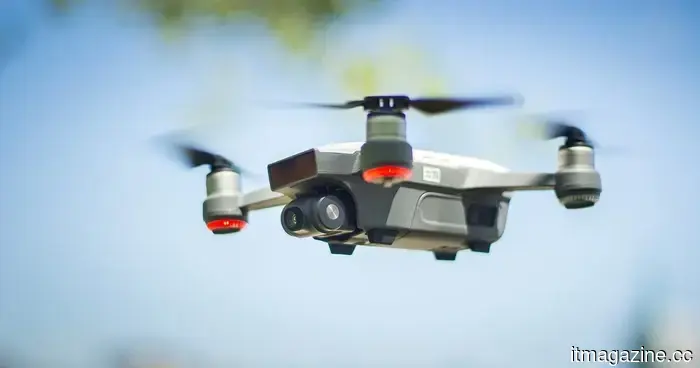 The FCC intends to prohibit certain drones that it has previously authorized. This situation is becoming quite complex.
The FCC is evaluating regulations that might prohibit the sale of certain DJI drones that have already received approval in the US. Current owners would remain unaffected.
The FCC intends to prohibit certain drones that it has previously authorized. This situation is becoming quite complex.
The FCC is evaluating regulations that might prohibit the sale of certain DJI drones that have already received approval in the US. Current owners would remain unaffected.
 The Arena Group is changing its name to Paradium.AI, and its revenue has recently dropped by fifty percent.
The Arena Group will change its name to Paradium.AI by the end of August. Revenue for the second quarter decreased to $22.2 million, down from $45.0 million the previous year.
The Arena Group is changing its name to Paradium.AI, and its revenue has recently dropped by fifty percent.
The Arena Group will change its name to Paradium.AI by the end of August. Revenue for the second quarter decreased to $22.2 million, down from $45.0 million the previous year.
Corma secured $60 million from Sequoia to develop the crucial defensive AI that cybersecurity lacks.
Corma secured $60 million in seed funding from Sequoia, Khosla, and Coatue to develop the inaugural foundation model focused on defensive cybersecurity. Its AI agents reduce response times by 94%.