
Six major financial institutions support Nvidia's $500 billion initiative to finance the expansion of AI technology.
Nvidia has enlisted six prominent financial organizations to help transform its chips into assets that banks can lend against. The company announced collaborations with Apollo, BlackRock, Blackstone, Brookfield, Goldman Sachs, and KKR to develop “compute financing platforms,” which aim to mobilize over $500 billion of external capital for AI infrastructure.
The goal is to create sizeable and attractive capital pools for Nvidia’s clients, which include leading AI laboratories, enterprises, and cloud service providers purchasing its hardware. Essentially, Nvidia is establishing a financing network centered around its own products, marking a significant shift in the circular financing that connects the AI economy.
At the heart of the proposal is a new perspective on GPUs. Nvidia is positioning its computing resources as “investable assets,” claiming they offer the lowest token costs, the highest revenue potential, the longest operational lifespan, and a robust CUDA-based software ecosystem. The company argues that graphics processors should no longer be seen merely as depreciating equipment, but instead as collateral with predictable returns, comparable to toll roads or power plants.
CEO Jensen Huang articulated this viewpoint, stating, “Nvidia compute is uniquely suited for this role. It is widely adopted, adaptable across various models and workloads, fungible, and transferable.” Goldman Sachs described its involvement as “creating a market for credit backed by Nvidia compute,” clearly signaling the ambition of establishing a tradable asset class with the chips as the foundational security.
Each partner contributes a unique facet of capital: Apollo provides a flexible long-term foundation, BlackRock links long-term funding to essential infrastructure, KKR adds long-duration capital paired with infrastructure knowledge, and Brookfield, which has already invested in a $100 billion data campus, aims to expand the “AI factories” housing the hardware.
No specific project names or financial commitments were disclosed, and the $500 billion figure represents potential aggregate investment over time rather than a guaranteed amount. This distinction is important because only memorandums of understanding have been signed thus far. Final agreements are still in progress, meaning the figure mentioned reflects an intention rather than executed transactions. Additionally, such MOUs can sometimes fade or stall during the lengthy period between announcement and finalization.
The structure also highlights a noteworthy concern. It formalizes a pattern that has made investors apprehensive, given that Nvidia plays multiple roles in these arrangements: selling the chips, guaranteeing their resale value, and now facilitating the capital acquisition. It's also crucial to recall that Nvidia's own $750 billion in AI deals previously unsettled the credit market, indicating that even its supporters remain aware of how closely these commitments are connected.
A more significant worry is the leverage involved. A substantial portion of the anticipated half-trillion dollars would likely be debt, and layering this onto an infrastructure boom aligns with the dynamics regulators have flagged. The BIS has cautioned that an AI downturn could impact credit markets as severely as the 2008 crisis, largely due to the reliance on borrowed funds and interconnected promises for current investment.
Moreover, the concept of “compute as collateral” is only sustainable while demand continues. If AI revenue declines, the assets supporting this credit could quickly lose value, leaving those who are leveraged vulnerable and lenders with chips worth less than the corresponding loans. While Huang describes the hardware as fungible and transferable, an excess in supply would challenge this characterization.
For now, Nvidia has achieved a subtle yet significant outcome. It has engaged Wall Street to support the demand for its own products, and if the agreements solidify, the AI expansion could receive a new and substantial source of funding, even as the accompanying debt becomes increasingly opaque.
Other articles
 Bios Life exits stealth mode with a $25 million investment and a partnership with Tempus for cancer monitoring.
Bios Life has unveiled itself with $25 million in funding and a partnership with Tempus to create continuous, AI-based cancer monitoring for those at high risk and survivors.
Bios Life exits stealth mode with a $25 million investment and a partnership with Tempus for cancer monitoring.
Bios Life has unveiled itself with $25 million in funding and a partnership with Tempus to create continuous, AI-based cancer monitoring for those at high risk and survivors.
 Intel secures up to $20 billion to support its foundry initiative in competition with TSMC.
Intel is offering $15 billion in stock, potentially increasing it to $20 billion, to support its foundry investment, taking advantage of a near-tripling of its share price by 2026, which makes new equity more affordable.
Intel secures up to $20 billion to support its foundry initiative in competition with TSMC.
Intel is offering $15 billion in stock, potentially increasing it to $20 billion, to support its foundry investment, taking advantage of a near-tripling of its share price by 2026, which makes new equity more affordable.
 AquaNab secures funding to combat the $4 billion sea lice issue affecting salmon using alpaca nanoantibodies.
AquaNab is working on nanoantibodies derived from alpacas that are distributed via fish feed to combat sea lice, presenting a cleaner option compared to the chemical and mechanical methods used for delousing in salmon farms.
AquaNab secures funding to combat the $4 billion sea lice issue affecting salmon using alpaca nanoantibodies.
AquaNab is working on nanoantibodies derived from alpacas that are distributed via fish feed to combat sea lice, presenting a cleaner option compared to the chemical and mechanical methods used for delousing in salmon farms.
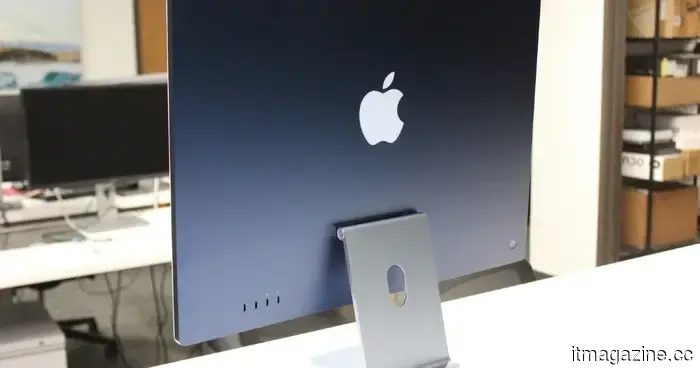 Apple might have discovered a solution to the OLED iMac’s most significant issue, but it is still several years away from being released.
LG Display's latest OLED strategy aims to address the burn-in issue that has prevented OLED from being included in the iMac for years, rather than merely enhancing brightness.
Apple might have discovered a solution to the OLED iMac’s most significant issue, but it is still several years away from being released.
LG Display's latest OLED strategy aims to address the burn-in issue that has prevented OLED from being included in the iMac for years, rather than merely enhancing brightness.
 Intel secures up to $20 billion to support its foundry strategy in competition with TSMC.
Intel is offering $15 billion in stock, with the possibility of increasing this to $20 billion, to finance its foundry investment, capitalizing on the fact that a nearly threefold increase in its shares by 2026 makes issuing new equity more economical.
Intel secures up to $20 billion to support its foundry strategy in competition with TSMC.
Intel is offering $15 billion in stock, with the possibility of increasing this to $20 billion, to finance its foundry investment, capitalizing on the fact that a nearly threefold increase in its shares by 2026 makes issuing new equity more economical.
 Lovable's solution to the risks of enterprise AI is an insurance policy offered by Lloyd's.
Lovable is the inaugural coding agent platform to receive certification under AIUC-1, and this certification is backed by Lloyd's underwriting. Three launches, one goal: procurement.
Lovable's solution to the risks of enterprise AI is an insurance policy offered by Lloyd's.
Lovable is the inaugural coding agent platform to receive certification under AIUC-1, and this certification is backed by Lloyd's underwriting. Three launches, one goal: procurement.
Six major financial institutions support Nvidia's $500 billion initiative to finance the expansion of AI technology.
Nvidia has recruited six prominent figures from the finance sector to create 'compute financing platforms' that could potentially leverage more than $500 billion in third-party capital for AI development.