
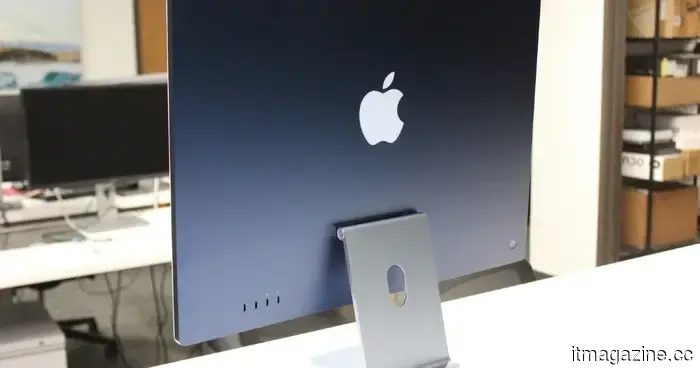
Apple might have discovered a solution to the OLED iMac’s most significant issue, but it is still several years away from being released.
LG Display is reportedly addressing the burn-in issue associated with OLED technology specifically for an upcoming iMac.
I've wanted an OLED iMac for a long time. Whenever I inquire why Apple hasn't produced one yet, the response is the same: OLED burn-in. Desktop displays are often on for extended periods with static menu bars and docks, creating conditions that are particularly challenging for OLED panels.
A new report from The Elec indicates that LG Display may have found a solution to the burn-in problem. The display manufacturer is developing panel technology designed specifically to enhance the durability of OLED panels for machines that operate continuously throughout the day—meaning these panels will meet Apple's longevity requirements.
So, what exactly is being done to resolve the burn-in issue?
LG's current four-layer OLED panels, already utilized in high-end monitors, feature a stacked configuration of light-emitting layers arranged in a blue-green-blue-red sequence. Essentially, there is one blue layer in use. However, the innovative advancement comes from the addition of a second blue layer.
To provide some background, excessive current flowing through a limited number of light-emitting points at a high pixel density contributes to reducing a panel’s lifespan and leads to visible ghosting or burn-in, particularly under sustained high brightness.
Here’s where the additional blue layer proves beneficial: it distributes electrical current across a greater number of emitters. Consequently, each individual emitter has to perform less work, potentially enhancing both brightness and the long-term durability of the panel.
Apple has reportedly requested both LG and Samsung to produce 24-inch panels capable of reaching 600 nits at 218 pixels per inch, representing a significant upgrade over the existing LCD iMac's maximum brightness of 500 nits at a similar resolution. However, at this time, it seems Apple’s main focus is on enhancing longevity rather than brightness.
When might we see this in an actual iMac?
Not anytime soon. LG and Samsung, with the latter pursuing its own QD-OLED strategy, are said to be aiming for 2028 to complete development. If they stick to this schedule, an actual OLED iMac might not be released until 2029.
This complex manufacturing process is also costly. Adding more emitting layers requires more materials and complicates production, which can reduce yield. For now, it appears that Apple will refresh its current LCD iMac with a new chip later this year while considering the OLED iMac as a long-term goal.
This clarification changes the perception of Apple’s OLED delay. It was never solely about achieving the right brightness or color; it was fundamentally about ensuring durability for desktop usage.
For over five years, Shikhar has been streamlining developments in consumer technology.
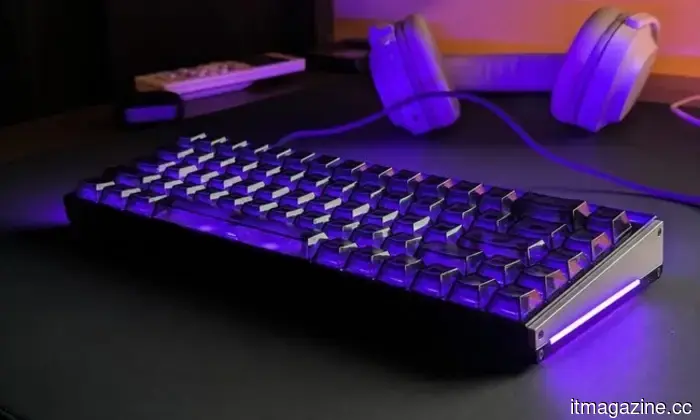
I found an interesting MelGeek lighting feature that allowed me to transform my keyboard into a Tetris display.
MelGeek’s GIF Lighting feature enabled me to turn the MADE68 Ultra V2 into a mini Tetris board.
I have been testing the MelGeek Made68 Ultra V2 for the last few weeks, and surprisingly, one of my favorite aspects has nothing to do with gaming.
This is undoubtedly a gaming keyboard, and it is premium at that. It utilizes Hall effect switches, offers adjustable actuation, and includes all the standard features expected from a modern magnetic keyboard. I've particularly enjoyed using it in Rainbow Six Siege, where the responsiveness in peeking and strafing feels significantly better than on the mechanical keyboards I typically use.
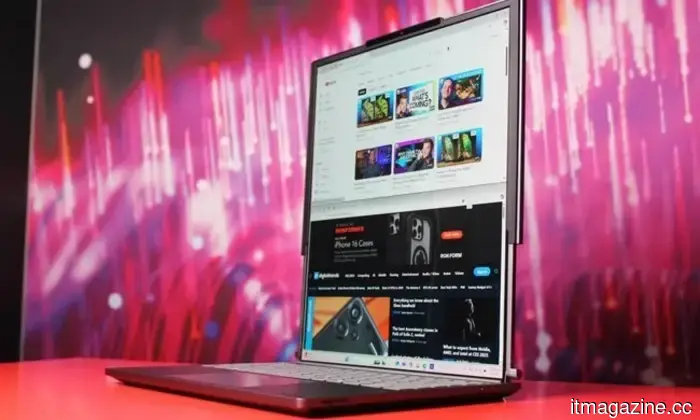
Lenovo's next ThinkBook could literally expand its screen horizontally when more workspace is needed.
Lenovo seems to continue exploring how much display it can fit into a laptop bag. A recent report from WindowsLatest highlights a Lenovo ThinkBook design featuring a display that can extend horizontally, potentially providing users with significantly more desktop space without permanently enlarging the laptop. This design is related to a Lenovo patent that showcases a laptop computer capable of multiple configurations. The patent was submitted in August 2024 and granted in the US on March 10, 2026, with Lenovo Beijing as the assignee.
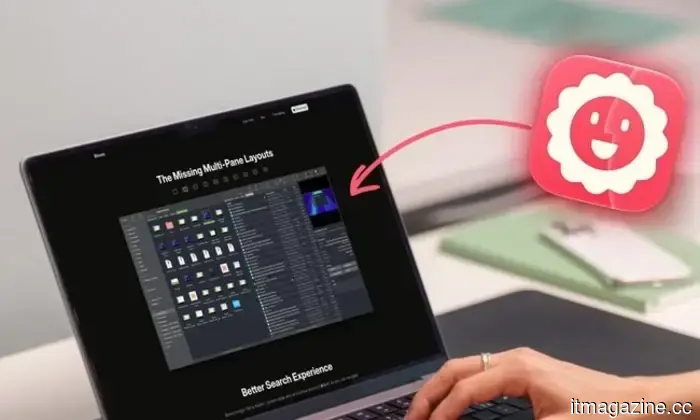
I didn’t realize how much Finder was hindering my productivity until I switched to Bloom.
It turns out my file manager was the unexpected source of my productivity issues.
I have been using Finder since acquiring my Mac, and for the most part, I never considered it much. You open a window, navigate through folders, move a file to its destination, and proceed with your day. That’s just how it’s supposed to work, right?
Yet, it shouldn’t be that way. Constantly opening new windows to transfer a file between folders, waiting for search results that scan my entire drive when I only want outcomes from a single folder, and repeatedly adjusting column widths because they never remember their size (this last one is particularly frustrating) should not be regarded as normal.

Other articles
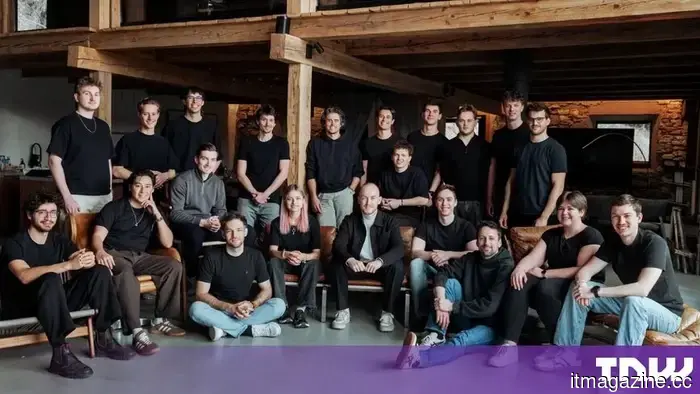 Exclusive: fonio.ai in Vienna reaches $10 million in annual recurring revenue within just a year of launching its subscription service.
Fonio.ai, the Vienna-based voice-AI startup, reports that it has exceeded $10 million in annual recurring revenue within less than a year, experiencing over 30% monthly growth since transitioning to a subscription-only model.
Exclusive: fonio.ai in Vienna reaches $10 million in annual recurring revenue within just a year of launching its subscription service.
Fonio.ai, the Vienna-based voice-AI startup, reports that it has exceeded $10 million in annual recurring revenue within less than a year, experiencing over 30% monthly growth since transitioning to a subscription-only model.
 Six major financial institutions support Nvidia's $500 billion initiative to finance the expansion of AI technology.
Nvidia has recruited six prominent figures from the finance sector to create 'compute financing platforms' that could potentially leverage more than $500 billion in third-party capital for AI development.
Six major financial institutions support Nvidia's $500 billion initiative to finance the expansion of AI technology.
Nvidia has recruited six prominent figures from the finance sector to create 'compute financing platforms' that could potentially leverage more than $500 billion in third-party capital for AI development.
 The specifications for the Galaxy S26 FE have been revealed, and Samsung is once again following the same pattern.
The Galaxy S26 FE may combine a more upscale design with an older chipset, recognizable cameras, and the identical 4,900mAh battery capacity as its predecessor.
The specifications for the Galaxy S26 FE have been revealed, and Samsung is once again following the same pattern.
The Galaxy S26 FE may combine a more upscale design with an older chipset, recognizable cameras, and the identical 4,900mAh battery capacity as its predecessor.
 The Minimal Phone 2 features an AMOLED screen and 5G connectivity while still retaining its vintage appeal.
Minimal's second-generation phone replaces its distraction-resistant E Ink display with an OLED screen and 5G capabilities, housed in a curved aluminum design that eliminates the headphone jack completely.
The Minimal Phone 2 features an AMOLED screen and 5G connectivity while still retaining its vintage appeal.
Minimal's second-generation phone replaces its distraction-resistant E Ink display with an OLED screen and 5G capabilities, housed in a curved aluminum design that eliminates the headphone jack completely.
 AquaNab secures funding to combat the $4 billion sea lice issue affecting salmon using alpaca nanoantibodies.
AquaNab is working on nanoantibodies derived from alpacas that are distributed via fish feed to combat sea lice, presenting a cleaner option compared to the chemical and mechanical methods used for delousing in salmon farms.
AquaNab secures funding to combat the $4 billion sea lice issue affecting salmon using alpaca nanoantibodies.
AquaNab is working on nanoantibodies derived from alpacas that are distributed via fish feed to combat sea lice, presenting a cleaner option compared to the chemical and mechanical methods used for delousing in salmon farms.
 Lovable's solution to the risks of enterprise AI is an insurance policy offered by Lloyd's.
Lovable is the inaugural coding agent platform to receive certification under AIUC-1, and this certification is backed by Lloyd's underwriting. Three launches, one goal: procurement.
Lovable's solution to the risks of enterprise AI is an insurance policy offered by Lloyd's.
Lovable is the inaugural coding agent platform to receive certification under AIUC-1, and this certification is backed by Lloyd's underwriting. Three launches, one goal: procurement.
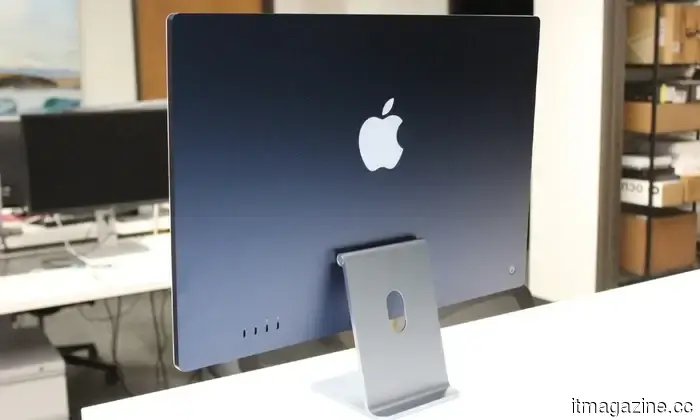
Apple might have discovered a solution to the OLED iMac’s most significant issue, but it is still several years away from being released.
LG Display's latest OLED strategy aims to address the burn-in issue that has prevented OLED from being included in the iMac for years, rather than merely enhancing brightness.