
Intel secures up to $20 billion to support its foundry strategy in competition with TSMC.
Intel has unveiled a $15 billion common stock offering, which could increase to as much as $20 billion if underwriters exercise their overallotment options. This is a daring initiative for a company that, not long ago, seemed to be a cautionary tale, demonstrating how significantly the chipmaker's fortunes have shifted over the past year.
The timing is strategic. Intel's stock has nearly tripled in 2026, surpassing AMD, Nvidia, and the Philadelphia Semiconductor Index, which has risen about 75% during the same period. When a stock is performing as well as this, issuing new shares becomes one of the most cost-effective ways to raise capital, and Intel is clearly taking advantage of the favorable conditions.
The offering was priced at around $95 a share or higher, reflecting a modest discount of approximately 2.6% from Monday's close of $97.52. This slight concession is typical for large equity raises and indicates the strong interest investors have in a company many had dismissed during the toughest times of its restructuring.
The funds are designated for the segment of Intel's business that is crucial for its recovery. They will support its foundry division, covering the costs of new manufacturing facilities and advanced packaging as the company aims to compete with TSMC in the capital-intensive contract chipmaking sector.
This ambition has become more costly as demand has increased. Orders for AI-driven processors have exceeded Intel's current capacity, prompting an increase in its 2026 capital-spending forecast from $18 billion to $20 billion, along with a commitment to begin production using its advanced 14A process by 2028. New equity will finance these commitments without increasing debt.
There is real momentum behind this initiative as well. Intel has secured Tesla as a customer for its 14A process, and reports indicate a potential partnership with Apple, either of which would enhance credibility for a foundry that has historically struggled to attract major clients away from the Taiwanese leader.
Investors have reacted positively, with demand for the offering reportedly surpassing $100 billion, a remarkable figure illustrating the drastic shift in sentiment. One analyst pointed out that raising funds “makes perfect sense” following a near five-fold increase in the stock since last August.
However, this turnaround didn't happen in isolation. It has been partially supported by the U.S. government's investment in Intel and a series of significant investments, as well as strategic choices like partnering with Musk's Terafab and committing substantial funds to manufacturing in Ireland.
Yet, the market's response on the announcement day served as a useful reminder. Intel shares dropped about 4 to 5% following the news of the sale, a decline that reflects dilution rather than a loss of trust. The increase in shares outstanding means that existing shareholders will own a marginally smaller portion of the company, leading to an adjustment in stock price.
The more significant question remains whether the foundry initiative will be successful. Competing with TSMC is a daunting task that has previously challenged Intel, and the 14A roadmap remains untested at the volumes and yields necessary for commercial success.
Securing Tesla and pursuing a partnership with Apple are positive developments, but they do not guarantee sustained, profitable contract manufacturing. Intel has also been developing products that will utilize this manufacturing, from its 18A process and new chips to packaging technologies intended to provide differentiation.
The share sale allows Intel to gain time and capacity necessary for these endeavors, although successful execution—rather than just funding—will ultimately determine the outcome. For now, Intel is appropriately leveraging its recovery by converting a remarkable surge into funding for its most crucial and uncertain initiative, hoping that positive sentiment will last long enough to validate the skeptics’ doubts.
Other articles
 Google is experimenting with a homepage that prioritizes AI, and it seems that the Search button is becoming less prominent.
Seen in Chrome, Edge, and Comet, Google's updated homepage design replaces the classic Search button with three AI-centric shortcuts.
Google is experimenting with a homepage that prioritizes AI, and it seems that the Search button is becoming less prominent.
Seen in Chrome, Edge, and Comet, Google's updated homepage design replaces the classic Search button with three AI-centric shortcuts.
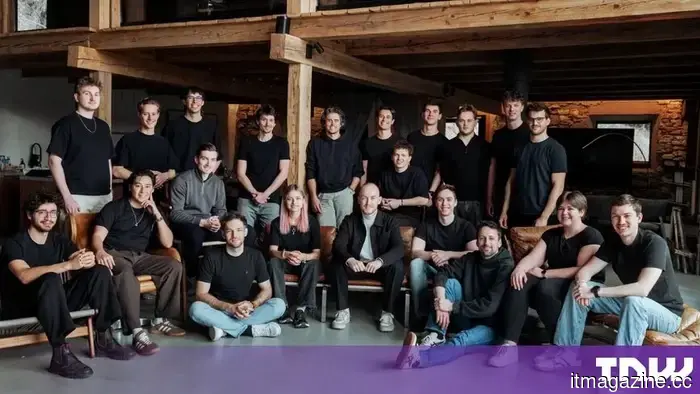 Exclusive: fonio.ai in Vienna reaches $10 million in annual recurring revenue within just a year of launching its subscription service.
Fonio.ai, the Vienna-based voice-AI startup, reports that it has exceeded $10 million in annual recurring revenue within less than a year, experiencing over 30% monthly growth since transitioning to a subscription-only model.
Exclusive: fonio.ai in Vienna reaches $10 million in annual recurring revenue within just a year of launching its subscription service.
Fonio.ai, the Vienna-based voice-AI startup, reports that it has exceeded $10 million in annual recurring revenue within less than a year, experiencing over 30% monthly growth since transitioning to a subscription-only model.
 AquaNab secures funding to combat the $4 billion sea lice issue affecting salmon using alpaca nanoantibodies.
AquaNab is working on alpaca-based nanoantibodies that are administered via fish feed to combat sea lice, presenting a more environmentally friendly option compared to the chemical and mechanical methods currently used for delousing in salmon farms.
AquaNab secures funding to combat the $4 billion sea lice issue affecting salmon using alpaca nanoantibodies.
AquaNab is working on alpaca-based nanoantibodies that are administered via fish feed to combat sea lice, presenting a more environmentally friendly option compared to the chemical and mechanical methods currently used for delousing in salmon farms.
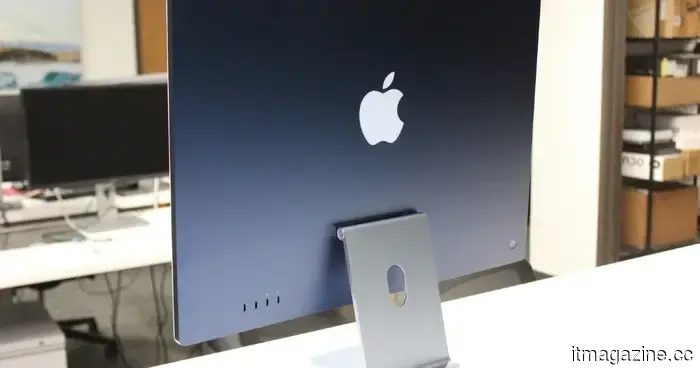 Apple might have discovered a solution to the OLED iMac’s most significant issue, but it is still several years away from being released.
LG Display's latest OLED strategy aims to address the burn-in issue that has prevented OLED from being included in the iMac for years, rather than merely enhancing brightness.
Apple might have discovered a solution to the OLED iMac’s most significant issue, but it is still several years away from being released.
LG Display's latest OLED strategy aims to address the burn-in issue that has prevented OLED from being included in the iMac for years, rather than merely enhancing brightness.
 A US court has just allowed thousands of lawsuits related to social media harm to move forward.
The Ninth Circuit determined that Section 230 serves as a defense rather than providing total immunity, allowing youth-addiction lawsuits against Meta, TikTok, Snap, and YouTube to proceed to trial.
A US court has just allowed thousands of lawsuits related to social media harm to move forward.
The Ninth Circuit determined that Section 230 serves as a defense rather than providing total immunity, allowing youth-addiction lawsuits against Meta, TikTok, Snap, and YouTube to proceed to trial.
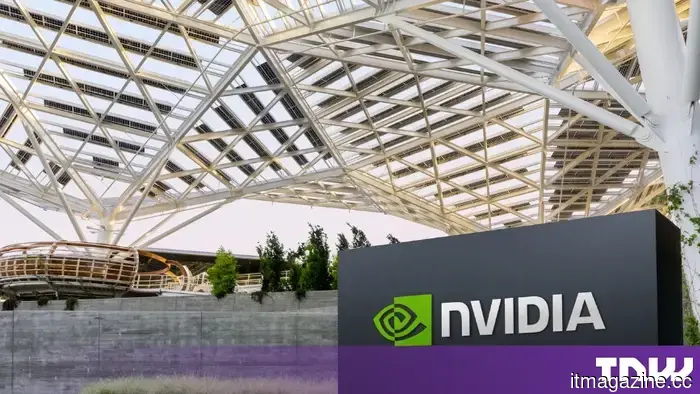 Six major financial institutions support Nvidia's $500 billion initiative to finance AI development.
Nvidia has brought together six prominent figures in finance to establish 'compute financing platforms' that have the potential to unlock more than $500 billion in third-party capital for the development of AI.
Six major financial institutions support Nvidia's $500 billion initiative to finance AI development.
Nvidia has brought together six prominent figures in finance to establish 'compute financing platforms' that have the potential to unlock more than $500 billion in third-party capital for the development of AI.
Intel secures up to $20 billion to support its foundry strategy in competition with TSMC.
Intel is offering $15 billion in stock, with the possibility of increasing this to $20 billion, to finance its foundry investment, capitalizing on the fact that a nearly threefold increase in its shares by 2026 makes issuing new equity more economical.