
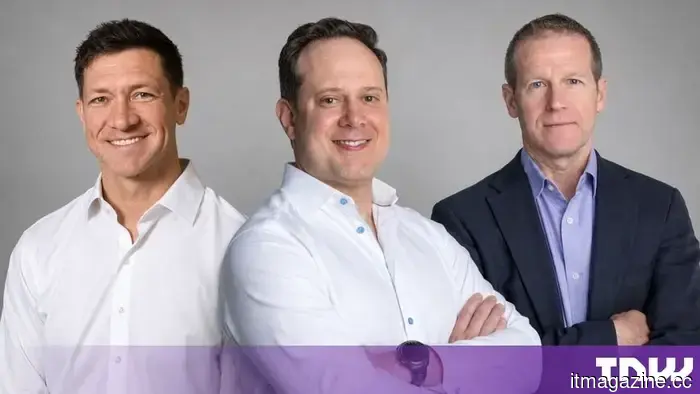
Bios Life exits stealth mode with a $25 million investment and a partnership with Tempus for cancer monitoring.
A group of former BioNTech employees believes that cancer screening is outdated, and they have secured $25 million to address this issue. Bios Life has come out of stealth mode with a strategy to transition from one-time screenings to continuous, AI-based monitoring, supported by a data partnership with Tempus.
The seed funding round has strong support for a launch, led by Redmile, Vsquared Ventures, and Kindred Capital, along with a consortium of healthcare and technology investors from both the United States and Europe, providing solid backing for the Boston-based company from the outset.
The target audience for this service is substantial and, according to the company, underserved. Bios Life points to over 40 million Americans who are either cancer survivors or considered high-risk, two demographics that currently receive disjointed, reactive care that only begins after a problem arises.
The implications are significant, as Bios Life highlights that over 40% of individuals will be diagnosed with cancer at some point in their lives, and many of these diagnoses occur late, at stages three or four, when treatment options become more challenging and outcomes less favorable.
The solution proposed involves a shift from episodic care to a continuous model. Instead of annual or biennial scans, the company aims to create what it describes as a digital twin for each patient—a constantly updated representation of their biology that transforms sporadic screenings into ongoing monitoring.
The service is intended to be primarily virtual. Bios Life plans to operate this platform online, with licensed clinicians covering the US and collaborating with cancer centers, anticipating a launch in the latter half of 2026, with a waitlist already available.
The technology is grounded in advanced genomics. The company holds commercial rights to the Nucleotide Transformer, a genomics foundation model developed by BioNTech-InstaDeep, which is recognized as one of the most cited and downloaded in the industry, capable of analyzing genetic signals at the single nucleotide level.
The collaboration with Tempus is crucial for data learning. Through a multi-year agreement, Bios Life will utilize Tempus’ de-identified, multi-modal oncology datasets to train and validate its predictive systems, which are essential for any credible medical AI.
Genetics also plays a pivotal role. Through Tempus-owned Ambry Genetics, an expert in hereditary cancer testing, Bios Life intends to integrate genetic screening into its platform, combining inherited risk with the lifestyle and clinical data monitored over time.
Clinicians supporting the initiative view this moment as overdue. Kevin Oeffinger from Duke remarked that screening has been relatively stagnant for decades, and an AI-enhanced virtual model could be a transformative development for high-risk populations, a strong assertion from an academic authority.
The expertise of the founders underpins the appeal of the venture. CEO Ryan Richardson previously served as BioNTech’s chief strategy officer and led its AI branch InstaDeep, alongside other veterans from BioNTech and InstaDeep, all of whom have experience in the mRNA and genomics-AI sectors.
The technology is capable of detecting breast cancer from scans and, in some research, has proven to be more accurate than biopsies in evaluating rare tumors, indicating a legitimate momentum behind the initiative.
Currently, founder-led health-AI ventures are gaining traction, with prominent figures leaving significant positions to develop their own data-driven medical innovations, and Bios Life exemplifies this trend of combining distinguished backgrounds with patient data.
However, there are vital concerns, particularly in healthcare. The platform has yet to launch, AI risk assessment requires clinical validation before it can be trusted, and continuous monitoring poses its own challenges, such as false positives, over-screening, and the anxiety and costs associated with pursuing findings that may ultimately be irrelevant.
This tension is a prevalent issue in the field, as the excitement surrounding AI health technology has often advanced faster than the actual results. Bios Life possesses a capable team, a data partner, and funding; what remains is to prove that lifelong surveillance truly benefits patients rather than merely increasing the frequency of their monitoring.
Other articles
 Six major financial institutions support Nvidia's $500 billion initiative to finance AI development.
Nvidia has brought together six prominent figures in finance to establish 'compute financing platforms' that have the potential to unlock more than $500 billion in third-party capital for the development of AI.
Six major financial institutions support Nvidia's $500 billion initiative to finance AI development.
Nvidia has brought together six prominent figures in finance to establish 'compute financing platforms' that have the potential to unlock more than $500 billion in third-party capital for the development of AI.
 AquaNab secures funding to combat the $4 billion sea lice issue affecting salmon using alpaca nanoantibodies.
AquaNab is working on alpaca-based nanoantibodies that are administered via fish feed to combat sea lice, presenting a more environmentally friendly option compared to the chemical and mechanical methods currently used for delousing in salmon farms.
AquaNab secures funding to combat the $4 billion sea lice issue affecting salmon using alpaca nanoantibodies.
AquaNab is working on alpaca-based nanoantibodies that are administered via fish feed to combat sea lice, presenting a more environmentally friendly option compared to the chemical and mechanical methods currently used for delousing in salmon farms.
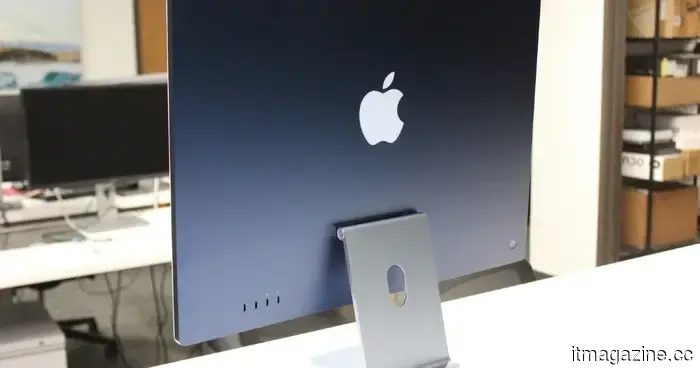 Apple might have discovered a solution to the OLED iMac’s most significant issue, but it is still several years away from being released.
LG Display's latest OLED strategy aims to address the burn-in issue that has prevented OLED from being included in the iMac for years, rather than merely enhancing brightness.
Apple might have discovered a solution to the OLED iMac’s most significant issue, but it is still several years away from being released.
LG Display's latest OLED strategy aims to address the burn-in issue that has prevented OLED from being included in the iMac for years, rather than merely enhancing brightness.
 A US court has just allowed thousands of lawsuits related to social media harm to move forward.
The Ninth Circuit determined that Section 230 serves as a defense rather than providing total immunity, allowing youth-addiction lawsuits against Meta, TikTok, Snap, and YouTube to proceed to trial.
A US court has just allowed thousands of lawsuits related to social media harm to move forward.
The Ninth Circuit determined that Section 230 serves as a defense rather than providing total immunity, allowing youth-addiction lawsuits against Meta, TikTok, Snap, and YouTube to proceed to trial.
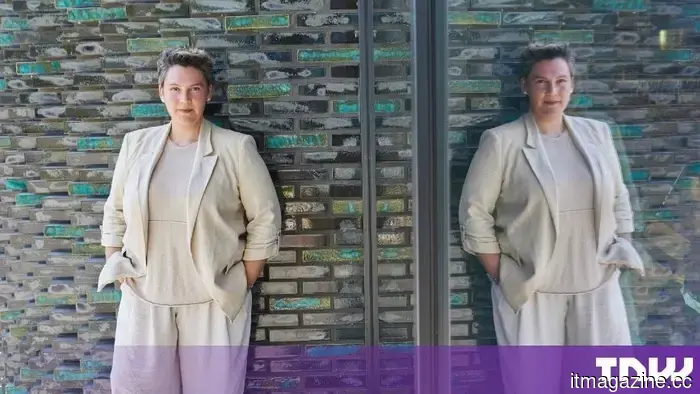 AquaNab secures funding to combat the $4 billion sea lice issue affecting salmon using alpaca nanoantibodies.
AquaNab is working on nanoantibodies derived from alpacas that are distributed via fish feed to combat sea lice, presenting a cleaner option compared to the chemical and mechanical methods used for delousing in salmon farms.
AquaNab secures funding to combat the $4 billion sea lice issue affecting salmon using alpaca nanoantibodies.
AquaNab is working on nanoantibodies derived from alpacas that are distributed via fish feed to combat sea lice, presenting a cleaner option compared to the chemical and mechanical methods used for delousing in salmon farms.
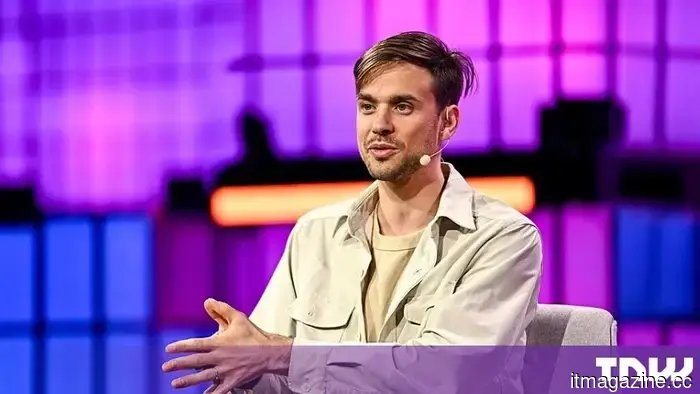 Lovable's solution to the risks of enterprise AI is an insurance policy offered by Lloyd's.
Lovable is the inaugural coding agent platform to receive certification under AIUC-1, and this certification is backed by Lloyd's underwriting. Three launches, one goal: procurement.
Lovable's solution to the risks of enterprise AI is an insurance policy offered by Lloyd's.
Lovable is the inaugural coding agent platform to receive certification under AIUC-1, and this certification is backed by Lloyd's underwriting. Three launches, one goal: procurement.
Bios Life exits stealth mode with a $25 million investment and a partnership with Tempus for cancer monitoring.
Bios Life has unveiled itself with $25 million in funding and a partnership with Tempus to create continuous, AI-based cancer monitoring for those at high risk and survivors.