
Meta smart glasses prohibited in courts throughout England and Wales.
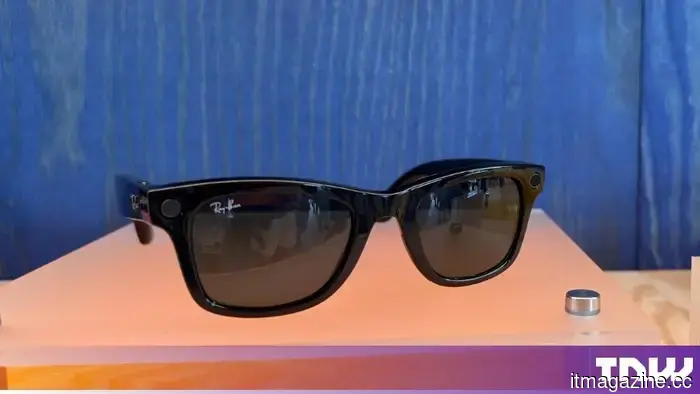
His Majesty’s Courts & Tribunals Service has prohibited the use of Meta smart glasses in court buildings throughout England and Wales, reintroducing a longstanding debate about recording permissions. HMCTS, which oversees criminal, civil, and family courts, will confiscate the glasses upon entrance and return them only when the user exits, categorizing the eyewear as covert recording devices.
This seemingly minor policy carries significant implications, reflecting a trend of venue bans that have ranged from restaurants to theaters to pubs, highlighted by instances where Meta’s Ray-Bans have been barred. An HMCTS spokesperson stated, “There are clear restrictions on taking images or videos within courts and tribunals which is why the use of Meta glasses is prohibited,” underlining the reasoning behind the ban.
Currently, recording within a UK court is already prohibited without consent, and doing so may lead to charges of contempt of court, meaning this ban reinforces an existing regulation rather than introducing a new one in response to technological advances. The challenge posed by these glasses lies in their discreet design; unlike smartphones, which can be easily identified when raised to film, there is no comparable exception for a device that can record from a position on one's face without being noticed. The discreet nature of the product, its main selling point, is precisely the reason it cannot be permitted in court.
New York's courts enacted a similar ban last month for the same reasons, showcasing a growing trend among jurisdictions that quietly adopt this strict stance. When two major legal systems impose similar prohibitions in quick succession, it moves beyond mere local caution to suggest a broader trend.
Incidents have driven this issue to the forefront. This year, a claimant named Laimonas Jakstys was accused of using smart glasses in the High Court to receive "coaching" during testimony, an allegation he refuted. Regardless of the truth behind the claim, the very possibility of a witness being fed lines through an unnoticed camera turns privacy concerns into a significant practical issue.
The scale of this concern is heightened by the widespread popularity of the glasses, with Meta selling around seven million pairs last year, priced between £269 and £469, making them common items rather than just niche gadgets.
The challenge lies in the fact that individuals who may be filmed have little ability to opt out, prompting venues and now courts to enact broad measures to address this imbalance. Meta prefers discussing technical aspects rather than restrictions. The company avoided commenting on the court policy but has often referenced the light indicating when the glasses are recording, along with tamper-detection features intended to prevent deactivation.
While these safeguards are genuine, a court cannot rely solely on a small LED light to uphold a contempt law, which is why the decision has been made to disallow the device altogether. A more pressing issue is that technology has advanced faster than proper etiquette, leading to institutions creating rules on the fly.
In courts—where the recording ban safeguards witnesses, jurors, and the essential fairness of trials—this improvisation is particularly significant, making it telling, albeit slightly foreboding, that they are establishing a definitive boundary. For the time being, the solution in England and Wales remains clear: if a camera cannot be reliably turned off, it is not allowed inside.
Other articles
 Meta's smart glasses have been prohibited in courts throughout England and Wales.
HMCTS has prohibited the use of Meta smart glasses in court buildings across England and Wales, seizing them upon entry, as organizations rush to establish regulations for wearable cameras that are continuously active.
Meta's smart glasses have been prohibited in courts throughout England and Wales.
HMCTS has prohibited the use of Meta smart glasses in court buildings across England and Wales, seizing them upon entry, as organizations rush to establish regulations for wearable cameras that are continuously active.
 Meta's smart glasses have been prohibited in courts throughout England and Wales.
HMCTS has prohibited Meta smart glasses in court buildings throughout England and Wales, seizing them upon entry, as organizations rush to establish guidelines for constantly active wearable cameras.
Meta's smart glasses have been prohibited in courts throughout England and Wales.
HMCTS has prohibited Meta smart glasses in court buildings throughout England and Wales, seizing them upon entry, as organizations rush to establish guidelines for constantly active wearable cameras.
 Trump Media reports a quarterly loss of $238 million as its investment in bitcoin turns unfavorable.
Trump Media disclosed a second-quarter loss of $238.1 million, primarily due to cryptocurrency markdowns, with revenue amounting to only $1.67 million, as the parent company of Truth Social increasingly focuses on bitcoin.
Trump Media reports a quarterly loss of $238 million as its investment in bitcoin turns unfavorable.
Trump Media disclosed a second-quarter loss of $238.1 million, primarily due to cryptocurrency markdowns, with revenue amounting to only $1.67 million, as the parent company of Truth Social increasingly focuses on bitcoin.
 Bumble is allowing men to initiate contact, breaking the foundational rule it was established on.
Bumble will allow men to initiate messages first, changing the women-first policy that characterized the platform, as the number of paying users declines and the app invests in an AI-driven transformation.
Bumble is allowing men to initiate contact, breaking the foundational rule it was established on.
Bumble will allow men to initiate messages first, changing the women-first policy that characterized the platform, as the number of paying users declines and the app invests in an AI-driven transformation.
 Beyond mobility: Unitree's GD01 marks the next stage in China's robotics competition.
In 2026, Unitree Robotics positioned itself back at the forefront of discussions within the robotics industry. Just last month, the founder and CEO of Unitree, Wang Xingxing,
Beyond mobility: Unitree's GD01 marks the next stage in China's robotics competition.
In 2026, Unitree Robotics positioned itself back at the forefront of discussions within the robotics industry. Just last month, the founder and CEO of Unitree, Wang Xingxing,
 Trump Media reports a quarterly loss of $238 million as its investment in bitcoin declines.
Trump Media announced a second-quarter loss of $238.1 million, primarily due to cryptocurrency markdowns, with revenue totaling only $1.67 million, as the parent company of Truth Social increasingly focuses on bitcoin.
Trump Media reports a quarterly loss of $238 million as its investment in bitcoin declines.
Trump Media announced a second-quarter loss of $238.1 million, primarily due to cryptocurrency markdowns, with revenue totaling only $1.67 million, as the parent company of Truth Social increasingly focuses on bitcoin.
Meta smart glasses prohibited in courts throughout England and Wales.
HMCTS has prohibited Meta smart glasses in court buildings throughout England and Wales, seizing them upon entry, as organizations attempt to establish regulations for continuously recording wearable cameras.