
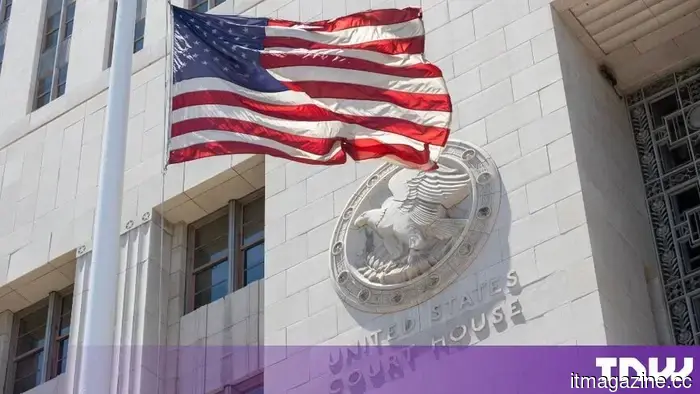
A US court has recently allowed thousands of lawsuits related to social media harm to move forward.
A US appeals court has permitted thousands of lawsuits against major social media companies concerning the harm done to young people to advance to trial, marking a significant reduction in the legal protection that the tech industry has depended on for years. On August 10, 2026, a three-judge panel from the Ninth Circuit Court of Appeals dismissed attempts by Meta and TikTok to have these claims dismissed, and their reasoning may change how courts address this sector.
The central issue revolves around Section 230 of the Communications Decency Act, which has historically shielded online platforms from being held liable for user-generated content. Judge Jacqueline Nguyen, in a 24-page opinion for the panel, asserted that the statute provides "a defense against liability, not blanket immunity from being sued." This nuanced distinction is significant, as it implies that the companies can no longer rely on an early dismissal of the claims.
The decision allows legal actions to continue against Meta, TikTok (owned by ByteDance), Snap (owner of Snapchat), and Google’s YouTube. Plaintiffs claim that these companies intentionally designed their products to be addictive and detrimental to youth, evaded parental controls, and enabled minors to access harmful content. While these remain allegations and the companies deny any wrongdoing—asserting that their platforms are inherently safe and that the responsibility for any harms lies elsewhere—the ruling is crucial because Section 230 has been the go-to defense for the tech industry in nearly every legal challenge.
By interpreting the law as a defense that can be raised during trials rather than as an automatic barrier to lawsuits, the court limits a protection that has previously led to dismissals without substantive evidence being presented. This ruling does not eliminate the defense entirely, but it compels companies to confront the claims substantively.
Prior to this decision, there was already an increasing momentum: in March 2026, a jury found Meta and YouTube negligent and liable, awarding $3 million in damages to a plaintiff who claimed that social media addiction led to depression, anxiety, and body dysmorphic disorder, with an additional $3 million suggested as punitive damages. TikTok and Snap settled before that trial commenced, indicating that some defendants preferred financial settlements over the risk of an adverse verdict.
The pressure on these companies is expected to continue. A separate trial against Meta, focusing on allegations that it used children's data to maintain user engagement, is scheduled to begin on August 14, 2026. Along with the recent appeals decision, this suggests that the months ahead will put the tech industry's arguments to the test in open court, before juries, after years of attempts to keep such issues out of legal proceedings.
This situation does not exist in a vacuum. Lawmakers and regulators globally are becoming increasingly concerned about the impact of social media on children. In the US, there has already been movement towards a kids' online safety package in Congress, while local disputes have ended in settlements that surpass even the budgets of school districts. Europe has adopted a more restrictive approach, with governments willing to establish strict age limits, such as Greece prohibiting under-15s from social media, and ongoing discussions in the UK about an under-16 ban, indicating a waning tolerance for self-regulation by tech firms.
Given this context, the Ninth Circuit's decision appears less like an isolated case and more like a continuation of a broader trend. For the companies involved, the immediate repercussion is increased exposure; cases they anticipated resolving swiftly will now advance, revealing internal documents during discovery, and potentially leading juries—rather than judges—to determine whether their design choices violated legal standards. While the allegations remain unproven and Section 230 still offers a legitimate defense, it seems the period in which that statute effectively halted conversations about accountability is coming to an end.
Other articles
 Volkswagen has just enhanced the Atlas Cross Sport with increased power, additional features, and a stronger personality.
The revamped 2027 Atlas Cross Sport from Volkswagen features a more athletic appearance, a truly premium interior, and an enhanced engine, with availability in showrooms early next year.
Volkswagen has just enhanced the Atlas Cross Sport with increased power, additional features, and a stronger personality.
The revamped 2027 Atlas Cross Sport from Volkswagen features a more athletic appearance, a truly premium interior, and an enhanced engine, with availability in showrooms early next year.
 Bios Life exits stealth mode with $25 million in funding and a partnership with Tempus for cancer monitoring.
Bios Life has come out of stealth mode with $25 million in funding and a partnership with Tempus to develop continuous, AI-driven cancer monitoring for individuals at high risk and survivors.
Bios Life exits stealth mode with $25 million in funding and a partnership with Tempus for cancer monitoring.
Bios Life has come out of stealth mode with $25 million in funding and a partnership with Tempus to develop continuous, AI-driven cancer monitoring for individuals at high risk and survivors.
 Google is experimenting with a homepage that prioritizes AI, and it seems that the Search button is becoming less prominent.
Seen in Chrome, Edge, and Comet, Google's updated homepage design replaces the classic Search button with three AI-centric shortcuts.
Google is experimenting with a homepage that prioritizes AI, and it seems that the Search button is becoming less prominent.
Seen in Chrome, Edge, and Comet, Google's updated homepage design replaces the classic Search button with three AI-centric shortcuts.
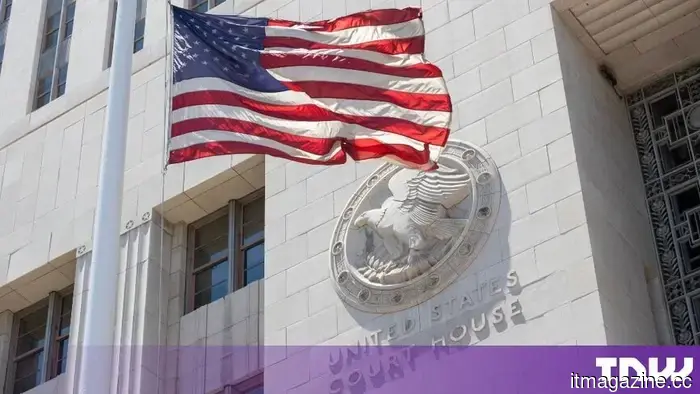 A US court has just allowed thousands of lawsuits related to social media harm to move forward.
The Ninth Circuit determined that Section 230 serves as a defense rather than providing total immunity, allowing youth-addiction lawsuits against Meta, TikTok, Snap, and YouTube to proceed to trial.
A US court has just allowed thousands of lawsuits related to social media harm to move forward.
The Ninth Circuit determined that Section 230 serves as a defense rather than providing total immunity, allowing youth-addiction lawsuits against Meta, TikTok, Snap, and YouTube to proceed to trial.
 AquaNab secures funding to combat the $4 billion sea lice issue affecting salmon using alpaca nanoantibodies.
AquaNab is working on alpaca-based nanoantibodies that are administered via fish feed to combat sea lice, presenting a more environmentally friendly option compared to the chemical and mechanical methods currently used for delousing in salmon farms.
AquaNab secures funding to combat the $4 billion sea lice issue affecting salmon using alpaca nanoantibodies.
AquaNab is working on alpaca-based nanoantibodies that are administered via fish feed to combat sea lice, presenting a more environmentally friendly option compared to the chemical and mechanical methods currently used for delousing in salmon farms.
 Six major financial institutions are supporting Nvidia's $500 billion initiative to finance the expansion of AI.
Nvidia has brought together six prominent figures from the finance sector to develop 'compute financing platforms' that have the potential to leverage more than $500 billion of external capital for AI development.
Six major financial institutions are supporting Nvidia's $500 billion initiative to finance the expansion of AI.
Nvidia has brought together six prominent figures from the finance sector to develop 'compute financing platforms' that have the potential to leverage more than $500 billion of external capital for AI development.
A US court has recently allowed thousands of lawsuits related to social media harm to move forward.
The Ninth Circuit determined that Section 230 serves as a defense rather than providing complete immunity, allowing youth-addiction lawsuits against Meta, TikTok, Snap, and YouTube to proceed to trial.