

Recruiters are utilizing AI avatars to conduct interviews. In response, candidates are sending avatars to participate in these interviews.
Job recruiters are encountering a peculiar new type of candidate: the AI avatar. These digital entities replicate an applicant’s voice and appearance while being entirely different, and they are appearing in initial interviews.
Lana Kersanava, a recruiter based in Sydney, shared with Semafor that she has come across such avatars in the last six months. “At first, it feels like something is not right," she remarked, adding, “It appears very lifelike.”
How she recognized it
The clue was not in the visual rendering, which held up well, but in the responses, which were delivered with an unyielding polish throughout a series of questions. After about five minutes, Kersanava terminated the interview and disqualified the applicant. She has done this three times now.
A notable point
All three avatar candidates had applied for English-speaking positions as non-native speakers, utilizing the technology to mask a deficit in language skills. This situation differs from someone falsely presenting their work experience.
Additionally, this occurs in a hiring environment that is known to exhibit bias. Studies have indicated that recruiters can be up to 19% less likely to engage with job seekers from immigrant and ethnic minority backgrounds compared to equally qualified candidates. While this does not justify the use of undisclosed avatars, it complicates the perception of these candidates as mere frauds.
The system they are responding to
Applicant tracking systems already employ AI to filter resumes before human review, and recruiters are increasingly utilizing AI avatars for first-round interviews. Candidates are now essentially machines responding to machines.
This resulting conflict between AI systems is transforming the hiring process, prompting employers to shift towards live technical demonstrations, scenario challenges, and role-play simulations, which are harder to automate.
Understanding the prevalence
A 2026 Greenhouse report found that 91% of US hiring managers have either encountered or suspected AI-generated responses during online interviews. An analysis of 19,368 live interviews conducted between July 2025 and January 2026 identified that 38.5% of candidates were flagged for AI-assisted behavior.
The trend is clear. Gartner estimates that by 2028, one out of every four job candidate profiles globally will be spurious, including AI-generated profiles, deepfake video interviews, and fabricated employment histories.
The entry barriers are low. Palo Alto Networks discovered that it can take as little as 70 minutes for someone without any image manipulation experience to create a fake candidate capable of passing a video interview.
Employers are reverting to in-person meetings
Seventy-two percent of recruiting leaders now conduct at least one in-person stage specifically to combat AI-assisted fraud, with companies like Google, McKinsey, and Cisco reinstating mandatory face-to-face interview rounds.
This strategy addresses detection but undermines the benefits of remote hiring. Candidates unable to travel, particularly many international applicants whom this technology might appeal to, are the first to lose access.
The screening tools aren’t that effective
There is an uncomfortable assumption underlying the concern, which is that the automated filtering being advocated actually works. The critique against AI resume screening has been stated multiple times, mainly asserting that it prioritizes keyword matching over actual capacity.
Candidates optimizing to bypass this filter with advanced tools is a predictable result rather than a moral failure. Kersanava’s five-minute detection capability also indicates that the current generation of avatars isn't deceiving observant humans.
What’s happening is that the first-round interviews are becoming meaningless for everyone. If a machine evaluates another machine, the interview ceases to gauge anything significant, suggesting the need for a shift in the process rather than just monitoring the candidates.
Other articles
 China has recently filled a gap in chip production that often goes unmentioned. The size of the wafer indicates the distance it still needs to cover.
Hwatsing developed China's inaugural metrology system that is integrated with wafer polishing equipment. The six-inch format falls short compared to advanced logic technologies.
China has recently filled a gap in chip production that often goes unmentioned. The size of the wafer indicates the distance it still needs to cover.
Hwatsing developed China's inaugural metrology system that is integrated with wafer polishing equipment. The six-inch format falls short compared to advanced logic technologies.
 South Africa aims to prohibit firms from relocating stablecoins overseas, while allowing individuals to retain their limits.
Proposed regulations from SARB and the Treasury would prohibit companies from making cross-border cryptocurrency transfers, although individuals would still maintain a R2 million allowance. Exchanges are considering taking legal action.
South Africa aims to prohibit firms from relocating stablecoins overseas, while allowing individuals to retain their limits.
Proposed regulations from SARB and the Treasury would prohibit companies from making cross-border cryptocurrency transfers, although individuals would still maintain a R2 million allowance. Exchanges are considering taking legal action.
 I'm finished charging items that stay on my desk.
Wireless peripherals have improved significantly, yet I wonder why devices that remain on my desk require batteries, pairing procedures, and charging schedules.
I'm finished charging items that stay on my desk.
Wireless peripherals have improved significantly, yet I wonder why devices that remain on my desk require batteries, pairing procedures, and charging schedules.
 Recruiters are utilizing AI avatars to conduct interviews. In response, candidates are now sending their own avatars to participate.
A recruiter in Sydney eliminated three candidates who presented themselves as AI avatars. Gartner predicts that by 2028, one out of every four candidate profiles will be fraudulent.
Recruiters are utilizing AI avatars to conduct interviews. In response, candidates are now sending their own avatars to participate.
A recruiter in Sydney eliminated three candidates who presented themselves as AI avatars. Gartner predicts that by 2028, one out of every four candidate profiles will be fraudulent.
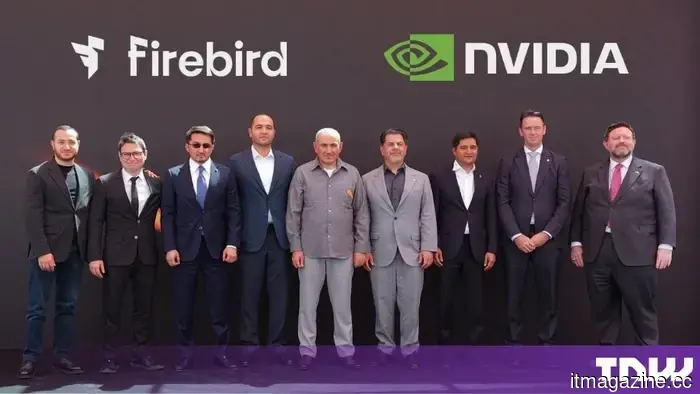 Armenia has recently launched the largest AI factory in the region, made possible by a license signed by Washington.
Firebird launched the largest AI factory in the CIS region in Armenia. The number of GPUs is less important than the export license and the presence of the Kazakh minister in the room.
Armenia has recently launched the largest AI factory in the region, made possible by a license signed by Washington.
Firebird launched the largest AI factory in the CIS region in Armenia. The number of GPUs is less important than the export license and the presence of the Kazakh minister in the room.
 China has recently bridged a gap in chip manufacturing that often goes unnoticed. The size of the wafer indicates how much progress is still needed.
Hwatsing developed China's initial metrology system that is combined with wafer polishing equipment. However, the six-inch format means it falls behind in terms of advanced logic.
China has recently bridged a gap in chip manufacturing that often goes unnoticed. The size of the wafer indicates how much progress is still needed.
Hwatsing developed China's initial metrology system that is combined with wafer polishing equipment. However, the six-inch format means it falls behind in terms of advanced logic.
Recruiters are utilizing AI avatars to conduct interviews. In response, candidates are sending avatars to participate in these interviews.
A recruiter in Sydney rejected three candidates who presented themselves as AI avatars. Gartner predicts that by 2028, one in four candidate profiles will likely be fraudulent.