
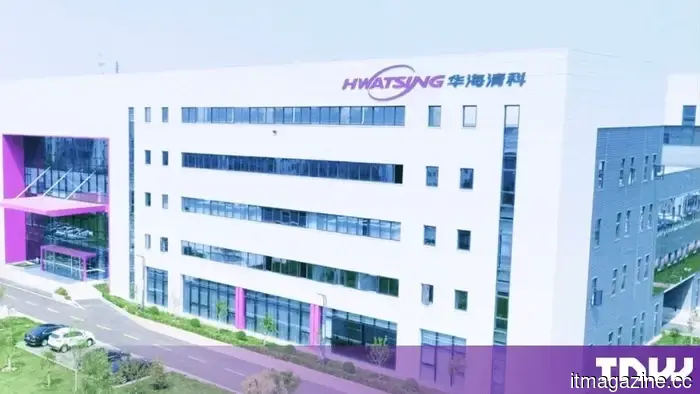
China has recently filled a gap in chip production that often goes unmentioned. The size of the wafer indicates the distance it still needs to cover.
Hwatsing Technology, a prominent manufacturer of chemical mechanical polishing equipment in China, revealed a metrology system for six-inch wafers on Thursday that can be directly integrated into the polishing workflow. The company claims this innovation is the first six-inch metrology system combined with CMP equipment in China.
The key aspect of this development is the integration itself. Instead of measuring wafers separately after processing, this system captures data both before and after polishing, sending real-time information back to the control system, as reported by the South China Morning Post.
The significance of polishing
Chemical mechanical polishing is essential for flattening and smoothing the silicon disc between processing layers. Modern chips encompass multiple layers, and each must be precisely planar to within nanometres; otherwise, the subsequent layer's printing will suffer. Although it seems unremarkable, this process defines yield. Closing the measurement loop should enhance wafer uniformity and reduce waste, which is particularly critical in a country where fabrication plants operate older lithography and require every bit of yield possible.
Details from the announcement
A six-inch wafer equates to 150mm. Cutting-edge logic chips operate on 300mm wafers, and the sub-10nm nodes affected by export controls are not manufactured elsewhere. The 150mm format pertains to mature nodes and compound semiconductors, which are increasingly falling behind. For instance, silicon carbide power devices are transitioning from 150mm to 200mm for volume production, while gallium nitride is advancing from 200mm towards 300mm.
However, this doesn’t diminish the tool's importance. It indicates a progression rather than a significant leap forward.
Hwatsing's achievements
The company's historical performance sends a stronger message. China's CMP equipment market share increased from approximately 1.5% in 2022 to nearly 11% in 2023, with Hwatsing accounting for most of this growth, according to Georgetown’s Center for Security and Emerging Technology.
The volume speaks for itself; Hwatsing delivered its 1,000th CMP system in April and aims to focus on advanced chip manufacturing next. The company is also seeking up to 4 billion yuan (about $552 million) through a private placement to enhance capacity, develop wafer reclamation services, and invest in high-end tool development. Additionally, a separate investment of $237 million in a new plant is underway.
Applied Materials remains a dominant player in the CMP market, with Ebara holding around 27% of the global share. An 11% market presence is meaningful but does not indicate dominance.
The unresolved lithography challenge
Polishing equipment is not the limiting factor. ASML is the sole manufacturer of EUV lithography machines, which China cannot purchase under current US-led export restrictions. This area represents where more significant advancements are occurring. China’s indigenous immersion DUV tool has been named Shanghai Aishengna, and the development of a domestic DUV machine would be far more impactful than a mere metrology upgrade, despite independent analysts expressing skepticism about the reported progress.
Strategic underpinnings
Beijing is focused on closing any gap it can, even while the most challenging one remains unaddressed. Chinese self-sufficiency in semiconductor equipment has reportedly improved to around 35%, up from approximately 25% two years prior. Washington is contemplating further restrictions on chip equipment sales, with Beijing contending that cutting the supply chain harms all parties involved. Each round of controls has intensified the localization that it was intended to hinder.
The anticipated success
China has demonstrated its ability to establish a world-class chip company in segments where tools are accessible. Memory manufacturer CXMT surged 466% at its Shanghai debut, becoming the most valuable listed DRAM company in the nation.
Demand is on the rise. Apple has commenced testing CXMT memory chips, which represents a notable validation for a Chinese chip producer. However, CXMT still relies on foreign equipment that isn’t always guaranteed. This dependence is exactly what tools like Hwatsing’s aim to mitigate, addressing each process step incrementally—a slower approach than a significant breakthrough but more challenging to sanction.
Other articles
 I'm finished charging items that stay on my desk.
Wireless peripherals have improved significantly, yet I wonder why devices that remain on my desk require batteries, pairing procedures, and charging schedules.
I'm finished charging items that stay on my desk.
Wireless peripherals have improved significantly, yet I wonder why devices that remain on my desk require batteries, pairing procedures, and charging schedules.
 Educators in Hong Kong are advocating for a ban on social media for individuals under 16. However, the government has stated that it does not intend to introduce legislation on this matter.
Educators and a lawmaker in Hong Kong have called for legislation to prohibit social media access for individuals under 16. A survey indicates that 62% of residents are in favor of this measure. However, the government has stated that it will not pursue legislation at this time.
Educators in Hong Kong are advocating for a ban on social media for individuals under 16. However, the government has stated that it does not intend to introduce legislation on this matter.
Educators and a lawmaker in Hong Kong have called for legislation to prohibit social media access for individuals under 16. A survey indicates that 62% of residents are in favor of this measure. However, the government has stated that it will not pursue legislation at this time.
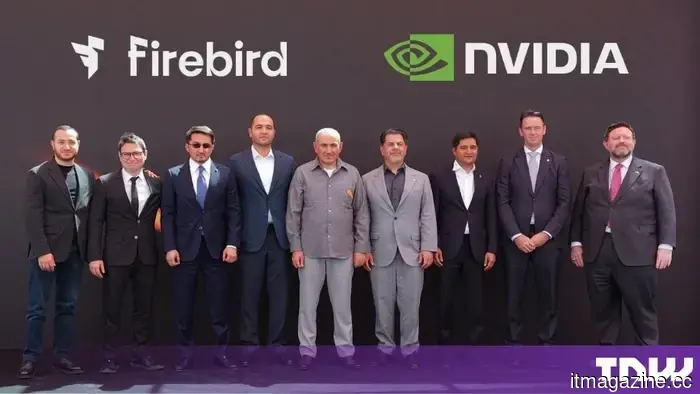 Armenia has recently launched the largest AI factory in the region, made possible by a license signed by Washington.
Firebird launched the largest AI factory in the CIS region in Armenia. The number of GPUs is less important than the export license and the presence of the Kazakh minister in the room.
Armenia has recently launched the largest AI factory in the region, made possible by a license signed by Washington.
Firebird launched the largest AI factory in the CIS region in Armenia. The number of GPUs is less important than the export license and the presence of the Kazakh minister in the room.
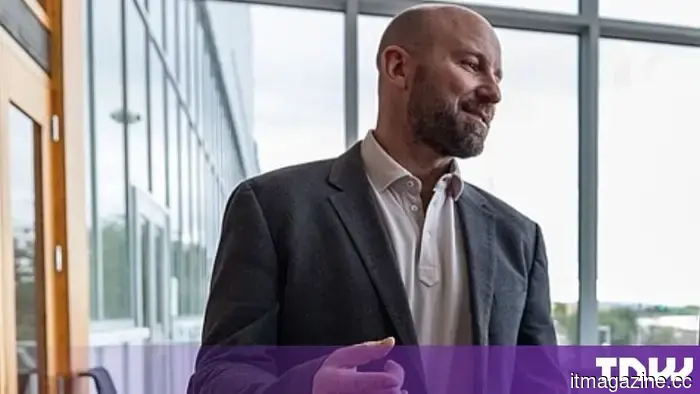 Meta's CTO advised employees to refrain from requesting additional time off and to utilize the benefits of AI to create "cooler stuff" instead.
Meta's CTO, Andrew Bosworth, informed employees that the productivity benefits from AI should be directed towards creating additional products rather than extended vacations. He described the inquiry as "very dumb."
Meta's CTO advised employees to refrain from requesting additional time off and to utilize the benefits of AI to create "cooler stuff" instead.
Meta's CTO, Andrew Bosworth, informed employees that the productivity benefits from AI should be directed towards creating additional products rather than extended vacations. He described the inquiry as "very dumb."
 China's latest AI challenge isn't related to chips; it's the depletion of Chinese-language training data.
Chinese represents only 1.3% of the total content on the internet. Beijing is now regarding data as critical infrastructure and has a plan to develop national AI datasets by 2028.
China's latest AI challenge isn't related to chips; it's the depletion of Chinese-language training data.
Chinese represents only 1.3% of the total content on the internet. Beijing is now regarding data as critical infrastructure and has a plan to develop national AI datasets by 2028.
 Concealed code within ChatGPT’s Android application indicates that OpenAI is developing a feature for direct export of stickers to WhatsApp.
An APK teardown has discovered code for a feature labeled "Add to WhatsApp" in ChatGPT, which would enable users to create stickers from text prompts and export them directly. This feature is not currently active.
Concealed code within ChatGPT’s Android application indicates that OpenAI is developing a feature for direct export of stickers to WhatsApp.
An APK teardown has discovered code for a feature labeled "Add to WhatsApp" in ChatGPT, which would enable users to create stickers from text prompts and export them directly. This feature is not currently active.
China has recently filled a gap in chip production that often goes unmentioned. The size of the wafer indicates the distance it still needs to cover.
Hwatsing developed China's inaugural metrology system that is integrated with wafer polishing equipment. The six-inch format falls short compared to advanced logic technologies.