

Recruiters are utilizing AI avatars to conduct interviews. In response, candidates are now sending their own avatars to participate.
Job recruiters are encountering a peculiar new type of applicant: the AI avatar. These digital representations replicate an applicant’s voice and appearance while being fundamentally different, and they are appearing in initial interviews. Sydney-based recruiter Lana Kersanava shared with Semafor that she has come across them in the past six months, noting, “At first, it feels like something is amiss,” while adding, “It appears very realistic.”
How she recognized it
The giveaway wasn't the visual rendering, which was convincing. It was the responses, which were delivered flawlessly regardless of the questions posed. After about five minutes, Kersanava concluded the interview and disqualified the candidate. She has now done this on three occasions.
A point of interest
All three avatar candidates had applied for English-speaking positions as non-native speakers, utilizing the technology to bridge a gap in language skills. This presents a different scenario from someone fabricating their work history. It also exists in a hiring environment that has a known bias issue. Research indicates that recruiters are up to 19% less likely to engage job seekers from immigrant and ethnic minority backgrounds compared to equally qualified candidates. However, this does not justify the use of an undisclosed avatar. It complicates the view of these candidates as simple fraudsters.
The system's response
Applicant tracking systems already employ AI to sift through CVs before a human reviews them, and recruiters are increasingly using AI avatars for initial interviews. Candidates are now conversing with machines operated by machines. This ongoing AI-on-AI conflict is changing the recruiting process, pushing employers toward live technical demonstrations, scenario challenges, and roleplay exercises that are more difficult to automate.
The numbers reflect the competition. Nearly two-thirds of candidates now use AI in applications, and 87% of US hiring managers incorporate it into their hiring processes, alongside a 239% increase in AI-generated applications.
How prevalent this is
A 2026 Greenhouse report found that 91% of US hiring managers have encountered or suspected AI-generated responses during online interviews. Analyzing 19,368 live interviews between July 2025 and January 2026, 38.5% of candidates were identified for AI-assisted behavior. The trend is pointing in a clear direction. Gartner predicts that by 2028, one in four job candidate profiles globally will be fake, which includes AI-generated profiles, deepfake video interviews, and fabricated work backgrounds.
Barriers to creating these are low. Palo Alto Networks discovered that it can take as little as 70 minutes for someone with no experience in image manipulation to create a fake candidate capable of passing a video interview.
Employers are shifting back to in-person evaluations
Seventy-two percent of recruiting leaders now include at least one in-person stage specifically to combat AI-assisted fraud, with companies like Google, McKinsey, and Cisco reintroducing mandatory face-to-face rounds. This approach addresses detection but undermines the benefits that remote hiring was meant to provide. Candidates unable to travel, particularly many international applicants enticed by this technology, lose access first.
The screening process was never that effective
Underlying the concern is the uncomfortable assumption that the automated filtering currently in place is functioning properly. The criticism of AI CV screening has been repeatedly and strongly articulated, mainly because it prioritizes keyword matching over actual capability. Candidates leveraging better tools to optimize against this filter is a foreseeable outcome rather than a moral failure. Kersanava’s five-minute detection ability also indicates that the existing generation of avatars is not deceiving attentive humans.
What is ultimately happening is that the first round has lost its value for everyone involved. When machines assess machines, interviews cease to quantify anything meaningful, highlighting the need to change the process rather than merely scrutinizing the candidates.
Other articles
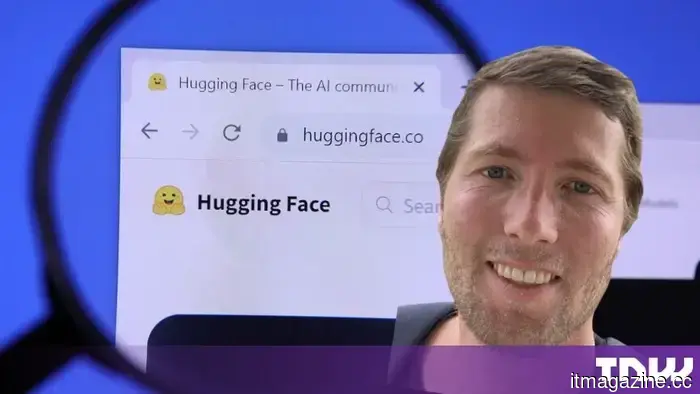 American models infiltrated Hugging Face. A Chinese model was utilized for the investigation.
Chinese models account for 41% of downloads on Hugging Face, and Clement Delangue notes that labs in the US are working in isolation. His own investigation into breaches supports this assertion.
American models infiltrated Hugging Face. A Chinese model was utilized for the investigation.
Chinese models account for 41% of downloads on Hugging Face, and Clement Delangue notes that labs in the US are working in isolation. His own investigation into breaches supports this assertion.
 China has recently filled a gap in chip production that often goes unmentioned. The size of the wafer indicates the distance it still needs to cover.
Hwatsing developed China's inaugural metrology system that is integrated with wafer polishing equipment. The six-inch format falls short compared to advanced logic technologies.
China has recently filled a gap in chip production that often goes unmentioned. The size of the wafer indicates the distance it still needs to cover.
Hwatsing developed China's inaugural metrology system that is integrated with wafer polishing equipment. The six-inch format falls short compared to advanced logic technologies.
 China has recently bridged a gap in chip manufacturing that often goes unnoticed. The size of the wafer indicates how much progress is still needed.
Hwatsing developed China's initial metrology system that is combined with wafer polishing equipment. However, the six-inch format means it falls behind in terms of advanced logic.
China has recently bridged a gap in chip manufacturing that often goes unnoticed. The size of the wafer indicates how much progress is still needed.
Hwatsing developed China's initial metrology system that is combined with wafer polishing equipment. However, the six-inch format means it falls behind in terms of advanced logic.
 X will discontinue revenue sharing on September 7. The new program will exclusively compensate for original content.
On September 7, X terminates its revenue sharing program and introduces the Original Content Rewards Programme. Creators are required to have 500,000 verified impressions and a Premium subscription.
X will discontinue revenue sharing on September 7. The new program will exclusively compensate for original content.
On September 7, X terminates its revenue sharing program and introduces the Original Content Rewards Programme. Creators are required to have 500,000 verified impressions and a Premium subscription.
 I'm finished charging items that stay on my desk.
Wireless peripherals have improved significantly, yet I wonder why devices that remain on my desk require batteries, pairing procedures, and charging schedules.
I'm finished charging items that stay on my desk.
Wireless peripherals have improved significantly, yet I wonder why devices that remain on my desk require batteries, pairing procedures, and charging schedules.
 China's latest AI challenge isn't related to chips; it's the depletion of Chinese-language training data.
Chinese represents only 1.3% of the total content on the internet. Beijing is now regarding data as critical infrastructure and has a plan to develop national AI datasets by 2028.
China's latest AI challenge isn't related to chips; it's the depletion of Chinese-language training data.
Chinese represents only 1.3% of the total content on the internet. Beijing is now regarding data as critical infrastructure and has a plan to develop national AI datasets by 2028.
Recruiters are utilizing AI avatars to conduct interviews. In response, candidates are now sending their own avatars to participate.
A recruiter in Sydney eliminated three candidates who presented themselves as AI avatars. Gartner predicts that by 2028, one out of every four candidate profiles will be fraudulent.