

China's latest AI challenge isn't related to chips; it's the depletion of Chinese-language training data.
TL;DR: China is experiencing a significant shortage of AI data. Chinese content makes up only 1.3% of web content, while English constitutes 49%. Beijing aims to establish national datasets by 2028, but platforms like WeChat and Douyin do not share their data with external parties. Publishers are imposing bans on the use of their content for AI training.
China's AI development faces a new limitation, not related to chips. The nation is running low on high-quality Chinese-language training data. While US restrictions on advanced semiconductors have dominated discussions about China's AI abilities, experts within China are increasingly cautioning that data scarcity might be an equally significant obstacle, and unlike chips, there is no hardware alternative. According to internet tracker W3Techs, Chinese content represents merely 1.3% of global web material, whereas English accounts for nearly half, with Spanish at 6% and Japanese at 5%.
This issue is global but has a more severe impact on China. Epoch AI projects that the global supply of high-quality, publicly accessible text could be depleted within six years. OpenAI co-founder Andrej Karpathy has highlighted the potential for a “data wall” by the end of the decade. Chinese developers are already spending more per useful token than their Western counterparts since their models must operate with less native-language content. The digital environment in China exacerbates the data shortage: platforms such as WeChat and Douyin do not share information with third-party developers, forcing AI labs to rely on lower-quality resources for training.
In response, Beijing is treating data as crucial infrastructure. In June, the National Data Administration announced a plan to create validated AI training datasets nationwide by 2028, encompassing sectors like manufacturing, energy, healthcare, finance, agriculture, autonomous driving, and embodied AI. Yu Xiaohui, president of the state-affiliated China Academy of Information and Communications Technology, stated, “Competition in the AI era involves not just models and computing power, but also high-quality data supply systems.” Tsinghua University computer scientist Sun Maosong has called on authorities to digitize historical records, ancient texts, scientific literature, and regional dialects.
However, not everyone is eager to digitize. Huaxia Publishing House recently included a disclaimer on a new translation: “Using the content of this book for artificial intelligence training is prohibited. Violators will be held legally accountable.” China is increasingly concerned about American AI models it cannot compete with, and the data shortage partly accounts for this disparity. The US has initiatives like Anthropic’s Project Panama, which involved purchasing and destroying millions of physical books for digitization. In contrast, China, with 1.3% of the web, has a publishing sector that is beginning to close off access.

Other articles
 Educators in Hong Kong are advocating for a ban on social media for individuals under 16. However, the government has stated that it does not intend to introduce legislation on this matter.
Educators and a lawmaker in Hong Kong have called for legislation to prohibit social media access for individuals under 16. A survey indicates that 62% of residents are in favor of this measure. However, the government has stated that it will not pursue legislation at this time.
Educators in Hong Kong are advocating for a ban on social media for individuals under 16. However, the government has stated that it does not intend to introduce legislation on this matter.
Educators and a lawmaker in Hong Kong have called for legislation to prohibit social media access for individuals under 16. A survey indicates that 62% of residents are in favor of this measure. However, the government has stated that it will not pursue legislation at this time.
 Another Googlebook has recently appeared online, and this one is from Asus.
Asus has become the most recent significant PC manufacturer to have a Googlebook model available online, following previously noticed versions from Lenovo and Dell ahead of IFA.
Another Googlebook has recently appeared online, and this one is from Asus.
Asus has become the most recent significant PC manufacturer to have a Googlebook model available online, following previously noticed versions from Lenovo and Dell ahead of IFA.
 I'm finished charging items that stay on my desk.
Wireless peripherals have improved significantly, yet I wonder why devices that remain on my desk require batteries, pairing procedures, and charging schedules.
I'm finished charging items that stay on my desk.
Wireless peripherals have improved significantly, yet I wonder why devices that remain on my desk require batteries, pairing procedures, and charging schedules.
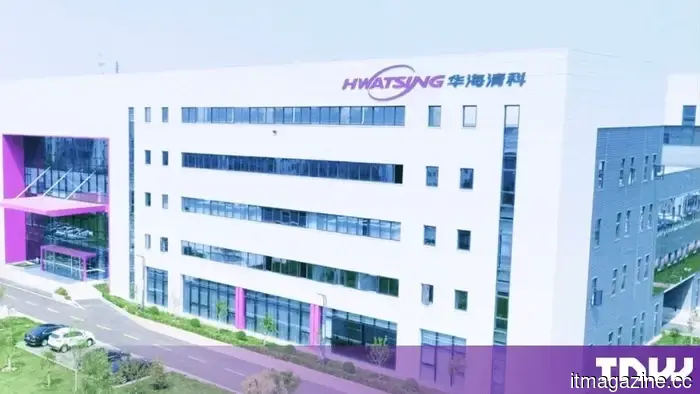 China has recently filled a gap in chip production that often goes unmentioned. The size of the wafer indicates the distance it still needs to cover.
Hwatsing developed China's inaugural metrology system that is integrated with wafer polishing equipment. The six-inch format falls short compared to advanced logic technologies.
China has recently filled a gap in chip production that often goes unmentioned. The size of the wafer indicates the distance it still needs to cover.
Hwatsing developed China's inaugural metrology system that is integrated with wafer polishing equipment. The six-inch format falls short compared to advanced logic technologies.
 South Africa aims to prohibit firms from relocating stablecoins overseas, while allowing individuals to retain their limits.
Proposed regulations from SARB and the Treasury would prohibit companies from making cross-border cryptocurrency transfers, although individuals would still maintain a R2 million allowance. Exchanges are considering taking legal action.
South Africa aims to prohibit firms from relocating stablecoins overseas, while allowing individuals to retain their limits.
Proposed regulations from SARB and the Treasury would prohibit companies from making cross-border cryptocurrency transfers, although individuals would still maintain a R2 million allowance. Exchanges are considering taking legal action.
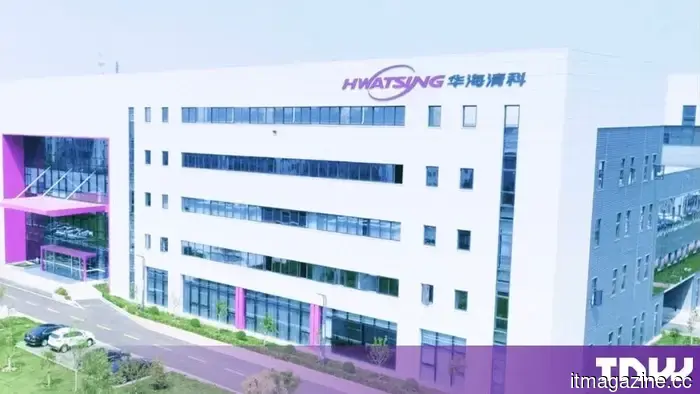 China has recently bridged a gap in chip manufacturing that often goes unnoticed. The size of the wafer indicates how much progress is still needed.
Hwatsing developed China's initial metrology system that is combined with wafer polishing equipment. However, the six-inch format means it falls behind in terms of advanced logic.
China has recently bridged a gap in chip manufacturing that often goes unnoticed. The size of the wafer indicates how much progress is still needed.
Hwatsing developed China's initial metrology system that is combined with wafer polishing equipment. However, the six-inch format means it falls behind in terms of advanced logic.
China's latest AI challenge isn't related to chips; it's the depletion of Chinese-language training data.
Chinese represents only 1.3% of the total content on the internet. Beijing is now regarding data as critical infrastructure and has a plan to develop national AI datasets by 2028.