
The Pixel 11 is just around the corner, but I'm even more thrilled about what it might bring with it.
It’s August, which signifies one important thing for those who keep even a slight eye on smartphones: new Pixel devices are on the horizon. Google is set to hold its upcoming Made by Google event on August 12, and this year, we anticipate a robust lineup of phones. Expected on stage are the Pixel 11, Pixel 11 Pro, Pixel 11 Pro XL, and Pixel 11 Pro Fold. This lineup mirrors last year's four-phone setup, but the real intrigue lies in what has changed internally. With the usual enhancements in camera technology, new hardware, and various AI features that Google may introduce, there promises to be much discussion.
However, the phones may not be the only highlight. Google is rumored to have additional announcements planned, potentially making this one of its largest hardware events of the year. If you're planning to tune in, here’s when the Made by Google event starts, how to watch it, and everything we expect Google to unveil.
Google’s Pixels are ready to shine
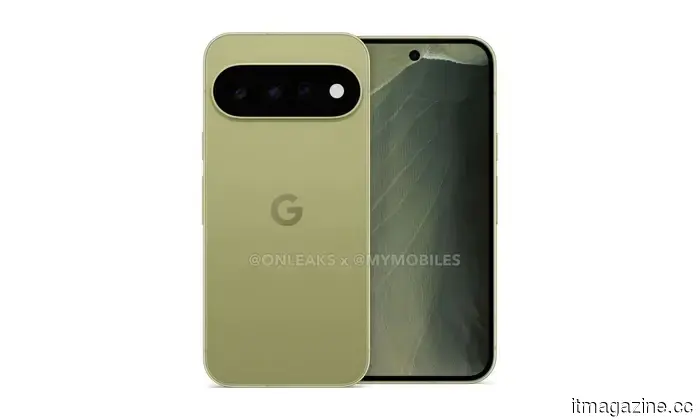
First on the agenda, likely the primary draw for viewers, is the Pixel 11 series. By this point, Google might not have many surprises left for us. The phones have been extensively leaked over recent months, and if these leaks hold true, those expecting a significant redesign might need to manage their expectations. From what we’ve gathered thus far, Google seems set to continue with the design style it established with the Pixel 10 series. This isn’t necessarily a negative — I personally appreciate the current Pixel aesthetics. Nonetheless, the Pixel 11 series probably won’t feature those distinguishable upgrades that are immediately noticeable from a distance. There is one new feature that might give it a unique edge, however. Google has hinted at a new light integrated into the camera bar, reportedly named HiLight or Pixel Glow. It seems to draw inspiration from Gemini’s colorful visual design and may light up during interactions with Gemini or while waiting for the AI to process. I'm more intrigued about its further functionalities beyond AI; envision various colors indicating notifications, battery status, timers, or incoming calls. If Google allows developers access to it, that little light could greatly enhance user utility.
Pixel 11 MyMobiles x OnLeaks
The more significant updates are expected to happen internally. The Pixel 11 lineup is anticipated to be powered by Google’s new Tensor G6 chip, replacing last year's Tensor G5. A more powerful processor is always welcome, but my interest lies less in raw power. Having used recent Pixel devices extensively, I’m keen to see how the G6 performs under actual usage conditions — taking photos and videos, using mobile data for navigation, switching between apps, or simply operating in hot weather. Improved thermal management would mean much more to me than just an attractive benchmark score. Battery life and charging are high on my priority list too. With Samsung finally adopting silicon-carbon battery technology and faster charging in its Galaxy Z Fold 8 series, I hope to see Google follow suit instead of playing it safe for another generation. A phone can boast a plethora of AI features, but they lose their appeal when you find yourself searching for a charger halfway through the day. Pricing is another crucial aspect. Android Headlines has reported that the Pixel 11 Pro could start at $1,099 in the US and €1,199 in Europe. If true, that would indicate a $100 increase for the US model compared to the Pixel 10 Pro, which launched at $999. The rumored color options include Dune, Light Fog, Midnight Haze, and Pine, although these names may not be final. With Google’s event just days away, I wouldn’t take any leaked pricing or names as definitive. We won't have to wait long to learn the actual price of the Pixel 11 series — and more importantly, whether Google has done enough this year to justify a higher price.
Finally, a Pixel for your keys
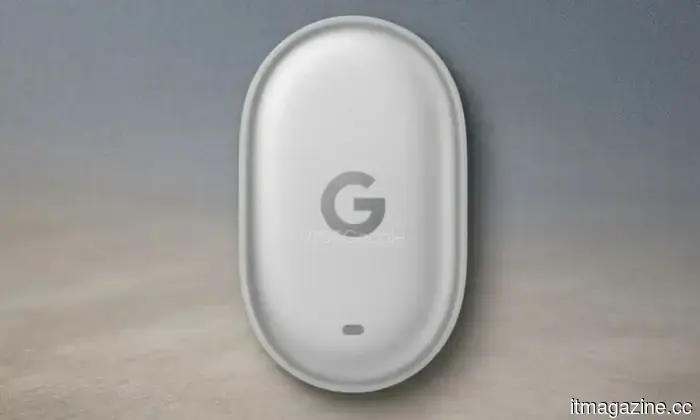
Next up is the announcement I’m most eager about: the Pixel Tag. Google has surprisingly gone this long without introducing its own Bluetooth tracker, but if the recent leak shared by 9to5Google is accurate, that may finally change at this upcoming event. Honestly, it’s about time. Apple has had AirTags for years, Samsung has its SmartTag series with a third-generation model supposedly on the way, while Pixel users have largely relied on third-party alternatives. A dedicated Pixel Tag could finally address this clear gap in Google’s hardware ecosystem.
9to5Google
The leaked tracker has an elongated design and is expected to integrate with Google’s Find Hub network, allowing nearby Android devices to assist in locating lost items anonymously. The feature I’m hoping will be included is Ultra-Wideband, as it could provide the Pixel Tag with more precise directional finding when near a misplaced object — making the search for keys lost around the house considerably less frustrating. One slightly amusing design aspect, however, is that the Pixel Tag reportedly won’t have a built-in lanyard hole, suggesting
Other articles
 NavVis secured €73.7 million to develop the spatial data infrastructure that factories require prior to implementing AI.
NavVis, based in Munich, secured €73.7 million in Series D funding to expand its spatial twin platform. The company has scanned over 1 billion square meters of industrial space, with customers including BMW, VW, Toyota, Siemens, and BASF.
NavVis secured €73.7 million to develop the spatial data infrastructure that factories require prior to implementing AI.
NavVis, based in Munich, secured €73.7 million in Series D funding to expand its spatial twin platform. The company has scanned over 1 billion square meters of industrial space, with customers including BMW, VW, Toyota, Siemens, and BASF.
 NavVis secured €73.7 million to develop the spatial data layer essential for factories to implement AI.
NavVis, located in Munich, secured €73.7 million in Series D funding to expand its spatial twin platform. The company has scanned over 1 billion square meters of industrial space. Its customer base includes BMW, VW, Toyota, Siemens, and BASF.
NavVis secured €73.7 million to develop the spatial data layer essential for factories to implement AI.
NavVis, located in Munich, secured €73.7 million in Series D funding to expand its spatial twin platform. The company has scanned over 1 billion square meters of industrial space. Its customer base includes BMW, VW, Toyota, Siemens, and BASF.
 Bill Ackman shares Jeff Bezos' view: the most effective way to make a positive impact on the world is to create something that is functional.
Ackman asserts that capitalism addresses issues more effectively than philanthropy. His newly established Brain Research Institute utilizes nonprofit funding to develop for-profit enterprises.
Bill Ackman shares Jeff Bezos' view: the most effective way to make a positive impact on the world is to create something that is functional.
Ackman asserts that capitalism addresses issues more effectively than philanthropy. His newly established Brain Research Institute utilizes nonprofit funding to develop for-profit enterprises.
 NavVis secured €73.7M to develop the spatial data layer essential for factories prior to implementing AI.
NavVis, located in Munich, secured €73.7M in a Series D funding round to expand its spatial twin platform. The company has scanned over 1 billion square meters of industrial space, with customers including BMW, VW, Toyota, Siemens, and BASF.
NavVis secured €73.7M to develop the spatial data layer essential for factories prior to implementing AI.
NavVis, located in Munich, secured €73.7M in a Series D funding round to expand its spatial twin platform. The company has scanned over 1 billion square meters of industrial space, with customers including BMW, VW, Toyota, Siemens, and BASF.
 Bill Ackman shares Jeff Bezos' view that the most effective way to contribute to the world is to create something that is functional.
Ackman claims that capitalism addresses issues more effectively than philanthropy. His new Brain Research Institute employs nonprofit funding to create for-profit enterprises.
Bill Ackman shares Jeff Bezos' view that the most effective way to contribute to the world is to create something that is functional.
Ackman claims that capitalism addresses issues more effectively than philanthropy. His new Brain Research Institute employs nonprofit funding to create for-profit enterprises.
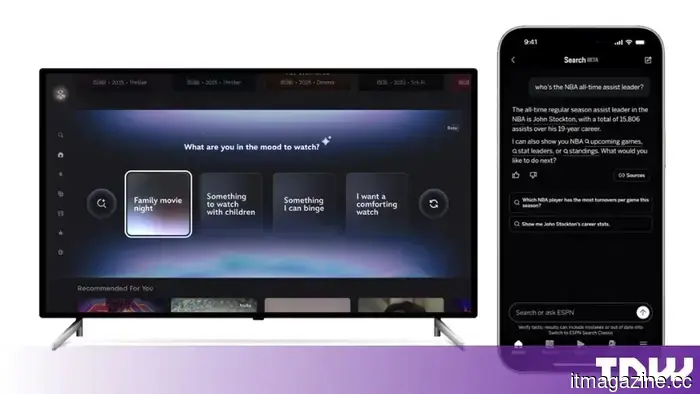 Disney+ and ESPN are experimenting with AI-driven search functionality that allows users to articulate their desires using everyday language.
Disney+ and ESPN are currently in the beta phase of testing AI search functionalities. ESPN utilizes years of data to provide answers to sports-related inquiries. Meanwhile, Disney+ offers show recommendations based on users' moods rather than solely on their viewing history.
Disney+ and ESPN are experimenting with AI-driven search functionality that allows users to articulate their desires using everyday language.
Disney+ and ESPN are currently in the beta phase of testing AI search functionalities. ESPN utilizes years of data to provide answers to sports-related inquiries. Meanwhile, Disney+ offers show recommendations based on users' moods rather than solely on their viewing history.
The Pixel 11 is just around the corner, but I'm even more thrilled about what it might bring with it.
The Pixel 11 will be the main attraction on August 12, but it might not be the highlight of the event. With a long-anticipated Pixel Tag, along with watches, laptops, and smart glasses, Google may have a lot more to reveal.