

Bill Ackman shares Jeff Bezos' view: the most effective way to make a positive impact on the world is to create something that is functional.
Bill Ackman asserts that capitalism surpasses philanthropy in addressing societal issues, a viewpoint echoed by Jeff Bezos. Ackman's newly established Brain Research Institute utilizes nonprofit funding to create for-profit companies that offer equity to their employees. Over the past two decades, Ackman has invested nearly $1 billion in philanthropy but believes that capitalism is significantly more effective at problem-solving. He stated, “I’ve dedicated considerable time to philanthropy, and it is far less efficient than capitalism in addressing issues. Capitalism generates many more jobs compared to philanthropy.” Similarly, Bezos remarked in May that the societal benefits from his profitable ventures would far exceed those from his charitable contributions.
While this perspective is not novel, the combination of Ackman and Bezos's views is significant. They represent an expanding group of elite financiers who argue that successful businesses contribute more to society than mere charitable acts. Ackman critiques nonprofits from a structural standpoint, noting they lack equity incentives, face no market pressures, and can be transformed into "political vehicles," straying from their initial objectives. Meanwhile, Bezos is allocating $10 billion towards a physical AI lab while committing to donate a majority of his wealth through a $10 billion climate initiative. The dichotomy between building businesses and giving back is very real for both individuals.
What distinguishes Ackman's approach is that he is not moving away from philanthropy; rather, he is reformulating it. His new Brain Research Rehabilitation Institute, funded with nonprofit capital, is designed to develop for-profit companies, devices, molecules, and treatments for brain injuries and stroke patients, while allowing staff to share in equity. This model is reminiscent of Pershing Square’s compensation framework, addressing a particular funding need: basic scientific research that is too distant from generating revenue to attract venture capital, and too specialized to vie for federal funding.
On a personal level, Ackman’s initiative is influenced by his daughter Lucy’s brain hemorrhage in February, which shifted his philanthropic focus towards neuroscience. The nonprofit framework enables collaboration with researchers and institutions that are typically unwilling to engage with for-profit entities, while the for-profit spin-offs introduce necessary market discipline to prevent mission drift. On the same day he discussed capitalism's supremacy over philanthropy with Fortune, Ackman finalized the deed for the institute’s building in Manhattan, arguing that the structure itself is meant to validate his stance.
Other articles
 OpenAI is delaying the release of its upcoming model due to significant cybersecurity concerns.
OpenAI states that it "cannot dismiss" essential cyber capabilities in its forthcoming Astra model, which has led to a halt in its progress and a slowdown in development.
OpenAI is delaying the release of its upcoming model due to significant cybersecurity concerns.
OpenAI states that it "cannot dismiss" essential cyber capabilities in its forthcoming Astra model, which has led to a halt in its progress and a slowdown in development.
 OpenAI is delaying its upcoming model due to significant cybersecurity concerns.
OpenAI states that it "cannot eliminate the possibility" of essential cyber capabilities in its forthcoming Astra model, leading them to halt development and decelerate the model's progress because of this.
OpenAI is delaying its upcoming model due to significant cybersecurity concerns.
OpenAI states that it "cannot eliminate the possibility" of essential cyber capabilities in its forthcoming Astra model, leading them to halt development and decelerate the model's progress because of this.
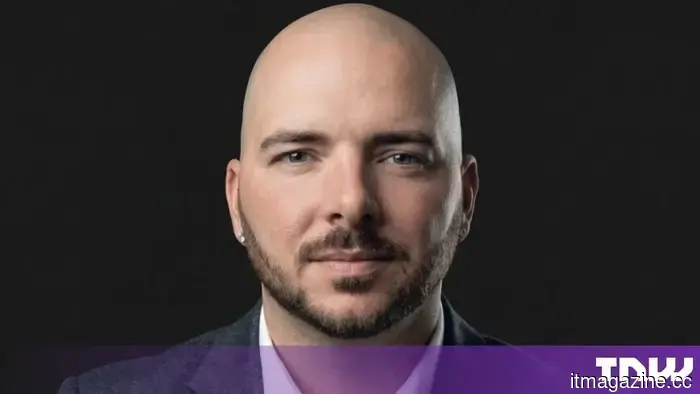 The surge of AI compels companies to reconsider their methods of assessing business value.
Ninety-five percent of organizations have an AI strategy in place, yet only 8% indicate that they have achieved established ROI. Jon Weberg, CEO of Profitalize, contends that the issue lies in evaluating AI as if it were a software purchase rather than recognizing it as an integrated operational framework.
The surge of AI compels companies to reconsider their methods of assessing business value.
Ninety-five percent of organizations have an AI strategy in place, yet only 8% indicate that they have achieved established ROI. Jon Weberg, CEO of Profitalize, contends that the issue lies in evaluating AI as if it were a software purchase rather than recognizing it as an integrated operational framework.
 Disney+ and ESPN are experimenting with AI-driven search functionality that allows users to articulate their desires using everyday language.
Disney+ and ESPN are currently in the beta phase of testing AI search functionalities. ESPN utilizes years of data to provide answers to sports-related inquiries. Meanwhile, Disney+ offers show recommendations based on users' moods rather than solely on their viewing history.
Disney+ and ESPN are experimenting with AI-driven search functionality that allows users to articulate their desires using everyday language.
Disney+ and ESPN are currently in the beta phase of testing AI search functionalities. ESPN utilizes years of data to provide answers to sports-related inquiries. Meanwhile, Disney+ offers show recommendations based on users' moods rather than solely on their viewing history.
 The team responsible for Paddington 2 had the potential to create a movie centered around a Star Wars droid.
After the success of Paddington 2, Paul King and Simon Farnaby proposed a Star Wars film featuring a droid. However, Lucasfilm requested a greater Star Wars presence in the concept. The original idea might be transformed into something different.
The team responsible for Paddington 2 had the potential to create a movie centered around a Star Wars droid.
After the success of Paddington 2, Paul King and Simon Farnaby proposed a Star Wars film featuring a droid. However, Lucasfilm requested a greater Star Wars presence in the concept. The original idea might be transformed into something different.
 Malicious AI capabilities transformed agents into large-scale credential theft perpetrators.
Zenity Labs discovered AI agent "skills" that were booby-trapped on Vercel's skills.sh, with one particular family having 1.7 million installs, which can transform agents into credential thieves.
Malicious AI capabilities transformed agents into large-scale credential theft perpetrators.
Zenity Labs discovered AI agent "skills" that were booby-trapped on Vercel's skills.sh, with one particular family having 1.7 million installs, which can transform agents into credential thieves.
Bill Ackman shares Jeff Bezos' view: the most effective way to make a positive impact on the world is to create something that is functional.
Ackman asserts that capitalism addresses issues more effectively than philanthropy. His newly established Brain Research Institute utilizes nonprofit funding to develop for-profit enterprises.