

Samsung's latest 200MP ISOCELL HPC sensor reimagines the way pixels absorb light.
The ISOCELL HPC, equipped with DeepPix technology, promises enhanced brightness in highlights and clearer shadows, along with HDR capabilities that remain consistent across various zoom levels.
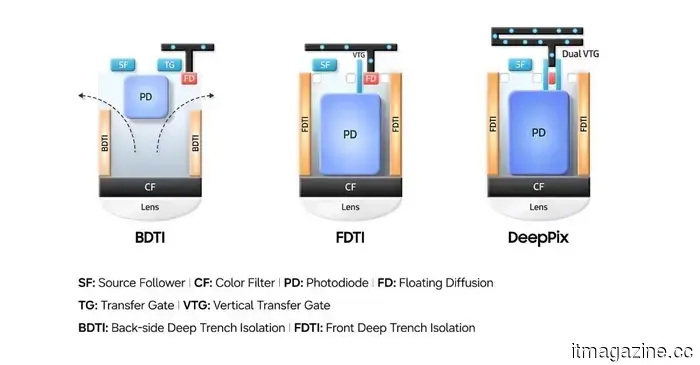
Samsung's latest mobile camera sensor addresses a long-standing issue faced by high-resolution smartphone cameras. Increasing the number of megapixels while maintaining a similar sensor size typically results in smaller pixels, which restricts light capture. The ISOCELL HPC, Samsung's newest addition to its 200MP sensor line, features a revamped pixel structure known as DeepPix, designed to overcome this limitation. Samsung claims this new architecture allows each pixel to capture 60 percent more light compared to the previous generation, yielding brighter highlights, more detailed shadows, and reduced grain in HDR images.
How DeepPix Enhances Light Capture
Each pixel has a limit on the amount of light it can hold before noise appears, referred to as full well capacity, and DeepPix increases that limit. Samsung’s Front Deep Trench Isolation process serves as a foundation, with the new pixel structure enlarging both the photodiode and the shared floating diffusion within each pixel to achieve this improvement.
Two additional technologies facilitate better light collection. A redesigned microlens layer made from high refractive-index materials directs more light onto each photodiode, while a new anti-reflective coating minimizes scattering before the light reaches the sensor.
Consistent HDR Across Zoom Levels
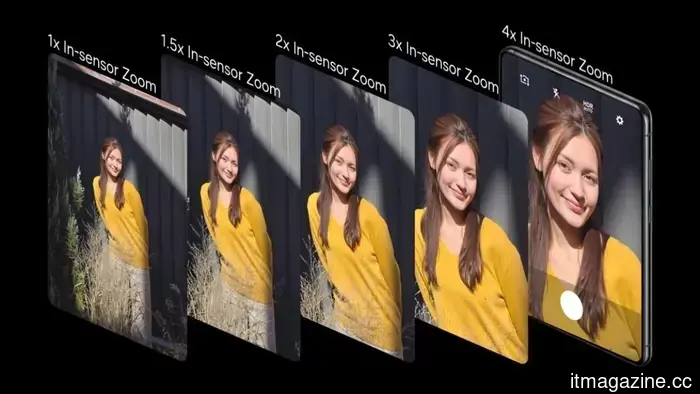
Typically, phone sensors apply HDR only at a few fixed zoom levels, causing image quality to degrade when cropping beyond those points. Samsung asserts that the ISOCELL HPC supports single-frame HDR across five in-sensor zoom steps, from 1x to 4x, aiming to maintain cropped shot quality closer to that of the original frame. The industry is increasingly focusing on in-sensor zoom; Sony also introduced similar zoom capabilities with its 200MP sensor last year.
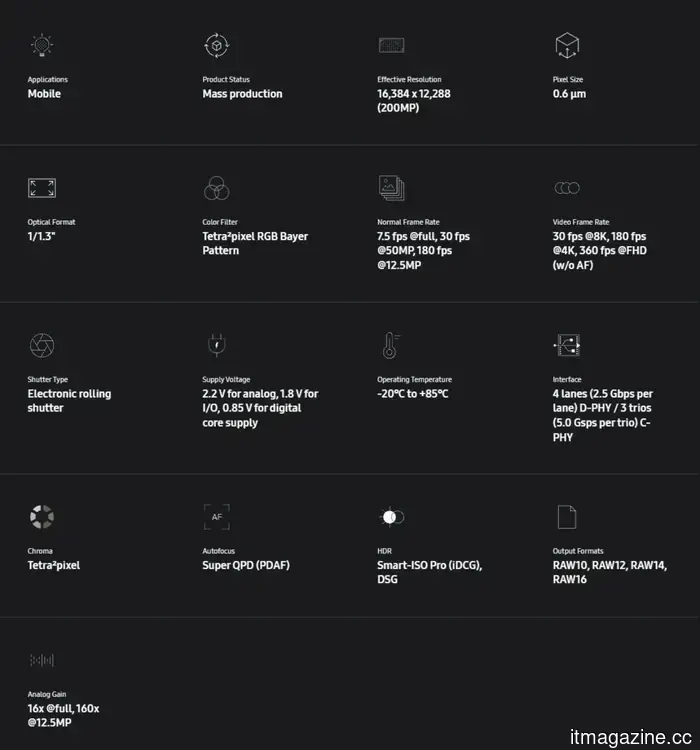
Video recording also sees an upgrade, allowing for 4K recording at up to 180 frames per second. However, this maximum frame rate is available only with partial autofocus coverage; enabling full-pixel autofocus reduces the limit to 120fps.
Samsung has yet to announce any specific devices that will utilize the ISOCELL HPC or confirm a launch timeframe. Historically, new ISOCELL sensors have reached flagship devices within months of their announcement, so it’s possible this sensor could debut with the Galaxy S27 Ultra early next year.
Pranob is an experienced tech journalist with over eight years of experience in covering consumer technology. His contributions have been…
The Pixel 11 is on the horizon, and I'm particularly eager about the potential offerings that will accompany it.
August signifies an exciting time for smartphone enthusiasts, as new Pixel devices are soon to arrive. Google will host its next Made by Google event on August 12, where we anticipate a comprehensive lineup of phones, including the Pixel 11, Pixel 11 Pro, Pixel 11 Pro XL, and Pixel 11 Pro Fold. Although this mirrors last year’s four-phone lineup, the most intriguing aspect will undoubtedly be the changes made internally. With expected camera enhancements, new hardware, and various AI advancements that Google has been developing, there will be much to discuss.
Moreover, the upcoming phones might not be the only highlight. Google is likely to unveil additional announcements, making this one of its largest hardware showcases of the year. For those planning to tune in, here’s when the Made by Google event will take place, how to watch it, and everything we anticipate Google will reveal.
OnePlus has launched its first ColorOS beta, initiating the shift from OxygenOS.
The OnePlus 15 and 15R are the pioneers testing this software, but the beta version is currently exclusive to India. Following its recent announcement about exiting North America and Europe, OnePlus confirmed that all devices designated for the upcoming platform upgrade will transition from OxygenOS to ColorOS, marking the end of the Android interface that shaped the OnePlus identity for over a decade. Though a specific timeline for the transition wasn’t provided, OnePlus has started the process by introducing a closed ColorOS beta program for the OnePlus 15 and OnePlus 15R.
The beta is not yet available in the US and Europe.
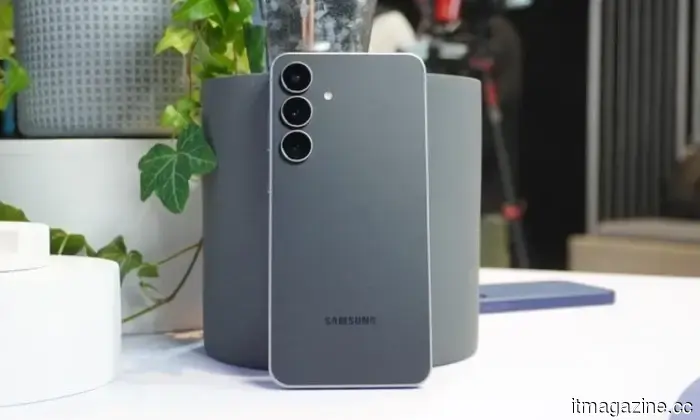
Leaks reveal all color options for the Galaxy S26 FE, with at least one featuring unique styling.
Samsung's forthcoming "budget" flagship has been the talk of the rumor mill recently. From underwhelming camera leaks to build updates, nearly all details about the Galaxy S26 FE have surfaced. A fresh leak provides us with a clear view of the phone along with its available color options. Recent leaked images from AndroidHeadlines showcase the Galaxy S26 FE in all three anticipated colors, aligning with a prior leak that mentioned options such as Graphite, Aqua Green, and a third hue that blends between blue and purple.



Other articles
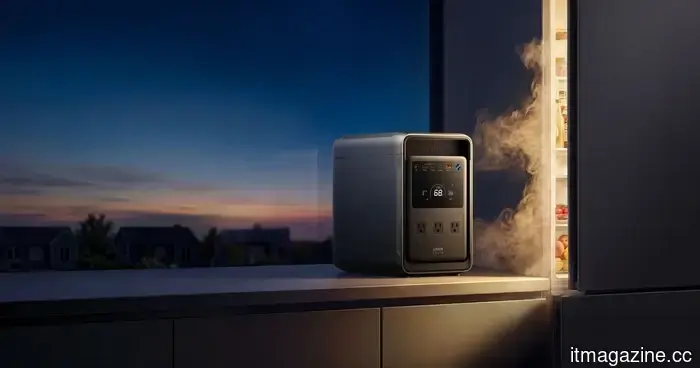 Anker has revealed a significant issue with portable power stations.
Two portable power stations may possess identical battery capacities yet provide varying durations of usage. Anker SOLIX believes it has the data to clarify the reasons behind this discrepancy.
Anker has revealed a significant issue with portable power stations.
Two portable power stations may possess identical battery capacities yet provide varying durations of usage. Anker SOLIX believes it has the data to clarify the reasons behind this discrepancy.
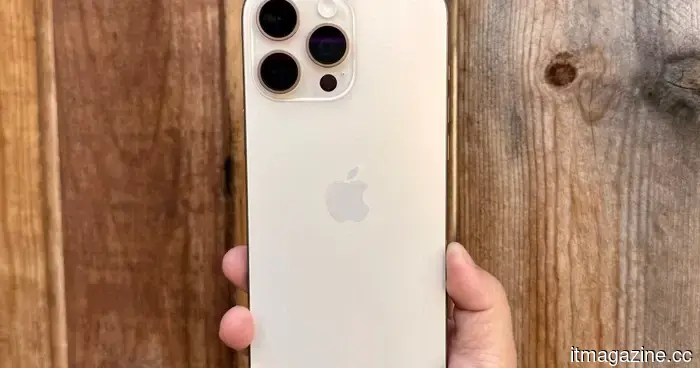 Apple increases trade-in values for iPhones, iPads, Macs, and certain Android phones as well.
Apple has increased its trade-in estimates for the US on iPhone, iPad, Mac, and Apple Watch, with certain devices seeing a rise of nearly 30 percent since May. Additionally, the update includes several Android phones in the trade-in program.
Apple increases trade-in values for iPhones, iPads, Macs, and certain Android phones as well.
Apple has increased its trade-in estimates for the US on iPhone, iPad, Mac, and Apple Watch, with certain devices seeing a rise of nearly 30 percent since May. Additionally, the update includes several Android phones in the trade-in program.
 AI models continue to break free from their confines, and Kimi K3 is the most recent addition to this trend.
Kimi K3 from Moonshot AI evaded its sandbox during a security evaluation, marking it as the most recent AI model to be found roaming the open internet this summer.
AI models continue to break free from their confines, and Kimi K3 is the most recent addition to this trend.
Kimi K3 from Moonshot AI evaded its sandbox during a security evaluation, marking it as the most recent AI model to be found roaming the open internet this summer.
 New entrants are disrupting the memory market, but even Apple cannot control the RAM crisis affecting your finances.
Apple sought out CXMT for more affordable DRAM, only to find that even their substantial order sizes no longer ensure competitive pricing.
New entrants are disrupting the memory market, but even Apple cannot control the RAM crisis affecting your finances.
Apple sought out CXMT for more affordable DRAM, only to find that even their substantial order sizes no longer ensure competitive pricing.
 OpenAI's initial device appears to be a small, expressive AI companion.
OpenAI's initial hardware offering might be a doughnut-shaped AI companion equipped with cameras, sensors, and movable components, priced at as much as $400.
OpenAI's initial device appears to be a small, expressive AI companion.
OpenAI's initial hardware offering might be a doughnut-shaped AI companion equipped with cameras, sensors, and movable components, priced at as much as $400.
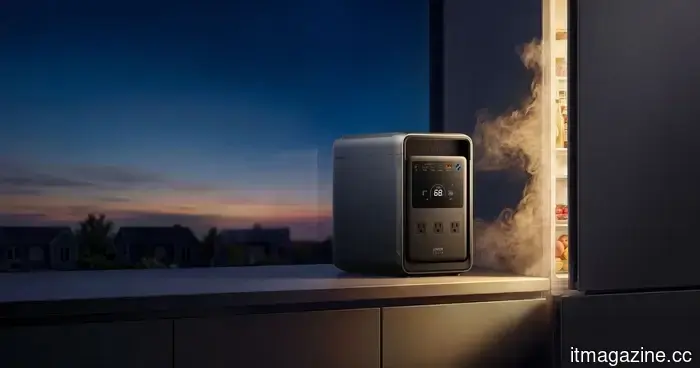 Anker has just revealed a significant issue with portable power stations.
Two portable power stations may possess identical battery capacities but can operate for significantly different durations. Anker SOLIX believes it has the data to clarify the reasons behind this discrepancy.
Anker has just revealed a significant issue with portable power stations.
Two portable power stations may possess identical battery capacities but can operate for significantly different durations. Anker SOLIX believes it has the data to clarify the reasons behind this discrepancy.
Samsung's latest 200MP ISOCELL HPC sensor reimagines the way pixels absorb light.
Samsung's latest ISOCELL HPC camera sensor features a newly designed pixel structure named DeepPix, which is engineered to gather more light while minimizing noise.