
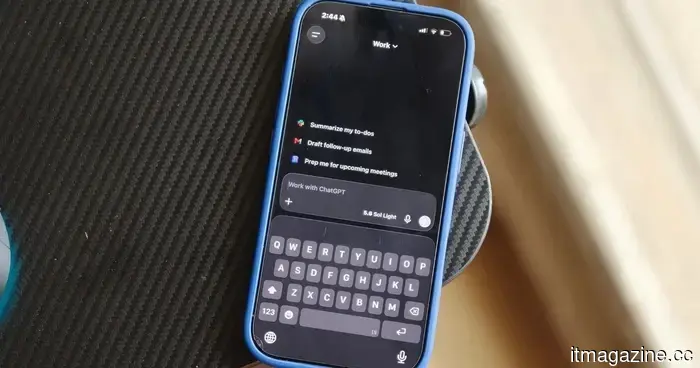
Since switching to ChatGPT Voice, typing has become incredibly slow.
You already know the routine: it’s a new day, which means I've discovered yet another way to incorporate ChatGPT into my daily life. This time, it revolves around Voice. I've been utilizing ChatGPT's voice mode almost everywhere possible. It began on my phone, then progressed to my laptop and desktop, and yes, I’ve even found myself chatting with it through Apple CarPlay while driving. What started as an occasional use has now become a regular part of my routine.
The timing has been perfect, too. OpenAI recently launched GPT-Live, its next-generation voice experience engineered to sound more natural and engage in conversations more intelligently. After spending so much time typing various prompts, the ability to speak to ChatGPT is refreshingly different. It’s quicker, more conversational, and honestly, it provides a nice break for my fingers.
Finally, my thoughts have found a receptive audience.
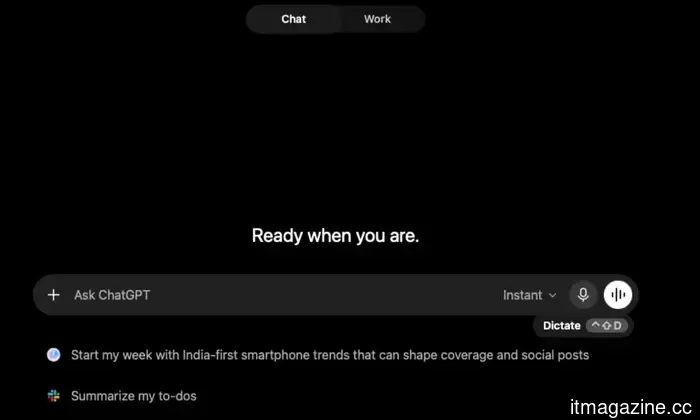
I’m quite talkative, so developing a feature based on conversation was a bold move. Recently, I opened ChatGPT on my laptop, casually said “hi,” and before I knew it, I was rambling about anything and everything on my mind. I didn’t even start with a proper conversation; I began speaking, and ChatGPT patiently listened to what can only be described as an unfiltered stream of consciousness. This is precisely why I’ve come to love it. Whenever an idea pops up, I don’t have to search for a notes app or rush to type before it slips away. I just open ChatGPT, start talking, and it diligently transcribes everything I say. And I truly mean everything — the “ums,” the awkward pauses, the incomplete thoughts, and the moments I completely lose my train of thought. Somehow, it still manages to make sense of it all.
Shimul Sood / Digital Trends
However, the experience goes beyond basic transcription. It feels like brainstorming with someone who is always ready to listen. I can share half-formed ideas, change topics, interrupt, or ask follow-up questions, and the conversation flows smoothly. Since there are different voices to choose from, I can even select one that feels most comfortable, making the entire experience a bit more personal. Then there's ChatGPT on Apple CarPlay, which is both amazing and somewhat ridiculous. On one hand, it’s truly beneficial. Long drives transform into brainstorming sessions where I can think aloud, float ideas, or discuss whatever is on my mind without taking my hands off the wheel. On the other hand, I sometimes catch myself having an extended conversation with an AI in my car and think, Well… this is my life now. It genuinely feels as if someone is sitting in the passenger seat, happily engaging with every random thought that crosses my mind.
I dictated chaos; it supplied clarity.
OpenAI has also advanced the experience further by placing ChatGPT Voice at the core of productivity. If you're willing to grant the necessary permissions, it can even draft emails while you speak. Instead of typing each sentence, you express your thoughts, indicate you'd like to create an email, and begin talking. Naturally, I wanted to test this out. I granted access and spoke as I normally would, with incomplete sentences, random interruptions, the occasional “wait, let me rephrase that,” and all the other quirks that come with speaking rather than typing. Despite my somewhat imperfect delivery, ChatGPT managed to compile everything into a well-crafted email that required minimal editing. It somehow filtered out the chaos and kept the message coherent, which genuinely impressed me.
Shimul Sood / Digital Trends
Experiences like this make ChatGPT feel like the assistant I’ve always wanted by my side. However, I still tread carefully when it comes to allowing AI access to work-related emails. It’s not that I distrust the technology — I just prefer having an additional pair of eyes on professional communications before they’re sent out. But if you're comfortable letting AI handle more tasks, this feature is capable and definitely worth trying.
My keyboard is now officially out of work.
These days, ChatGPT Voice is the first thing I turn to whenever an idea strikes me. In fact, I've reached a point where I type significantly less than I used to, and honestly, both my brain and fingers are thankful for it. Rather than trying to condense an idea into a few well-chosen sentences, I can express my thoughts exactly as they come to me. That’s the most significant change I’ve noticed. When typing, you naturally begin to edit yourself. You remove words, rewrite sentences, and spend more time figuring out how to articulate something than actually saying it. Speaking doesn’t operate that way. Your tone, excitement, hesitation, and even those little “wait, that’s not what I meant” moments come through naturally. Somehow, ChatGPT still comprehends the message you're trying to convey, even if you don’t express it perfectly.
Shimul Sood / Digital Trends
For me, this has been a total

Other articles
 Microsoft is training AI to identify the hidden bottlenecks within Windows 11.
Microsoft is integrating AI assistants with Windows' sophisticated performance-analysis tools, aiding engineers in examining CPU spikes, memory issues, driver complications, and various factors that contribute to slow PCs.
Microsoft is training AI to identify the hidden bottlenecks within Windows 11.
Microsoft is integrating AI assistants with Windows' sophisticated performance-analysis tools, aiding engineers in examining CPU spikes, memory issues, driver complications, and various factors that contribute to slow PCs.
 Minecraft is arriving on Switch 2, and even the Creepers are looking better.
Minecraft will be available natively on Nintendo Switch 2 this October, featuring improved lighting, enhanced shadows, a new Mario pack, and an upgrade option for current Switch users.
Minecraft is arriving on Switch 2, and even the Creepers are looking better.
Minecraft will be available natively on Nintendo Switch 2 this October, featuring improved lighting, enhanced shadows, a new Mario pack, and an upgrade option for current Switch users.
 Review of the Huawei FreeBuds Pro 5: By far the best value earbuds I've tried in quite some time.
The Huawei FreeBuds Pro 5 are priced lower than what Apple and Sony typically ask for premium audio quality, yet they outshine their competitors with impressive sound performance and a host of additional features.
Review of the Huawei FreeBuds Pro 5: By far the best value earbuds I've tried in quite some time.
The Huawei FreeBuds Pro 5 are priced lower than what Apple and Sony typically ask for premium audio quality, yet they outshine their competitors with impressive sound performance and a host of additional features.
 Bose has unveiled the second generation of its QuietComfort Headphones, which incorporate some features from the Ultra model.
Bose's latest QuietComfort headphones feature TrueSpatial audio, lossless USB-C playback, enhanced noise cancellation, and a revamped design, priced at $359.
Bose has unveiled the second generation of its QuietComfort Headphones, which incorporate some features from the Ultra model.
Bose's latest QuietComfort headphones feature TrueSpatial audio, lossless USB-C playback, enhanced noise cancellation, and a revamped design, priced at $359.
 Huawei FreeBuds Pro 5 review: Without a doubt, the most impressive budget earbuds I've tried recently.
The Huawei FreeBuds Pro 5 are priced lower than what Apple and Sony typically ask for high-quality audio, yet they surpass their competitors with impressive sound quality and numerous additional benefits.
Huawei FreeBuds Pro 5 review: Without a doubt, the most impressive budget earbuds I've tried recently.
The Huawei FreeBuds Pro 5 are priced lower than what Apple and Sony typically ask for high-quality audio, yet they surpass their competitors with impressive sound quality and numerous additional benefits.
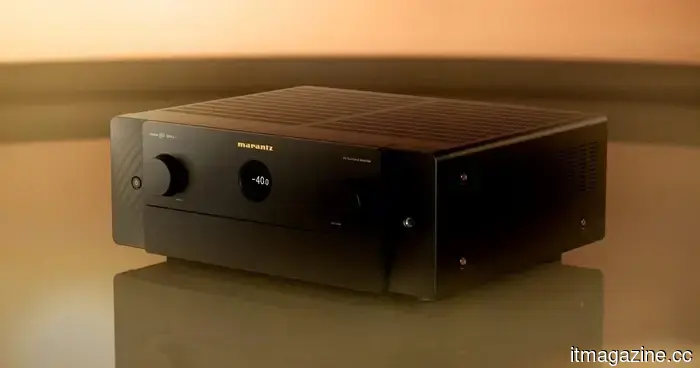 Marantz enhances its CINEMA Series 2 by introducing a new DAC, implementing Dirac Live, and improving gaming compatibility.
Marantz's latest CINEMA Series 2 receivers feature a reimagined DAC, enhanced Dirac Live room correction, and gaming-friendly FreeSync support across four different models.
Marantz enhances its CINEMA Series 2 by introducing a new DAC, implementing Dirac Live, and improving gaming compatibility.
Marantz's latest CINEMA Series 2 receivers feature a reimagined DAC, enhanced Dirac Live room correction, and gaming-friendly FreeSync support across four different models.
Since switching to ChatGPT Voice, typing has become incredibly slow.
I began conversing with ChatGPT out of curiosity. Now my keyboard takes more breaks than I do.