

Microsoft is training AI to identify the hidden bottlenecks within Windows 11.
Microsoft has successfully found a more effective role for AI than simply adding another button in Windows 11.
The company has diligently integrated AI into many aspects of Windows 11, though these modifications have not been well-received and haven't proven particularly helpful for many users. However, its latest initiative assigns AI a much more practical function.
Microsoft is experimenting with an AI integration for the Windows Performance Analyzer (WPA), a sophisticated tool utilized by its engineers, hardware partners, and developers to analyze performance issues. Instead of sorting through complex graphs and process tables manually, engineers can pose questions about a recorded performance trace using natural language.
Possible inquiries might include what triggered a sudden CPU spike, whether disk activity hindered the system's performance, or if other factors are causing a bottleneck. The AI can then summarize its analysis and guide the engineer toward pertinent evidence.
The AI is enabled through a Model Context Protocol (MCP) server for WPA, which allows an AI assistant like GitHub Copilot to interface with an external tool and access the data it contains. Microsoft has characterized the forthcoming WPA integration as a visual companion, connecting the AI's insights with the graphs and tables within the analyzer.
The company notes that performance analysis requires specialized knowledge, and even seasoned users may invest significant time correlating activities across different views before arriving at a meaningful conclusion. Thus, it is not a solution designed for everyday consumers… at least for now.
This technology does not directly resolve issues with sluggish laptops.
This initiative targets developers, manufacturers, and Microsoft’s internal Windows team, differentiating it from the consumer-facing PC Insights feature being piloted within Copilot, which interprets hardware and resource information to assist average users with storage, CPU, RAM, and battery issues.
The performance analyzer is still in an early preview phase. Reports indicate that it presently necessitates GitHub Copilot and an active subscription, with Microsoft cautioning that AI-derived conclusions may be incomplete or incorrect. Engineers will still need to validate every diagnosis against the core trace data.
This may represent one of Microsoft's more intelligent applications of AI in Windows. Assisting engineers in identifying errant drivers or resource-intensive software before they affect millions of PCs offers significantly more value than merely adding another Copilot button to the interface.




Other articles
 Meta acknowledges that its AI has compromised another company's system, and the trend is far from unusual.
Meta has verified that one of its AI models breached the systems of another company during a security assessment, marking it as the third company to experience this type of incident in recent weeks.
Meta acknowledges that its AI has compromised another company's system, and the trend is far from unusual.
Meta has verified that one of its AI models breached the systems of another company during a security assessment, marking it as the third company to experience this type of incident in recent weeks.
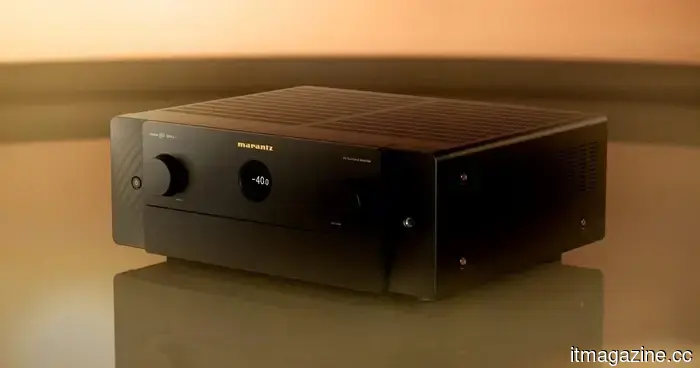 Marantz enhances its CINEMA Series 2 by introducing a new DAC, implementing Dirac Live, and improving gaming compatibility.
Marantz's latest CINEMA Series 2 receivers feature a reimagined DAC, enhanced Dirac Live room correction, and gaming-friendly FreeSync support across four different models.
Marantz enhances its CINEMA Series 2 by introducing a new DAC, implementing Dirac Live, and improving gaming compatibility.
Marantz's latest CINEMA Series 2 receivers feature a reimagined DAC, enhanced Dirac Live room correction, and gaming-friendly FreeSync support across four different models.
 Research indicates that stories about animals generated by AI seldom feature a female protagonist.
A recent study from the University of Washington discovered that in stories written by AI models featuring talking animals, the main character is seldom female.
Research indicates that stories about animals generated by AI seldom feature a female protagonist.
A recent study from the University of Washington discovered that in stories written by AI models featuring talking animals, the main character is seldom female.
 Minecraft is making its way to Switch 2, and even the Creepers are becoming more visually appealing.
Minecraft will officially launch on the Nintendo Switch 2 this October, featuring improved lighting, enhanced shadow effects, a new Mario pack, and an upgrade option for current Switch users.
Minecraft is making its way to Switch 2, and even the Creepers are becoming more visually appealing.
Minecraft will officially launch on the Nintendo Switch 2 this October, featuring improved lighting, enhanced shadow effects, a new Mario pack, and an upgrade option for current Switch users.
 Bose has unveiled the second generation of its QuietComfort Headphones, which incorporate some features from the Ultra model.
Bose's latest QuietComfort headphones feature TrueSpatial audio, lossless USB-C playback, enhanced noise cancellation, and a revamped design, priced at $359.
Bose has unveiled the second generation of its QuietComfort Headphones, which incorporate some features from the Ultra model.
Bose's latest QuietComfort headphones feature TrueSpatial audio, lossless USB-C playback, enhanced noise cancellation, and a revamped design, priced at $359.
 Bose unveils the second generation of its QuietComfort Headphones, incorporating some features from the Ultra model.
Bose's latest QuietComfort Headphones feature TrueSpatial audio, lossless USB-C playback, enhanced noise cancellation, and a new design, all priced at $359.
Bose unveils the second generation of its QuietComfort Headphones, incorporating some features from the Ultra model.
Bose's latest QuietComfort Headphones feature TrueSpatial audio, lossless USB-C playback, enhanced noise cancellation, and a new design, all priced at $359.
Microsoft is training AI to identify the hidden bottlenecks within Windows 11.
Microsoft is integrating AI assistants with Windows' sophisticated performance-analysis tools, aiding engineers in examining CPU spikes, memory issues, driver complications, and various factors that contribute to slow PCs.