

How Forex Traders in the US Can Now Select Their Preferred Platform
For much of retail forex's history, brokers selected the trading software for their clients. You would log into whichever platform was included with your account, and if you were dissatisfied with it, you simply had to accept it. However, that is changing. An increasing number of US-regulated forex brokers now allow you to choose the interface that best suits your trading style. Some traders prefer to navigate through an intuitive chart, while others opt to code a bot or automate a strategy that operates while they rest.
The Shift from One Platform to Three
Previously, having a choice of interfaces meant selecting a broker. If you wanted the charting tools of TradingView paired with the automation features of MetaTrader, you would either need to maintain two accounts or switch brokers entirely. Nowadays, some brokers offer multiple access points to the same account, allowing flexibility in your workflow. Still, the availability and functionality of these features can vary between brokers, meaning not all platforms provide the same capabilities.
OANDA is a prime example of this shift. As one of the few brokers regulated to serve US retail forex traders, it has been in operation since 1996. Currently, it allows a single account to connect to MetaTrader 4, TradingView, or a direct API. Here's how these three options generally differ, along with their respective costs and trade-offs.
MetaTrader 4 for Automated Strategies
Launched over 20 years ago, MetaTrader 4 remains a popular choice for traders looking to automate their strategies, primarily due to its Expert Advisor system. This feature enables small programs to execute and manage trades on your behalf. Given the long-standing use of MT4, there is a vast library of available Expert Advisors and a lively community that has addressed most common beginner issues.
Through OANDA, traders can access MT4 via desktop, mobile, and a web-based platform, integrating the broker’s pricing and execution with MT4’s charting capabilities. This setup allows you to run an Expert Advisor on a regulated US account, backtest it with historical data, and utilize familiar order types that MT4 users have relied on for years. There is no minimum deposit required to begin, making the primary investment one of time.
However, MT4 presents a trade-off: Expert Advisors are programmed in MQL4, a language unique to the software. If a trader wants their strategy to be more portable at a later stage, they will eventually need to reprogram it in a different language.
TradingView for Charting and Execution
While MT4 is often associated with automation, TradingView is predominantly used for chart analysis. It is a popular charting platform where many investors analyze market levels and setups. Several brokers, including OANDA, have developed full integrations that enable traders to execute trades directly from TradingView charts without switching between different applications.
Setting it up is straightforward. After opening a chart on TradingView, simply select the broker from the options presented, authorize the connection, and you're ready to trade. OANDA offers access to its forex pairs directly from TradingView through this integration. TradingView serves purely as the front end; pricing and order execution are processed on the broker’s servers, not those of TradingView. Users can place various order types from the chart, adjust stop-loss and target levels with their mouse, and size their positions using a built-in risk calculator before finalizing their trades.
Traders who depend on chart analysis benefit from a streamlined workflow, eliminating the need to toggle between a chart and a separate trading terminal.
APIs for Custom Trading Systems
Both of the above options still rely on a trading platform to connect traders to the market, even with an Expert Advisor in place. A direct API removes that intermediary layer. Developers looking to create their own dashboards, bots, or research pipelines can use an API to read prices, manage orders, and import transaction histories through standard web requests.
For example, OANDA’s US forex API is REST-based and returns standard JSON, allowing developers to create it in any programming language they prefer. It uses a personal access token for authentication and offers a free practice environment with live market data, enabling developers to test their systems before risking real money. This option often represents a logical progression for many traders; they may start with TradingView, transition to Expert Advisors on MT4, and eventually convert their strategies into code when a packaged platform no longer meets their needs.
The Real Cost of Moving Money
A trading platform encompasses more than just features; the costs associated with funding an account and withdrawing money are also crucial, and the fine print often reveals more than the headline figures suggest. Many brokers, including OANDA US Forex API, do not impose a deposit fee, and withdrawals to cards and e-wallets are often free. However, a trader's own bank or card provider may apply additional charges, meaning that "free" on the broker's side might not actually be free overall.
Traders should check for potential fees in advance to prevent unexpected costs later on. Bank
Other articles
 From Brief Visual Moments to Extended Storytelling: AI Video Is Advancing Toward Greater Narrative Complexity
As AI video generation evolves from brief, dynamic visuals to more intricate storytelling, creators require tools that can facilitate multi-scene narratives, maintain character consistency, and support organized workflows. Solutions like CapCut Video Studio Director Mode are being designed to assist creators in managing these aspects within a collaborative creative space. These tools do not serve as a substitute […]
From Brief Visual Moments to Extended Storytelling: AI Video Is Advancing Toward Greater Narrative Complexity
As AI video generation evolves from brief, dynamic visuals to more intricate storytelling, creators require tools that can facilitate multi-scene narratives, maintain character consistency, and support organized workflows. Solutions like CapCut Video Studio Director Mode are being designed to assist creators in managing these aspects within a collaborative creative space. These tools do not serve as a substitute […]
 Bose has unveiled the second generation of its QuietComfort Headphones, which incorporate some features from the Ultra model.
Bose's latest QuietComfort headphones feature TrueSpatial audio, lossless USB-C playback, enhanced noise cancellation, and a revamped design, priced at $359.
Bose has unveiled the second generation of its QuietComfort Headphones, which incorporate some features from the Ultra model.
Bose's latest QuietComfort headphones feature TrueSpatial audio, lossless USB-C playback, enhanced noise cancellation, and a revamped design, priced at $359.
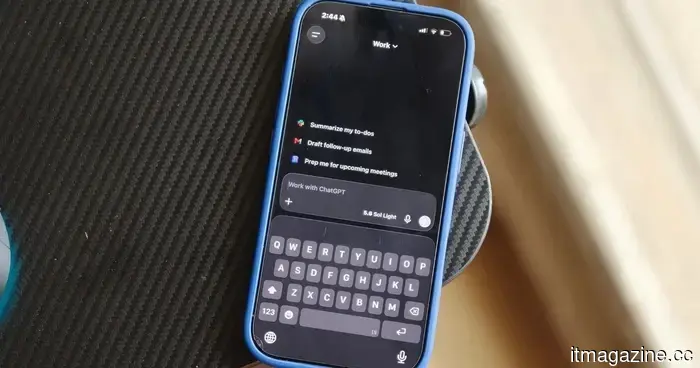 Since switching to ChatGPT Voice, typing has become incredibly slow.
I began conversing with ChatGPT out of curiosity. Now my keyboard takes more breaks than I do.
Since switching to ChatGPT Voice, typing has become incredibly slow.
I began conversing with ChatGPT out of curiosity. Now my keyboard takes more breaks than I do.
 Bose unveils the second generation of its QuietComfort Headphones, incorporating some features from the Ultra model.
Bose's latest QuietComfort Headphones feature TrueSpatial audio, lossless USB-C playback, enhanced noise cancellation, and a new design, all priced at $359.
Bose unveils the second generation of its QuietComfort Headphones, incorporating some features from the Ultra model.
Bose's latest QuietComfort Headphones feature TrueSpatial audio, lossless USB-C playback, enhanced noise cancellation, and a new design, all priced at $359.
 Google Maps is becoming alarmingly effective at organizing your day.
Your upcoming meal, hotel accommodation, or evening out may soon begin with a simple question on Google Maps.
Google Maps is becoming alarmingly effective at organizing your day.
Your upcoming meal, hotel accommodation, or evening out may soon begin with a simple question on Google Maps.
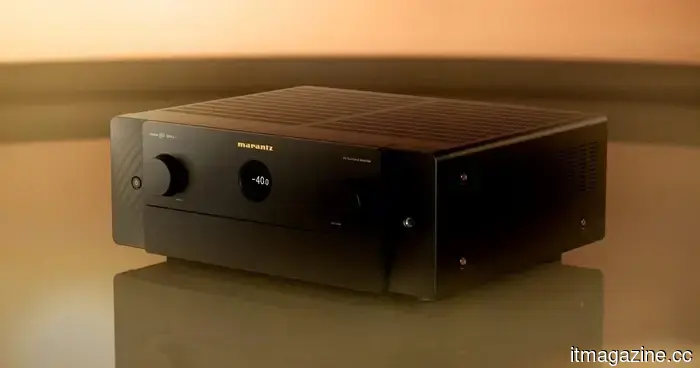 Marantz enhances its CINEMA Series 2 by introducing a new DAC, implementing Dirac Live, and improving gaming compatibility.
Marantz's latest CINEMA Series 2 receivers feature a reimagined DAC, enhanced Dirac Live room correction, and gaming-friendly FreeSync support across four different models.
Marantz enhances its CINEMA Series 2 by introducing a new DAC, implementing Dirac Live, and improving gaming compatibility.
Marantz's latest CINEMA Series 2 receivers feature a reimagined DAC, enhanced Dirac Live room correction, and gaming-friendly FreeSync support across four different models.
How Forex Traders in the US Can Now Select Their Preferred Platform
Throughout the majority of retail forex history, your broker chose the software on your behalf. You would access the platform that was included with your account, and if it wasn't to your liking, you had to make do with it. However, this is changing. An increasing number of US-regulated forex brokers now allow you to select the interface that best aligns with your preferences.