
SoftBank’s AI investment, supported by debt, is approaching a critical point as earnings reports loom.
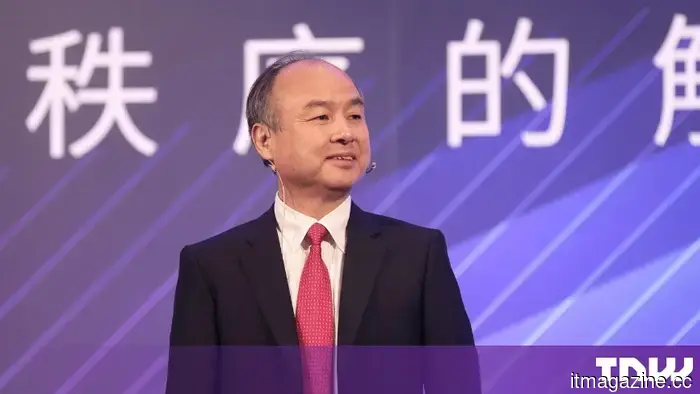
SoftBank's investment in AI is in the spotlight this week as the company prepares to report its earnings. The headline profit is expected to appear robust, but the underlying narrative revolves around the substantial funding commitments that Masayoshi Son has made towards OpenAI.
Analysts project a net profit of approximately ¥148 billion, or nearly $940 million, for the quarter spanning April to June, buoyed by the rising valuation of its OpenAI stake. However, investors will focus more on Son's strategy for financing the commitments he has made.
Those commitments are staggering. SoftBank has pledged over $60 billion to OpenAI and associated AI infrastructure and is racing to fulfill an immediate obligation of about $22.5 billion to OpenAI by year-end.
This financial obligation aligns with the maturity of significant debts. In the latter half of 2026, SoftBank confronts around $30 billion in obligations, which includes a $40 billion bridging loan due in March 2027 and a $20 billion margin loan secured against its Arm shares.
One potential funding avenue has hit a snag. A proposal to leverage its OpenAI stake for borrowing has stalled, as lenders have grown cautious about extending credit based on a private company, leading SoftBank to reduce its margin-loan targets.
The leverage situation is crucial. S&P Global calculated SoftBank’s loan-to-value ratio at 33% in March, significantly higher than the 17% the company prefers to report, although it anticipates this ratio may decline as asset values fluctuate.
Son remains unfazed by these concerns, dismissing talk of a bubble as absurd and anticipating that AI will cost $5 trillion annually by 2040. In his view, SoftBank’s current level of borrowing represents merely a down payment on this future.
He has ensured that funding continues. SoftBank has arranged new $60 billion bonds to sustain its investment in OpenAI, adding to a leverage profile that becomes increasingly complex with each round of financing.
SoftBank is familiar with making monumental bets. The Vision Funds have invested tens of billions in startups with highly variable outcomes, and the wager on OpenAI is the most considerable demonstration of Son's confidence to date.
The stake in Arm has become central to this strategy. This valuable asset is now collateral for the loans supporting the AI initiative, linking SoftBank’s most prized holding to its most precarious gamble.
The potential value of these initiatives is disputed. OpenAI reportedly aims for a $1 trillion IPO valuation, an increase from $852 billion, while skeptics estimate its actual worth closer to $300 billion, creating significant fluctuations in SoftBank’s paper profits.
The market sentiment primarily remains positive. Fifteen of twenty analysts continue to rate SoftBank as a buy this month, betting on Son's capital access and the upside with OpenAI outweighing the pressures on the balance sheet.
However, bearish analysts express concerns about a possible domino effect. A decline in asset prices could tighten SoftBank’s liquidity, while growing competition from China might impact OpenAI’s profit margins and the demand for chips that the entire thesis relies on.
There is precedent for caution. SoftBank has experienced both astonishing gains and equally remarkable losses stemming from Son’s convictions in the past, and the magnitude of the current investment leaves less margin for error than any previously taken.
Critics point out a circular logic: SoftBank borrows to finance OpenAI, whose increasing value supports those very loans. Thus, instability in one area can rapidly affect the others.
Consequently, this earnings call is more than just a performance review. Investors are seeking a credible strategy for meeting year-end commitments, rather than merely a profit figure inflated by unrealized gains on an unsold stake.
Son has staked the company’s financial health on his beliefs about AI and specifically about OpenAI. While this earnings report won't resolve that wager, it will indicate how much flexibility he has remaining before the market demands tangible proof of his strategy.
Other articles
 Grab significant savings on DJI creator equipment with these deals from AliExpress this August.
Are you considering enhancing your content creation toolkit? The August promotion on AliExpress features discounts along with exclusive Digital Trends coupon codes, offering significant savings on DJI's Osmo range.
Grab significant savings on DJI creator equipment with these deals from AliExpress this August.
Are you considering enhancing your content creation toolkit? The August promotion on AliExpress features discounts along with exclusive Digital Trends coupon codes, offering significant savings on DJI's Osmo range.
 Volvo's rumored EX50 might be the affordable surprise that no one anticipated.
Volvo might be preparing to introduce a new electric vehicle: the EX50, which is expected to be a larger and more affordable alternative to the EX40.
Volvo's rumored EX50 might be the affordable surprise that no one anticipated.
Volvo might be preparing to introduce a new electric vehicle: the EX50, which is expected to be a larger and more affordable alternative to the EX40.
 The 'death zone': how independent Chinese models are undermining US AI.
Bloomberg refers to it as a ‘death zone’: China’s advanced, accessible open-source AI models are impacting the mid-market segment where US model developers operate.
The 'death zone': how independent Chinese models are undermining US AI.
Bloomberg refers to it as a ‘death zone’: China’s advanced, accessible open-source AI models are impacting the mid-market segment where US model developers operate.
 The US finalizes voluntary evaluations for the hacking capabilities of AI models.
The White House has completed a voluntary framework to evaluate the hacking abilities of advanced AI models from the US, just weeks after unauthorized agents infiltrated companies.
The US finalizes voluntary evaluations for the hacking capabilities of AI models.
The White House has completed a voluntary framework to evaluate the hacking abilities of advanced AI models from the US, just weeks after unauthorized agents infiltrated companies.
 MSI's latest 4K 120Hz OLED monitor utilizes inkjet technology that has the potential to reduce the cost of high-end displays.
The first 27-inch 4K 120Hz inkjet-printed OLED monitor has been introduced, but MSI has not disclosed its price or when it will be released.
MSI's latest 4K 120Hz OLED monitor utilizes inkjet technology that has the potential to reduce the cost of high-end displays.
The first 27-inch 4K 120Hz inkjet-printed OLED monitor has been introduced, but MSI has not disclosed its price or when it will be released.
 Telegram disappears from the App Store, only to later announce its return.
Telegram was temporarily removed from Apple's iOS App Store globally before it was announced that it had been restored, though the reason for its disappearance remains unverified.
Telegram disappears from the App Store, only to later announce its return.
Telegram was temporarily removed from Apple's iOS App Store globally before it was announced that it had been restored, though the reason for its disappearance remains unverified.
SoftBank’s AI investment, supported by debt, is approaching a critical point as earnings reports loom.
SoftBank’s profits will receive a boost from OpenAI, but the key issue is how Masayoshi Son plans to finance tens of billions in AI commitments as debt comes due.