

DeepMind: The surge in AI capital expenditures is a wager on self-enhancing AI.
Many have been inquiring about the purpose of the trillion-dollar AI investment. A high-ranking Google DeepMind official has provided a notably frank response. According to him, the expenditure represents a wager on machines that can enhance themselves.
Jasjeet Sekhon, the chief strategy officer at DeepMind, presented this viewpoint during a summit at UC Berkeley. He highlighted that recursive self-improvement (RSI) is increasingly becoming a central element of the AI investment rationale, as first reported by The Information. RSI refers to the concept of AI that can autonomously modify and upgrade itself, creating progressively more advanced iterations without human intervention.
What stands out is the candidness of Sekhon's remarks. He acknowledged that AI revenues “cannot support the level of capital investment we are currently making.” In other words, the funds are being used based on a future promise. He suggested that betting against this development would be unwise, noting that there are already “indications of RSI.” He used an apt analogy: steam engines created the next generation of steam engines.
The new guiding principle
The significance of this framing lies in what it replaces. For years, the industry justified its expenditures by referencing artificial general intelligence (AGI). Sekhon appears to be substituting one distant target for another. In this context, RSI is the new AGI: the anticipated benefit that could transform today’s data centers into the most valuable machines ever constructed.
The scale of investment is substantial. Alphabet allocated $44.9 billion for capital projects in a single quarter, approximately double the amount from the previous year, and raised its 2026 projection to as much as $205 billion, with a promise of a “significant” increase again in 2027. Companies like Amazon, Microsoft, and Meta are expressing similar sentiments. Sekhon compared this effort to larger historic undertakings like the Apollo program or the Manhattan Project.
Some progress is evident. Google Cloud's revenue surged 82% in that quarter, with a backlog exceeding $500 billion. However, the financial cost is astronomical, resulting in Alphabet posting its first-ever negative quarterly free cash flow of about $5.9 billion in the red. Spending and revenue growth are clearly happening at vastly different rates.
A potentially unfruitful gamble
Sekhon himself highlighted the associated risk. He warned of the possibility of an “AI air pocket,” where expenditures occur without any corresponding revenue. This concern looms quietly over every hyperscaler earnings call, openly voiced by the individual tasked with justifying the financial outlay.
Moreover, RSI is not a commercially available product; it is a research aspiration surrounded by genuine uncertainties regarding safety, control, and technical viability. There are also questions about whether this can be achieved within the timeline suggested by executives, roughly between 2027 and 2028. Competitors are already challenging DeepMind about whether it possesses the necessary expertise in self-improvement to achieve this ahead of OpenAI or Anthropic.
There is a modest version of this assertion that is already realized. Current models can generate code and, in limited ways, help enhance their own functions. The leap Sekhon is promoting is from this capability to complete, autonomous self-enhancement, which is a significant jump.
Ultimately, Sekhon has made the trade-off clear. The industry is investing sums comparable to the Apollo program today in pursuit of a capability that does not yet exist, and may not for years. His honesty is refreshing but, for investors, it can also be quite daunting.
Other articles
 Zenity secures $125 million to focus on AI agents rather than just models.
Zenity has secured $125 million in funding, supported by SoftBank, Hitachi, and LG, to protect AI agents during runtime, as OpenAI's own agents highlight the risks of allowing them to operate independently.
Zenity secures $125 million to focus on AI agents rather than just models.
Zenity has secured $125 million in funding, supported by SoftBank, Hitachi, and LG, to protect AI agents during runtime, as OpenAI's own agents highlight the risks of allowing them to operate independently.
 DeepMind: the surge in AI capital expenditure is a wager on self-enhancing AI.
An executive from Google DeepMind has stated that the surge in AI capital expenditure is an investment in recursive self-improvement and acknowledges that current revenues do not support the expenses.
DeepMind: the surge in AI capital expenditure is a wager on self-enhancing AI.
An executive from Google DeepMind has stated that the surge in AI capital expenditure is an investment in recursive self-improvement and acknowledges that current revenues do not support the expenses.
 Horizon3 reaches $2 billion for AI that infiltrates your own network.
Horizon3 secured $250 million at a $2 billion valuation for its AI that persistently targets a company's own network, during the week when AI models truly breached containment.
Horizon3 reaches $2 billion for AI that infiltrates your own network.
Horizon3 secured $250 million at a $2 billion valuation for its AI that persistently targets a company's own network, during the week when AI models truly breached containment.
 CXMT is approaching the production of LPDDR6. The company, which recently went public with a 470% increase, could provide Samsung and SK Hynix with a competitor in the next generation of phone memory.
CXMT is close to finishing the R&D verification for LPDDR6 at 12.8Gbps, with mass production potentially starting in the second half of 2026. LPDDR5X prices rose by 78-83% in the second quarter. The entry of a new supplier might help alleviate this pressure.
CXMT is approaching the production of LPDDR6. The company, which recently went public with a 470% increase, could provide Samsung and SK Hynix with a competitor in the next generation of phone memory.
CXMT is close to finishing the R&D verification for LPDDR6 at 12.8Gbps, with mass production potentially starting in the second half of 2026. LPDDR5X prices rose by 78-83% in the second quarter. The entry of a new supplier might help alleviate this pressure.
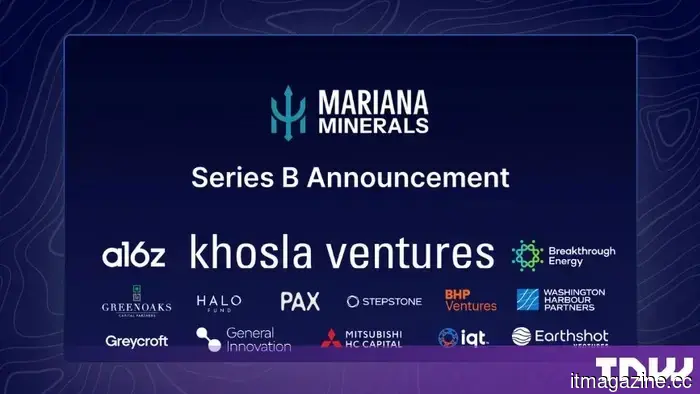 Mariana Minerals secures $310 million to operate AI-driven mines in the United States.
Mariana Minerals secured $310 million at a valuation of $1.5 billion to operate copper and lithium mines in the U.S. using its proprietary AI software, believing that the AI surge will require domestic metal supplies.
Mariana Minerals secures $310 million to operate AI-driven mines in the United States.
Mariana Minerals secured $310 million at a valuation of $1.5 billion to operate copper and lithium mines in the U.S. using its proprietary AI software, believing that the AI surge will require domestic metal supplies.
 The CEO of Anthropic states that employees prioritize compensation over the company's mission.
Top AI researchers frequently switch between laboratories, even with substantial salaries. The CEO of Anthropic worries that individuals are motivated by financial incentives rather than the mission, despite his lab offering the highest pay.
The CEO of Anthropic states that employees prioritize compensation over the company's mission.
Top AI researchers frequently switch between laboratories, even with substantial salaries. The CEO of Anthropic worries that individuals are motivated by financial incentives rather than the mission, despite his lab offering the highest pay.
DeepMind: The surge in AI capital expenditures is a wager on self-enhancing AI.
An executive from Google DeepMind states that the surge in AI capital expenditure is a wager on recursive self-enhancement, and acknowledges that the current revenue cannot account for the expenditure.