

India takes steps to prolong tax incentives favorable to Apple for contract manufacturing.
India aims to continue encouraging Apple’s manufacturing efforts. The government has suggested prolonging a tax exemption for foreign companies that provide manufacturing equipment to contract manufacturers, specifically targeting iPhone assembly.
According to a draft bill reviewed by Reuters, this exemption would be in effect until March 31, 2041, extending past the 2031 deadline originally established when the policy was introduced in February. This change allows foreign suppliers to avoid Indian taxes on the sophisticated machinery they provide to assemblers like Foxconn and Tata.
This initiative is part of a broader set of incentives India has implemented to draw electronics production to the country, including a five-year manufacturing subsidy for iPhone and Samsung manufacturers, as well as wider industrial support. The underlying goal remains the same: to make it more cost-effective to produce phones in India than to import them.
The specific issue addressed by the draft is a common one in contract manufacturing. Assembly plants frequently utilize equipment owned by a foreign parent or partner, and without an exemption, this arrangement can lead to tax liabilities in India, prompting companies to reconsider their production locations.
The bill's scope extends beyond smartphones; it also encompasses tablets, laptops, and wearables. Additionally, it includes exemptions for the storage and supply of components in customs-bonded zones that technically lie outside India’s customs boundary.
There is an added incentive related to data centers as well. Foreign companies would have the option to lease data centers in India, retaining their tax exemptions, with this provision set to last until 2047.
The benefits India seeks are reflected in production statistics. In 2022, about 6% of the world's iPhones were manufactured in India, with projections estimating around 26% by 2026, marking a significant transition from being a secondary option to becoming a central part of Apple’s supply chain.
Shifting production away from China is a key objective. Apple has invested years in diversifying iPhone manufacturing due to tariffs, geopolitical factors, and risks associated with concentration, with India emerging as a significant beneficiary of this redistribution.
Apple now assembles an increasing variety of iPhones in India, including the higher-end Pro models that were previously produced exclusively in China. A large portion of this output is intended for export rather than local sales, positioning India as a manufacturing hub rather than merely a market.
India is not the only nation vying for this work. Vietnam has garnered a growing share of Apple’s assembly, so these incentives are focused on maintaining existing contracts as much as they are on acquiring new ones, and a decade-long tax extension is a compelling offer for competitors.
New Delhi is actively supporting these efforts. Recently, the government eliminated import duties on electronics and battery components and has committed $20 billion to enhance domestic chip and smartphone manufacturing, part of Prime Minister Narendra Modi’s ongoing initiative to develop a robust domestic manufacturing sector.
The earlier February version allowed foreign firms to finance equipment for Indian plants without tax penalties, a change that Apple advocated for. Extending this exemption to 2041 transforms a temporary concession into a long-term plan that suppliers can align their investments with over the next decade.
Analysts perceive the extension not just as a financial incentive, but also as a signal of certainty. Riaz Thingna, a partner at Grant Thornton Bharat, emphasized that the stability it provides is the true benefit, offering suppliers the extended timeline necessary for making significant capital investments.
However, Apple’s growing Indian supply chain is not without challenges. A recent data leak from Tata revealed a list of iPhone suppliers, highlighting that relocating production also brings along associated risks.
The bill still requires parliamentary approval before it can be enacted, meaning its timing depends on New Delhi’s legislative agenda rather than Apple’s product release calendar.
For Apple, the reassurance lies in the direction indicated by these developments. India has spent the last two years positioning itself as a prime location for iPhone production, and the latest draft reinforces its commitment to maintaining this momentum.
Other articles
 A two-year-old battery startup has reached a valuation of $13 billion by transforming American homes into grid resources.
A battery company that was founded just three years ago is now valued at $13 billion. Base Power has secured $1 billion in a Series D funding round and has introduced its own battery, Base Core. The underlying assumption driving this valuation is straightforward: the power grid is struggling to meet the demands of America’s energy needs.
A two-year-old battery startup has reached a valuation of $13 billion by transforming American homes into grid resources.
A battery company that was founded just three years ago is now valued at $13 billion. Base Power has secured $1 billion in a Series D funding round and has introduced its own battery, Base Core. The underlying assumption driving this valuation is straightforward: the power grid is struggling to meet the demands of America’s energy needs.
 Booksellers are concerned that their rarest books may be destroyed to provide materials for AI. The investigation points to a 'recycler'.
We have discussed the reasons AI companies are acquiring older books: those printed before the internet, containing machine-generated text, serve as a pure source of language, devoid of AI imperfections. This illustrates the demand from a different perspective. In Aust
Booksellers are concerned that their rarest books may be destroyed to provide materials for AI. The investigation points to a 'recycler'.
We have discussed the reasons AI companies are acquiring older books: those printed before the internet, containing machine-generated text, serve as a pure source of language, devoid of AI imperfections. This illustrates the demand from a different perspective. In Aust
 Nvidia’s CUDA advantage encounters its initial significant challenge: artificial intelligence.
Nvidia’s supremacy is based on CUDA, not solely on its hardware. AI coding assistants and the transition to inference represent the initial real challenges to that software barrier.
Nvidia’s CUDA advantage encounters its initial significant challenge: artificial intelligence.
Nvidia’s supremacy is based on CUDA, not solely on its hardware. AI coding assistants and the transition to inference represent the initial real challenges to that software barrier.
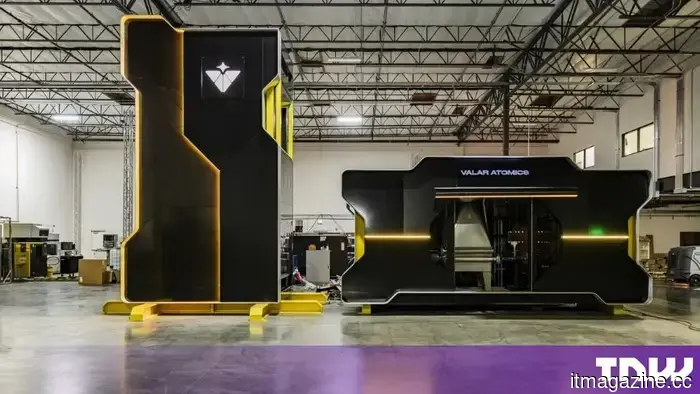 Sequoia heads a $1 billion funding round for Valar Atomics as the nuclear startup increases its valuation threefold to $6 billion.
Sequoia spearheaded a $1 billion Series B funding round for Valar Atomics, which is valued at $6 billion. The nuclear startup powered an Nvidia AI chip using its reactor in July. There are plans for a 30MW facility in Utah.
Sequoia heads a $1 billion funding round for Valar Atomics as the nuclear startup increases its valuation threefold to $6 billion.
Sequoia spearheaded a $1 billion Series B funding round for Valar Atomics, which is valued at $6 billion. The nuclear startup powered an Nvidia AI chip using its reactor in July. There are plans for a 30MW facility in Utah.
 A recent Lenovo leak has provided us with a clearer insight into Google's next move following its Chromebook venture.
A complete collection of Lenovo Googlebook 15 renders showcases Google's Android-based desktop interface, specialized Gemini controls, ample ports, and a notably focused approach to productivity.
A recent Lenovo leak has provided us with a clearer insight into Google's next move following its Chromebook venture.
A complete collection of Lenovo Googlebook 15 renders showcases Google's Android-based desktop interface, specialized Gemini controls, ample ports, and a notably focused approach to productivity.
 Giant Network's Supernatural Action Team reinterprets horror by blending Chinese folklore with contemporary gameplay.
From July 31 to August 3, ChinaJoy 2026 turned the Shanghai New International Expo Center into a center for gaming, technology, and pop culture.
Giant Network's Supernatural Action Team reinterprets horror by blending Chinese folklore with contemporary gameplay.
From July 31 to August 3, ChinaJoy 2026 turned the Shanghai New International Expo Center into a center for gaming, technology, and pop culture.
India takes steps to prolong tax incentives favorable to Apple for contract manufacturing.
India aims to continue supporting Apple’s manufacturing efforts. The government has suggested prolonging a tax incentive for foreign companies that provide manufacturing equipment to contract manufacturers, a modification specifically designed with iPhone production in focus. According to a draft bill...