
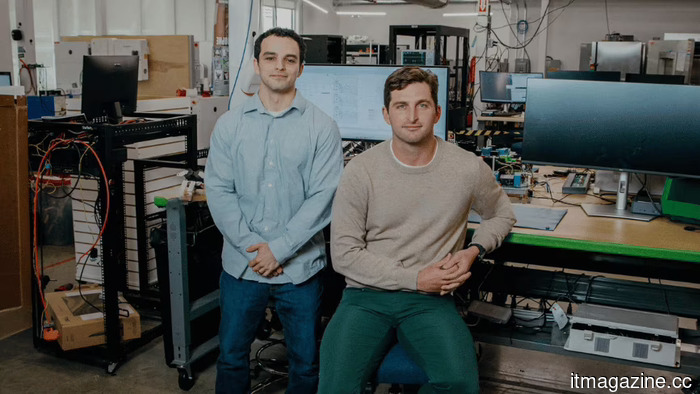
A two-year-old battery startup has reached a valuation of $13 billion by transforming American homes into grid resources.
A home-battery company that emerged just three years ago is now valued at $13 billion. Base Power has successfully raised $1 billion in a Series D funding round and introduced its own battery, called Base Core. The underlying belief behind this valuation is straightforward: the power grid is unable to meet America's energy demands, and thousands of home batteries can help address this issue.
This funding round values the Austin-based company at $13 billion post-money, bringing its total raised funds to over $2.5 billion, as stated by the company. The round was led by Ribbit, Addition, Valor Equity Partners, and JPMorgan Chase’s strategic investment division. Existing investors, including a16z, Thrive Capital, Lightspeed, and CapitalG also contributed additional funds.
Base Core is the product that this investment aims to scale. Manufactured at the company's Austin factory, it is one of the largest home batteries currently available, with a capacity of either 39.2 or 78.4 kWh. Chief Executive Zach Dell, who is the son of Michael Dell, mentions that it can be installed in less than an hour and withstand extreme weather conditions. It is now available for purchase in specific areas of Texas and Illinois.
The grid is struggling to expand rapidly enough to keep up with demand. The foundational thesis is based on a continually evolving scenario we frequently discuss from a different perspective. The rise of AI data centers and broad electrification is driving power demand up at a pace that utilities cannot match with supply. Creating new power generation sources is a slow process. Base’s solution is decentralized: it proposes placing significant batteries in individual homes and then aggregating these into a capacity that the grid can rely on during peak demand.
This model effectively turns each home into a node in a virtual power plant, marketed to owners as a source of more affordable energy and backup. It stands in contrast to the constraints faced by data centers. Base reports that its fleet now exceeds 500 MWh, has expanded from Texas into Illinois, and has secured utility contracts with El Paso Electric, Austin Energy, and CoServ amounting to over 200 MW.
The valuation is certainly eye-catching. A $13 billion price tag for a startup in 2023 with a fleet of approximately 500 MWh is quite high, particularly since the home battery business involves heavy capital investment and is built one installation at a time, which has challenged even larger companies. The virtual power plant model only becomes feasible at a national level, and currently, Core is operational in only two states.
What Base possesses is financial backing and strong belief in its model. This funding arrives as major technology firms invest billions into data centers and speculative ventures like fusion to support them. Base is positing that the quickest way to obtain new capacity lies within people's garages. The same boom in AI that is putting pressure on the grid has made rectifying this issue a significant venture opportunity.
For the time being, however, the actual capabilities of the company are less extensive than the valuation suggests. Core is available in only parts of two states, from a factory that produces thousands of units each month. The $13 billion valuation represents a bet that personal garages will transform into power plants and that Base will be the first to achieve this transition.
Другие статьи
 Новая утечка от Lenovo только что дала нам лучший взгляд на ставку Google после Chromebook.
Полный набор рендеров Lenovo Googlebook 15 раскрывает настольный интерфейс на базе Android от Google, специальные элементы управления Gemini, обилие портов и необычно серьезное предложение по производительности.
Новая утечка от Lenovo только что дала нам лучший взгляд на ставку Google после Chromebook.
Полный набор рендеров Lenovo Googlebook 15 раскрывает настольный интерфейс на базе Android от Google, специальные элементы управления Gemini, обилие портов и необычно серьезное предложение по производительности.
 Samsung, возможно, снизила качество зум-объектива Galaxy S27 Pro, чтобы сократить расходы.
Согласно новому отчету, связывающему изменения с ростом цен на компоненты, Galaxy S27 Pro от Samsung может быть оснащен меньшей, с более коротким диапазоном, зум-камерой, чем предполагалось ранее.
Двухлетний стартап в области аккумуляторов только что достиг $13 миллиардов, превратив американские дома в мощность для электросети.
Компания по производству домашних батарей, которая не существовала три года назад, теперь стоит 13 миллиардов долларов. Base Power привлекла 1 миллиард долларов в рамках раунда финансирования Series D и запустила свою собственную батарею, Base Core. Ставка, стоящая за этой цифрой, проста: сеть не может справиться с потреблением электроэнергии в Америке.
Samsung, возможно, снизила качество зум-объектива Galaxy S27 Pro, чтобы сократить расходы.
Согласно новому отчету, связывающему изменения с ростом цен на компоненты, Galaxy S27 Pro от Samsung может быть оснащен меньшей, с более коротким диапазоном, зум-камерой, чем предполагалось ранее.
Двухлетний стартап в области аккумуляторов только что достиг $13 миллиардов, превратив американские дома в мощность для электросети.
Компания по производству домашних батарей, которая не существовала три года назад, теперь стоит 13 миллиардов долларов. Base Power привлекла 1 миллиард долларов в рамках раунда финансирования Series D и запустила свою собственную батарею, Base Core. Ставка, стоящая за этой цифрой, проста: сеть не может справиться с потреблением электроэнергии в Америке.
 Xiaomi только что выпустила внедорожник с семью местами и спальней на верхнем этаже.
Xiaomi SkyNomad N90 Max сочетает в себе семь мест, трансформируемую кабину, дополнительную спальню на крыше и заявленный запас хода в 1,705 км за примерно 44,400 долларов.
Xiaomi только что выпустила внедорожник с семью местами и спальней на верхнем этаже.
Xiaomi SkyNomad N90 Max сочетает в себе семь мест, трансформируемую кабину, дополнительную спальню на крыше и заявленный запас хода в 1,705 км за примерно 44,400 долларов.
 Samsung снова делает ставку на MediaTek для питания своего флагманского планшета
Новый бенчмарк предполагает, что Galaxy Tab S12 Ultra будет использовать Dimensity 9500 от MediaTek, что станет третьим подряд флагманским планшетом Samsung, работающим на чипе этого производителя.
Samsung снова делает ставку на MediaTek для питания своего флагманского планшета
Новый бенчмарк предполагает, что Galaxy Tab S12 Ultra будет использовать Dimensity 9500 от MediaTek, что станет третьим подряд флагманским планшетом Samsung, работающим на чипе этого производителя.
 Книготорговцы опасаются, что их самые редкие книги перерабатываются в бумагу для питания ИИ. След ведет к «переработчику».
Мы писали о том, почему компании ИИ скупают старые книги: напечатанные до того, как интернет заполнился текстом, созданным машинами, они являются чистым источником языка, свободным от "мусора" ИИ. Вот как выглядит этот голод с другой стороны. В Австрии
Книготорговцы опасаются, что их самые редкие книги перерабатываются в бумагу для питания ИИ. След ведет к «переработчику».
Мы писали о том, почему компании ИИ скупают старые книги: напечатанные до того, как интернет заполнился текстом, созданным машинами, они являются чистым источником языка, свободным от "мусора" ИИ. Вот как выглядит этот голод с другой стороны. В Австрии
A two-year-old battery startup has reached a valuation of $13 billion by transforming American homes into grid resources.
A battery company that was founded just three years ago is now valued at $13 billion. Base Power has secured $1 billion in a Series D funding round and has introduced its own battery, Base Core. The underlying assumption driving this valuation is straightforward: the power grid is struggling to meet the demands of America’s energy needs.