

LinkedIn is leveraging crowdsourcing in its battle against poor-quality AI content.
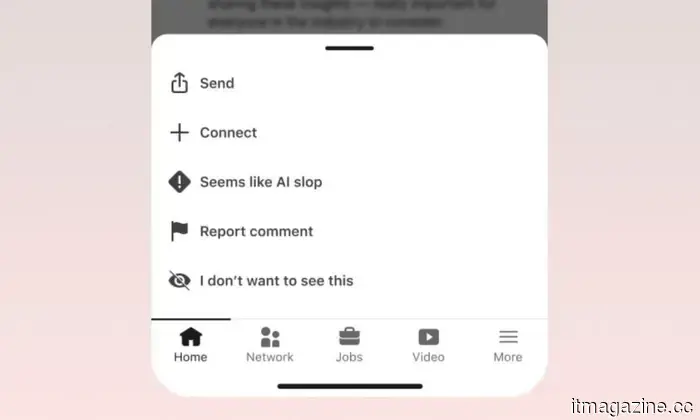
The company is introducing a new button that allows users to flag posts that appear to be generated by AI.
LinkedIn is facing a significant issue with AI-generated content and is now looking to its users for assistance in addressing it. The platform is launching a new feature that enables users to flag posts they believe may have been created by AI. This feedback will be utilized to adjust the algorithm that determines the reach of a post beyond the user's immediate network, based on its perceived AI generation.
This announcement follows an analysis by Pangram, which revealed that over forty percent of long-form posts on LinkedIn are entirely AI-generated. This suggests that the steps taken earlier this year to limit reach have not been sufficient on their own.
A crowdsourced solution to the problem
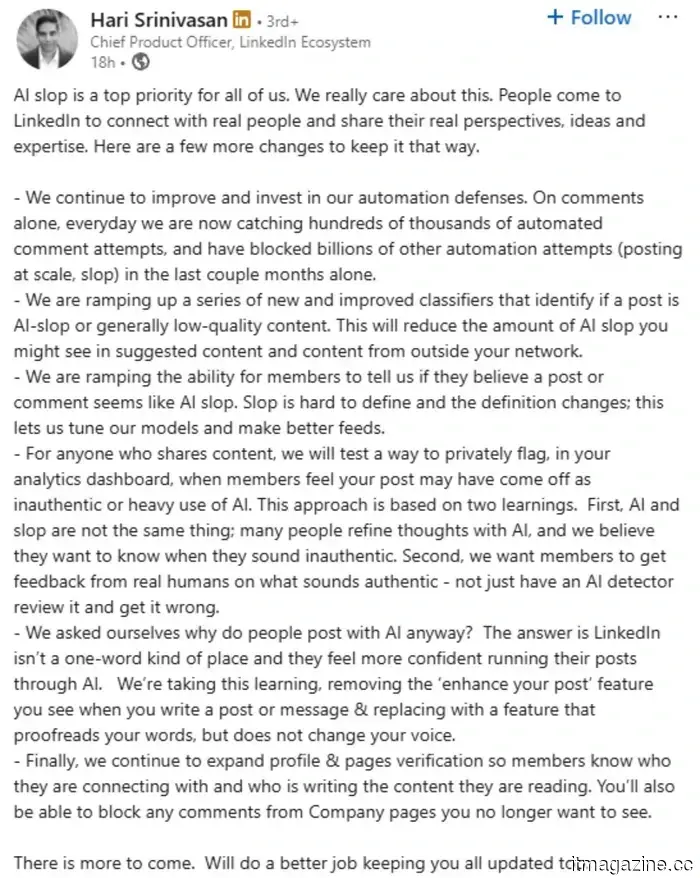
Hari Srinivasan, the Chief Product Officer, outlined these changes in a recent LinkedIn post, emphasizing that addressing AI-generated content has become a top priority for the company. Users seek genuine perspectives and expertise, not merely generated text. He noted that LinkedIn identifies hundreds of thousands of automated commenting attempts daily and has blocked billions of automation efforts, including large-scale AI-generated posts, in recent months.
The new flagging feature contributes to this initiative, complementing enhanced classifiers designed to detect AI-generated and low-quality posts before they reach audiences outside of the original posters’ networks. Srinivasan acknowledged the challenge in defining AI-generated content, which constantly evolves, and thus, user reports are essential for improving the automated detection system.
A user-friendly tool for feedback rather than punishment
LinkedIn is also piloting a private dashboard feature that informs members when their posts seem inauthentic or overly reliant on AI. This tool is designed to provide users an opportunity to refine their content rather than outright penalizing them. Srinivasan mentioned that this flagging system relies on user signals instead of being driven by an automated AI detector, as many users employ AI tools to enhance their thoughts without creating low-quality content and deserve accurate feedback.
In addition, the company is discontinuing its “enhance your post” AI writing feature and replacing it with a proofreading tool that checks grammar without changing the user's unique voice. This change subtly acknowledges that the previously promoted feature likely contributed to the proliferation of AI-like posts that LinkedIn is now aiming to address, even though this was not how Srinivasan described the decision.
LinkedIn is not the only platform tackling the issue of AI-generated content. Substack recently introduced a tool that flags AI-generated newsletters for its readers. The effectiveness of such tools in mitigating the spread of low-quality AI-generated content remains to be seen.




Otros artículos
 Looking for back-to-school supplies? I suggest considering these GaN chargers to maximize space and boost power capacity.
I examined eight of Amazon's highest-rated GaN chargers, ranging from the least expensive to the most expensive, to identify which ones effectively reduce cable clutter this semester.
Looking for back-to-school supplies? I suggest considering these GaN chargers to maximize space and boost power capacity.
I examined eight of Amazon's highest-rated GaN chargers, ranging from the least expensive to the most expensive, to identify which ones effectively reduce cable clutter this semester.
 PlayStation discs will no longer be available starting in 2028, and the backlash from fans isn't convincing Sony to reconsider.
Sony acknowledges the criticism regarding its choice to discontinue physical PlayStation releases in 2028; however, even well-organized fan protests have not influenced its intentions.
PlayStation discs will no longer be available starting in 2028, and the backlash from fans isn't convincing Sony to reconsider.
Sony acknowledges the criticism regarding its choice to discontinue physical PlayStation releases in 2028; however, even well-organized fan protests have not influenced its intentions.
 Are you shopping for back-to-school supplies? I suggest considering these GaN chargers to save space and deliver more power.
I examined eight of Amazon's top-rated GaN chargers, ranging from the least expensive to the most costly, to identify the ones that effectively reduce cable clutter this semester.
Are you shopping for back-to-school supplies? I suggest considering these GaN chargers to save space and deliver more power.
I examined eight of Amazon's top-rated GaN chargers, ranging from the least expensive to the most costly, to identify the ones that effectively reduce cable clutter this semester.
 LinkedIn is harnessing collective intelligence to combat low-quality AI content.
LinkedIn is reaching out to its users to address its AI content quality issue by introducing a button that allows individuals to report AI-generated writing.
LinkedIn is harnessing collective intelligence to combat low-quality AI content.
LinkedIn is reaching out to its users to address its AI content quality issue by introducing a button that allows individuals to report AI-generated writing.
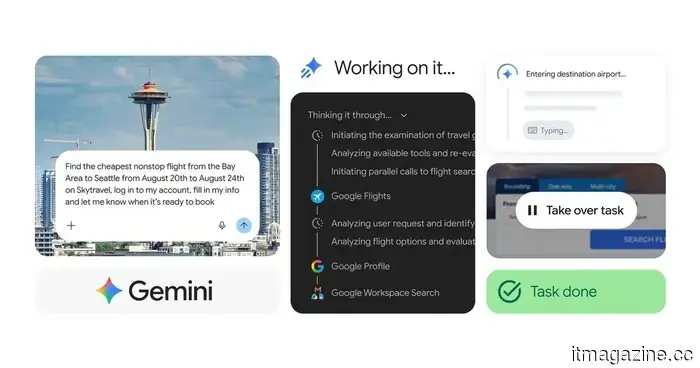 Gemini Spark can now utilize Chrome logins and saved passwords to carry out tasks for you.
Gemini Spark is now able to utilize Chrome's auto browse feature to manage web tasks using your logged-in accounts.
Gemini Spark can now utilize Chrome logins and saved passwords to carry out tasks for you.
Gemini Spark is now able to utilize Chrome's auto browse feature to manage web tasks using your logged-in accounts.
LinkedIn is leveraging crowdsourcing in its battle against poor-quality AI content.
LinkedIn is reaching out to its community for assistance in addressing its AI content quality issue by introducing a button that allows users to report AI-generated writing.