
The Role of Desktop UV Printers in Daily Creative Work Environments
Industrial UV printers are recognized for their capability to produce vibrant and durable prints on a variety of materials, including glass, wood, and metal. These printers are frequently utilized for direct printing on products like bottles, pens, phone cases, and custom signs.
With the emergence of smaller fabrication technologies, manufacturers are investigating how UV printing can be adapted for studios, workshops, and other creative spaces. Morpho is a company venturing into this evolving desktop category.
The founder of Morpho, Mingyu (Brett) Wang, experienced challenges while assisting his daughter with a school project that required a customized print. He found transforming a child's colorful ideas into reality to be more difficult than he anticipated. Wang’s investigation revealed a gap between large industrial machines and smaller systems designed for less specialized environments.
“The market offered either large industrial machines or desktop systems that were complicated to use, high-maintenance, and not suitable for home settings. We established Morpho to change that by providing intuitive, reliable, and accessible professional-grade UV printing for anyone with a creative concept,” Wang explains.
Morpho
Adapting Industrial Technology
Transitioning UV printing from commercial production spaces to more compact environments involves more than simply resizing the machinery. Manufacturers must also consider ease of use, intuitive setup, routine maintenance, proper ventilation, and seamless integration with other creative tools typically found in studios and workshops.
Wang identified numerous issues with industrial UV printers that hindered their ability to assist everyday creators, such as artists and small businesses.
He notes that user-friendliness and maintenance were critical factors in Morpho’s development process. UV printing utilizes ultraviolet light to cure specially formulated ink, making the design of the enclosure and workspace conditions essential aspects of a desktop system.
Morpho
Morpho’s strategy embodies a broader design challenge confronted by manufacturers of desktop fabrication tools: maintaining industrial-grade performance while adapting equipment for smaller, more creative, and user-friendly settings.
Designed Around Creative Workflows
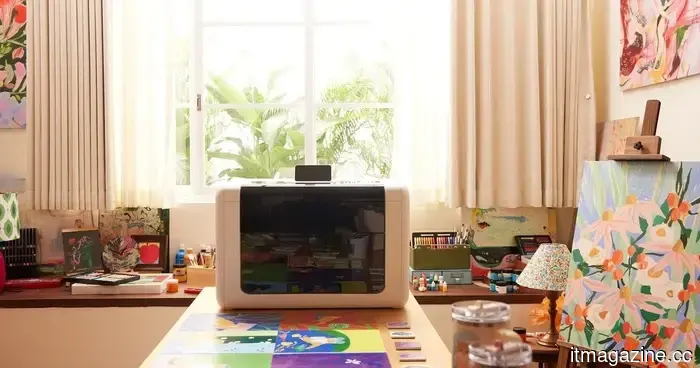
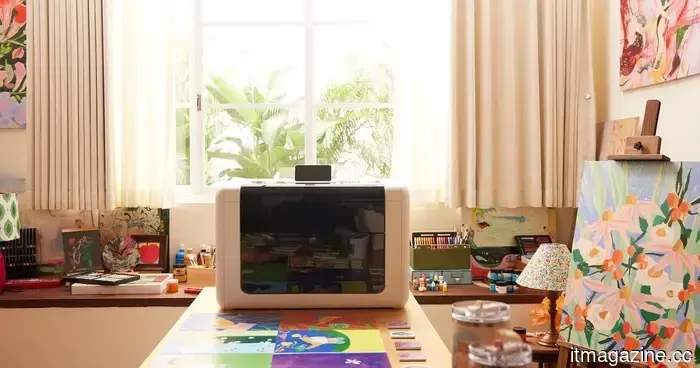
Morpho’s primary desktop UV printing system features a compact, enclosed format suitable for placement in a studio or workshop. According to the company, the enclosure minimizes direct UV light exposure and contains some of the odors linked to printing. Users must still adhere to the manufacturer’s operational and ventilation guidelines.
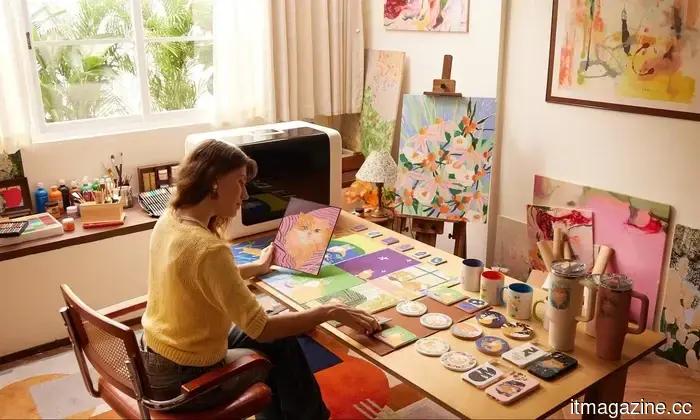
Morpho also tackles additional challenges that have traditionally kept industrial UV printing confined to large-scale environments. The system is built for ease of use, featuring intuitive controls and streamlined workflows that enable creators of varying skill levels to begin quickly. Like its industrial counterparts, it can handle various materials, including acrylic, glass, leather, metal, plastic, and wood. Morpho states that the system accommodates both flat and curved objects, as well as raised and layered printing effects. These capabilities let users customize a wide range of items, from signs and prototypes to decorative pieces and everyday accessories.
This versatility underscores why smaller UV printers may appeal to makers focusing on customized objects rather than standard paper-based projects. A single undertaking might involve printing on a sign, prototype, case, or decorative item, depending on the material's compatibility with the equipment.
Morpho
Reducing Routine Intervention
Morpho aims to create products that simplify complex industrial processes into user-friendly tools for makers, artists, and innovators.
Maintenance is another important design consideration for desktop UV printers, especially given that white UV ink can settle and disrupt ink flow. Morpho claims its system continuously circulates white ink and controls printhead temperature to minimize manual intervention. This automated maintenance reduces downtime and ensures the printer remains ready for use, even for those with limited technical skills.
The printer also features camera-assisted alignment and color calibration functions. These tools help users accurately position designs on items and maintain color consistency, although outcomes will vary based on the material, artwork, and operating conditions. By incorporating smart features that streamline setup and guarantee high-quality results, Morpho lowers the entry barrier for creators without specialized printing knowledge.
For Morpho, adopting a “physics first” approach involves studying how materials interact with UV ink, how mechanical tolerances affect precision, how ink flow behaves over time, and how to reduce potential failures from the outset rather than addressing them later.
The introduction of machines like Morpho’s indicates that UV printing may be following a trajectory similar to that of 3D printers and laser cutters: technology once primarily associated with industrial applications is being repurposed for smaller creative environments. The extent of desktop UV printing adoption will depend not only on technical capabilities but also on factors such as cost, maintenance demands, workflow compatibility, and the tangible results that creators can achieve.
Digital Trends collaborates with external contributors. All content from contributors undergoes review by the Digital Trends editorial team.
Other articles
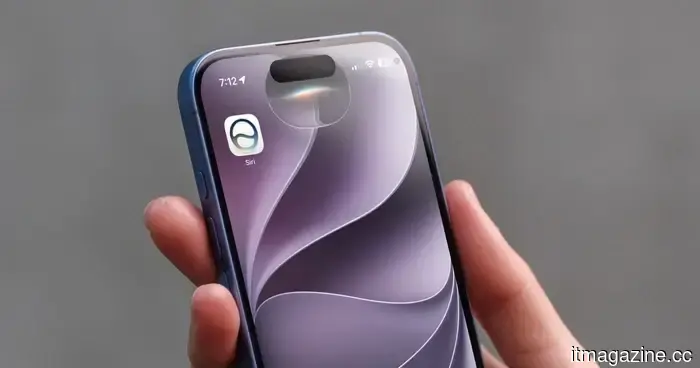 Apple's Siri AI is free, but costs may arise once you begin using it.
During Apple's earnings call, it was subtly indicated that frequent users of Siri AI may eventually require a larger iCloud+ plan to continue using it without restrictions. Here’s what Tim Cook mentioned.
Apple's Siri AI is free, but costs may arise once you begin using it.
During Apple's earnings call, it was subtly indicated that frequent users of Siri AI may eventually require a larger iCloud+ plan to continue using it without restrictions. Here’s what Tim Cook mentioned.
 Nvidia's RTX 50 GPUs are expected to nearly double in price compared to their initial launch cost.
Nvidia's RTX 50-series graphics cards are said to be facing significant price hikes, with the RTX 5090 possibly rising to around $3,843 from its initial launch price of $1,999.
Nvidia's RTX 50 GPUs are expected to nearly double in price compared to their initial launch cost.
Nvidia's RTX 50-series graphics cards are said to be facing significant price hikes, with the RTX 5090 possibly rising to around $3,843 from its initial launch price of $1,999.
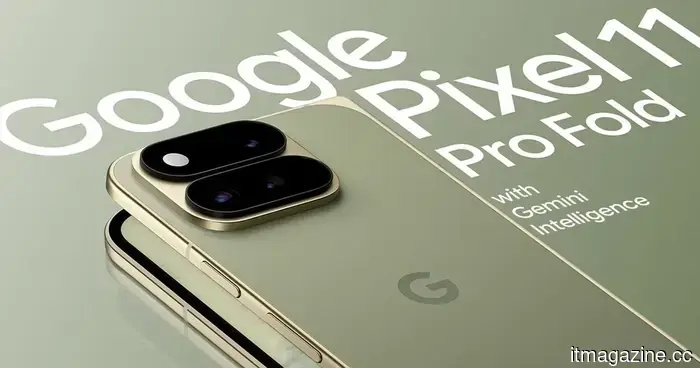 The Pixel 11 Pro Fold has surfaced in images that seem official, but its design fails to impress me.
Images that look official reveal a Pixel 11 Pro Fold that seems nearly identical to its predecessor, except for a slimmer profile, a Pine finish, and the addition of Pixel Glow LED.
The Pixel 11 Pro Fold has surfaced in images that seem official, but its design fails to impress me.
Images that look official reveal a Pixel 11 Pro Fold that seems nearly identical to its predecessor, except for a slimmer profile, a Pine finish, and the addition of Pixel Glow LED.
 The Role of Desktop UV Printers in Daily Creative Work Environments
Industrial UV printers are recognized for their capacity to produce long-lasting, vivid prints on a variety of materials including glass, wood, and metal. These printers are frequently employed for direct printing on products like bottles, pens, phone cases, personalized signs, and other items. With the emergence of smaller formats in other types of fabrication technology, manufacturers […]
The Role of Desktop UV Printers in Daily Creative Work Environments
Industrial UV printers are recognized for their capacity to produce long-lasting, vivid prints on a variety of materials including glass, wood, and metal. These printers are frequently employed for direct printing on products like bottles, pens, phone cases, personalized signs, and other items. With the emergence of smaller formats in other types of fabrication technology, manufacturers […]
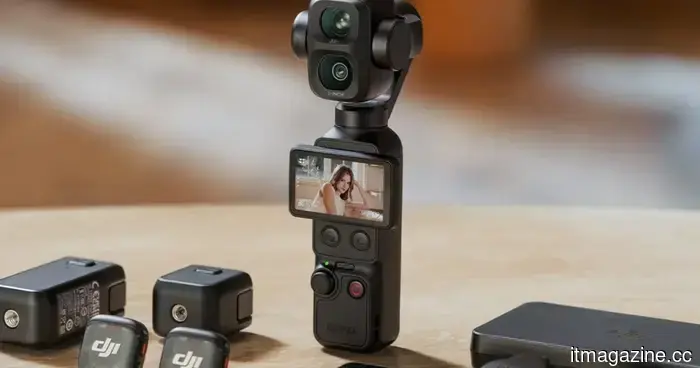 The DJI Osmo Pocket 4P makes its international debut as American vloggers observe from the sidelines.
DJI has launched the Osmo Pocket 4P vlogging camera in the UK, Europe, Canada, and Australia, but it remains unavailable for official purchase by American creators.
The DJI Osmo Pocket 4P makes its international debut as American vloggers observe from the sidelines.
DJI has launched the Osmo Pocket 4P vlogging camera in the UK, Europe, Canada, and Australia, but it remains unavailable for official purchase by American creators.
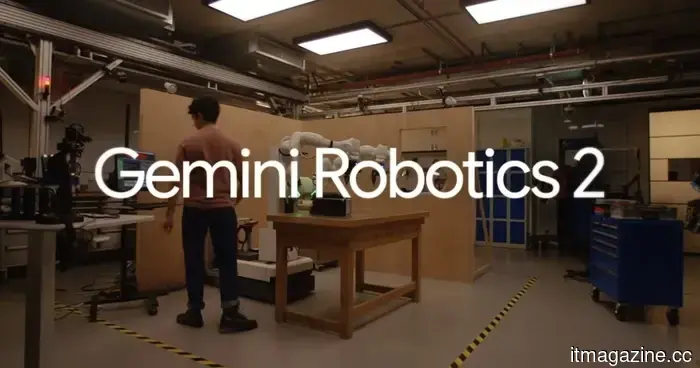 Google's latest AI enhances robots' balance, improves their hand dexterity, and enables them to work better together.
Google DeepMind's Gemini Robotics 2 enables humanoid robots to walk, perform delicate tasks, and collaborate with other robots, all while ensuring safety around humans.
Google's latest AI enhances robots' balance, improves their hand dexterity, and enables them to work better together.
Google DeepMind's Gemini Robotics 2 enables humanoid robots to walk, perform delicate tasks, and collaborate with other robots, all while ensuring safety around humans.
The Role of Desktop UV Printers in Daily Creative Work Environments
Industrial UV printers are recognized for their capability to produce strong, vivid prints on a range of materials including glass, wood, metal, and others. These printers are frequently employed for direct printing on products like bottles, pens, phone cases, custom signage, and more. As different types of fabrication technology have emerged in smaller formats, manufacturers […]