
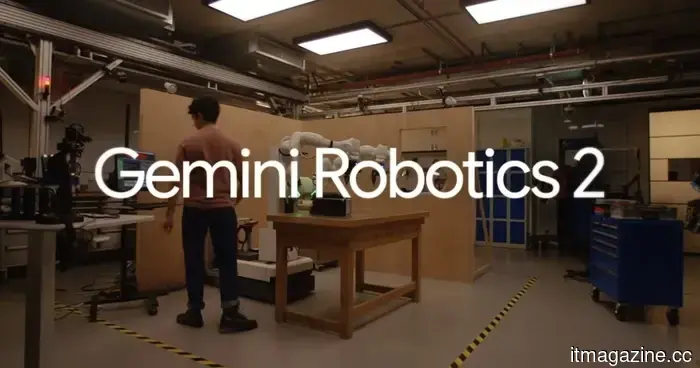
Google's latest AI enhances robots' balance, improves their hand dexterity, and enables them to work better together.
Google has significantly improved the functionality and assistance capabilities of robots.
Google DeepMind has brought science-fiction robots closer to reality, and the development is thrilling. With the launch of Gemini Robotics 2, an AI system built on its initial Gemini Robotics model, the company aims to enhance robots' ability to think, move, and collaborate. Unlike most current robots that depend on pre-defined routines or remote control, this innovative system enables robots to navigate unpredictable situations autonomously.
Can robots adeptly manage full-body tasks now?
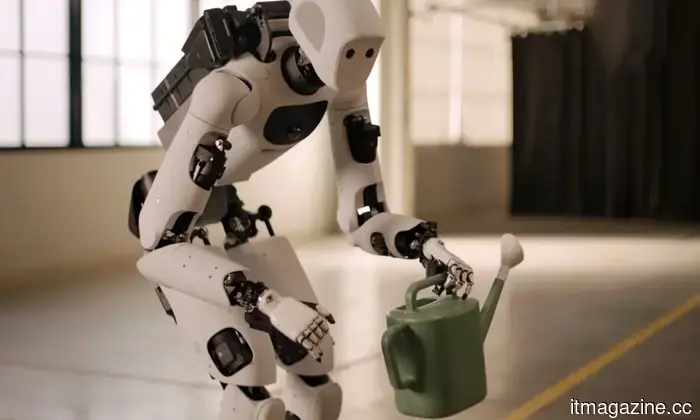
Previously, Google's robotic models primarily executed tasks using the upper body on tabletops. Gemini Robotics 2 transforms this by facilitating control of the entire humanoid, from feet to fingertips. In one demonstration, Apptronik’s Apollo 2 robot successfully placed a watering can in a bottom shelf bin after walking over, picking it up, and transporting it to the correct location.
The model also boasts significantly enhanced dexterity. It can operate a five-fingered robotic hand competently enough to tie knots, seal zip-lock bags, or unscrew light bulbs, while also performing smoothly with basic two-fingered grippers for activities such as packing and sorting.
In addition, Google is launching a reasoning model known as Gemini Robotics ER 2, which functions like the robot's project manager. This model breaks down instructions, manages multi-minute tasks, and can even coordinate multiple robots working on the same assignment. There’s also a version that operates on-device for robots without internet access, which can adapt to a new robot body within hours, using as few as 200 examples.
What enhances the safety of these robots during operation?
Safety has received considerable focus this time. Google introduced a new benchmark, ASIMOV-Agentic, to evaluate whether robots can determine when to avoid risky actions or request human assistance. Gemini Robotics ER 2 can also detect when someone approaches too closely and stop the robot safely. Gemini Robotics ER 2 is currently accessible on Google AI Studio, while the other models are being rolled out to early access partners.
Rachit is an experienced tech journalist with over a decade of experience reporting on the consumer technology landscape.
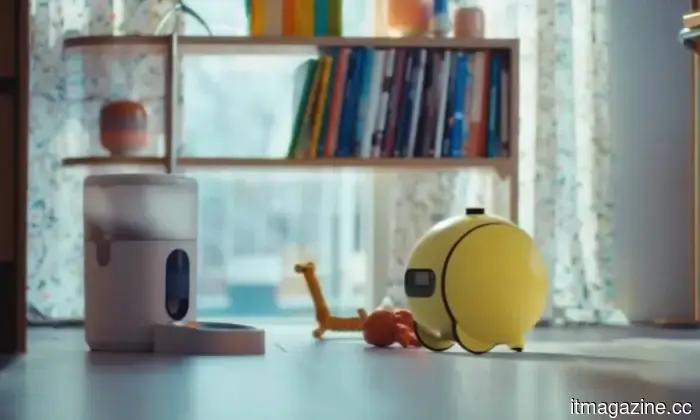
Do you recall Samsung’s Ballie home robot? It may be approaching reality.
Leaked app designs provide the strongest indication that Samsung's Ballie home robot, first introduced at CES 2020, might still be on track for an actual release. Samsung's rolling home robot has been a long-standing joke in the industry about whether it would ever ship, and I had nearly lost hope. However, there is now a renewed glimmer of possibility.
Samsung first showcased Ballie as a concept at CES 2020 and later presented a significantly enhanced version four years later. Nonetheless, the company has never definitively confirmed a release date or committed to launching it.
The AI browser landscape is evolving, and Polar is stepping up with its unique approach.
The AI browser competition is transitioning to a new stage. After spending much of 2025 attempting to revolutionize web search with integrated chatbots, startups are increasingly focusing on browser agents that can automate repetitive tasks, rather than merely answering inquiries. The latest entrant to embrace this shift is Polar, a startup founded by former Perplexity engineer Kevin Zhang, which has secured $5.7 million in seed funding led by Madrona.
Unlike the first generation of AI browsers aimed at everyday consumers, Polar is tailored specifically for knowledge workers. Its main objective is clear: rather than replacing Google Search, the browser seeks to eliminate the repetitive tasks that professionals encounter across numerous browser tabs daily.
I utilize ChatGPT Pro daily, and three particular features have ensured my continued subscription.
I've been using ChatGPT for several years, but initially, I didn't see the need to pay for it. Instead, I opted for Claude Pro as it better suited my workflow. With its regular chat and Cowork features, it provided everything I required in one platform, making it illogical to invest in an additional AI subscription.
However, this changed when OpenAI rolled out ChatGPT Work. Out of curiosity, I decided to try ChatGPT Pro, expecting to just test a new feature. Instead, I ended up using it far more often than anticipated. The more I integrated it into my everyday tasks, the more I discovered several features that I didn’t want to do without. Those are the three features that have kept me satisfied with my subscription ever since.



Other articles
 CISA alerts that hackers are progressively focusing on US water systems following an attack in Minnesota.
Following a coordinated assault that disabled controllers in over 30 water systems in Minnesota, CISA is recommending that utilities disconnect their industrial equipment from the internet.
CISA alerts that hackers are progressively focusing on US water systems following an attack in Minnesota.
Following a coordinated assault that disabled controllers in over 30 water systems in Minnesota, CISA is recommending that utilities disconnect their industrial equipment from the internet.
 A German court has ruled that the AI music producer Suno violated copyright laws, marking the first instance of such a decision in Europe.
The Munich Regional Court has determined that Suno trained on songs represented by GEMA without authorization and reproduced them, marking one of Europe’s initial binding judgments on AI-generated music.
A German court has concluded that Suno, one of the global leaders in...
A German court has ruled that the AI music producer Suno violated copyright laws, marking the first instance of such a decision in Europe.
The Munich Regional Court has determined that Suno trained on songs represented by GEMA without authorization and reproduced them, marking one of Europe’s initial binding judgments on AI-generated music.
A German court has concluded that Suno, one of the global leaders in...
 Lloyds Bank places its confidence in AI to reduce costs by £2 billion by 2030 as profits surge.
Lloyds Banking Group is placing its bets on artificial intelligence to reduce its costs by £2 billion by 2030, marking the most definitive indication that the largest high-street bank in Britain views automation as a vital component of its future. This goal was revealed along with hal...
Lloyds Bank places its confidence in AI to reduce costs by £2 billion by 2030 as profits surge.
Lloyds Banking Group is placing its bets on artificial intelligence to reduce its costs by £2 billion by 2030, marking the most definitive indication that the largest high-street bank in Britain views automation as a vital component of its future. This goal was revealed along with hal...
 GTA 6 dominates November, unless the Ocarina of Time Remake has a different opinion.
Recent listings for Nintendo amiibo have fueled speculation that a remake of Ocarina of Time might be released just one week prior to GTA 6, creating an impressive competition in November.
GTA 6 dominates November, unless the Ocarina of Time Remake has a different opinion.
Recent listings for Nintendo amiibo have fueled speculation that a remake of Ocarina of Time might be released just one week prior to GTA 6, creating an impressive competition in November.
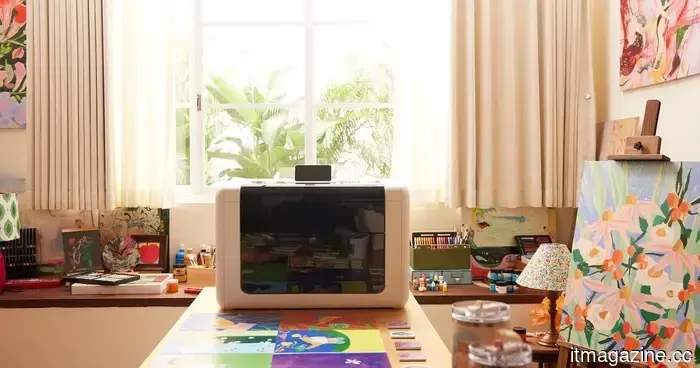 The Role of Desktop UV Printers in Daily Creative Work Environments
Industrial UV printers are recognized for their capacity to produce long-lasting, vivid prints on a variety of materials including glass, wood, and metal. These printers are frequently employed for direct printing on products like bottles, pens, phone cases, personalized signs, and other items. With the emergence of smaller formats in other types of fabrication technology, manufacturers […]
The Role of Desktop UV Printers in Daily Creative Work Environments
Industrial UV printers are recognized for their capacity to produce long-lasting, vivid prints on a variety of materials including glass, wood, and metal. These printers are frequently employed for direct printing on products like bottles, pens, phone cases, personalized signs, and other items. With the emergence of smaller formats in other types of fabrication technology, manufacturers […]
 The DJI Osmo Pocket 4P expands its reach internationally as American vloggers observe from the sidelines.
DJI has launched the Osmo Pocket 4P vlogging camera in the UK, Europe, Canada, and Australia; however, American creators are still unable to purchase it officially.
The DJI Osmo Pocket 4P expands its reach internationally as American vloggers observe from the sidelines.
DJI has launched the Osmo Pocket 4P vlogging camera in the UK, Europe, Canada, and Australia; however, American creators are still unable to purchase it officially.
Google's latest AI enhances robots' balance, improves their hand dexterity, and enables them to work better together.
Google DeepMind's Gemini Robotics 2 enables humanoid robots to walk, perform delicate tasks, and collaborate with other robots, all while ensuring safety around humans.