
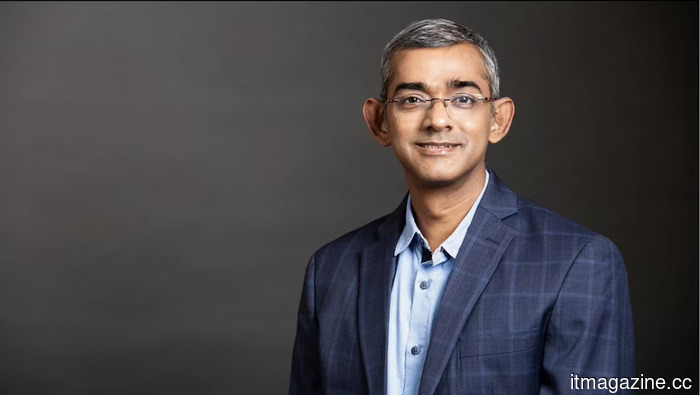
Indian authorities have initiated a case against the head of Meta in India concerning modified videos of Modi.
Hyderabad's cybercrime police have initiated action against Meta India head Arun Srinivas concerning AI-altered videos of Prime Minister Narendra Modi, heightening tensions between the government and the platform. Authorities in Hyderabad have lodged a criminal case against Meta's India chief for the dissemination of AI-manipulated videos of Modi that appeared on Facebook and Instagram, intensifying an ongoing dispute with the government.
The first information report, which was registered on July 31, identifies Arun Srinivas and follows a recent summons issued by New Delhi to Meta regarding content on its services. The complaint focuses on manipulated content, with two Instagram users informing the city's cybercrime police about several digitally altered videos and images of Modi, labeling them as misleading, derogatory, and obscene.
These videos had a political context, emerging in the wake of a student protest at Delhi's Jantar Mantar, organized by a group known as the Cockroach Janta Party, amidst a wave of unrest that has unsettled the government. The police are exploring serious legal implications, examining potential violations under the Bharatiya Nyaya Sanhita, India's new criminal code, and the Information Technology Act.
Currently, the case is in its initial stages. The report clarifies that the investigation is preliminary and no findings have been made so far; nonetheless, naming a high-ranking executive in an FIR is a noteworthy development. In response, Meta has sought to reassure the government by committing to enhance supervision over prominent accounts, mandating that at least two senior employees review such posts before any action is taken, a move aimed at easing tensions.
This conflict has deeper roots. Recently, India’s IT ministry summoned Meta officials for clarifications "at the highest level" following a temporary restriction on a Modi post, which the company attributed to an inadvertent blockage.
India's content moderation framework has been tailored with companies like Meta in mind. The regime has been increasingly assertive regarding how major platforms manage content involving the prime minister. The student protests have raised the stakes further, leading to the resignation of an education minister and prompting Modi's first public remarks on the situation, making anything related to his image politically sensitive.
India represents a significant and sensitive market for Meta, being one of its largest user bases, which grants the Indian government considerable influence and causes the company to exercise caution in its interactions with authorities.
The potential legal implications are real, yet unpredictable. Complaints against technology executives in India often serve as pressure tactics and may not always culminate in formal charges, but they carry the threat of summonses, travel restrictions, and extended scrutiny.
There is a historical precedent for this approach. Indian authorities have previously opened cases against and summoned executives from various platforms, leveraging individual accountability to exert pressure on companies based overseas.
The issue of deepfakes has become a pivotal concern. India has grappled with the regulation of synthetic media for years, with officials occasionally blurring the distinction between deepfakes and standard fake news.
The regulatory framework continues to evolve. The country is developing a more extensive system for supervising social media and streaming services, with manipulated political content sitting uneasily between free speech and defamation.
For Meta, this situation is not unfamiliar. The company finds itself between users sharing legally protected, albeit unflattering, political content and a government that regards derogatory material about Modi as a law enforcement issue.
Meta's decision-making is precarious; excessive content removal could lead to claims of censorship, while insufficient removal opens the door to cases such as this, leaving little margin to appease both parties simultaneously.
The developments ahead will be closely monitored. Regardless of whether the Hyderabad case progresses or dissipates, it indicates India's readiness to employ criminal law and target named executives when enforcing content policing around its leader.
Other articles
 Under EU regulations, AI labels are now mandatory for content that appears authentic.
Companies that develop or utilize AI will soon be required to label content that appears genuine but is not, as the European Union’s significant AI Act transitions from concepts to enforcement. Starting from August 2, providers and users throughout the bloc will be subject to binding regulations.
Under EU regulations, AI labels are now mandatory for content that appears authentic.
Companies that develop or utilize AI will soon be required to label content that appears genuine but is not, as the European Union’s significant AI Act transitions from concepts to enforcement. Starting from August 2, providers and users throughout the bloc will be subject to binding regulations.
 A German court has ruled that the AI music producer Suno violated copyright laws, marking the first instance of such a decision in Europe.
The Munich Regional Court has determined that Suno trained on songs represented by GEMA without authorization and reproduced them, marking one of Europe’s initial binding judgments on AI-generated music.
A German court has concluded that Suno, one of the global leaders in...
A German court has ruled that the AI music producer Suno violated copyright laws, marking the first instance of such a decision in Europe.
The Munich Regional Court has determined that Suno trained on songs represented by GEMA without authorization and reproduced them, marking one of Europe’s initial binding judgments on AI-generated music.
A German court has concluded that Suno, one of the global leaders in...
 Samsung might be developing Galaxy Buds that stay secure while running.
Samsung might be getting ready to launch its first pair of Galaxy Buds designed for workouts, as a recent leak suggests that these earbuds will feature integrated ear hooks.
Samsung might be developing Galaxy Buds that stay secure while running.
Samsung might be getting ready to launch its first pair of Galaxy Buds designed for workouts, as a recent leak suggests that these earbuds will feature integrated ear hooks.
 A German court has ruled that the AI music generator Suno violated copyright, marking a first for Europe.
The Munich Regional Court has determined that Suno used GEMA-represented songs for training without authorization and replicated them, marking one of Europe's initial binding rulings regarding AI-generated music.
A German court has delivered a verdict stating that Suno, a prominent entity in the global...
A German court has ruled that the AI music generator Suno violated copyright, marking a first for Europe.
The Munich Regional Court has determined that Suno used GEMA-represented songs for training without authorization and replicated them, marking one of Europe's initial binding rulings regarding AI-generated music.
A German court has delivered a verdict stating that Suno, a prominent entity in the global...
 DuckDuckGo's latest smart glasses feature no AI and offer complete shade.
DuckDuckGo and Knockaround have introduced sunglasses priced at $35 that feature neither a camera nor a microphone, nor any AI, taking a playful dig at smart glasses brands that capture footage of people without their consent.
DuckDuckGo's latest smart glasses feature no AI and offer complete shade.
DuckDuckGo and Knockaround have introduced sunglasses priced at $35 that feature neither a camera nor a microphone, nor any AI, taking a playful dig at smart glasses brands that capture footage of people without their consent.
 Your upcoming Nvidia GPU might be up to 30% pricier, and the reason is AI.
The RTX upgrade you've been dreaming of might be becoming less attainable as AI continues to push GPU prices upwards.
Your upcoming Nvidia GPU might be up to 30% pricier, and the reason is AI.
The RTX upgrade you've been dreaming of might be becoming less attainable as AI continues to push GPU prices upwards.
Indian authorities have initiated a case against the head of Meta in India concerning modified videos of Modi.
The cybercrime police of Hyderabad have registered a case against Arun Srinivas, the head of Meta India, concerning AI-modified videos of Prime Minister Modi, heightening tensions between the government and the company.