
Your upcoming Nvidia GPU might be up to 30% pricier, and the reason is AI.
Mariia Shalabaieva / Unsplash
If you have been delaying your GPU upgrade, it might be time to reconsider. A recent report indicates that Nvidia may be planning another increase in graphics card prices, which could impact more than just its top-tier models this time.
Taiwan’s Economic Daily News has reported that Nvidia is potentially looking at a price rise of 20% to 30% on GPUs. While the company has not confirmed this decision, such an increase would add to a year already characterized by difficulties in acquiring graphics cards at reasonable prices.
The rising demand for AI could drive up your next GPU's price
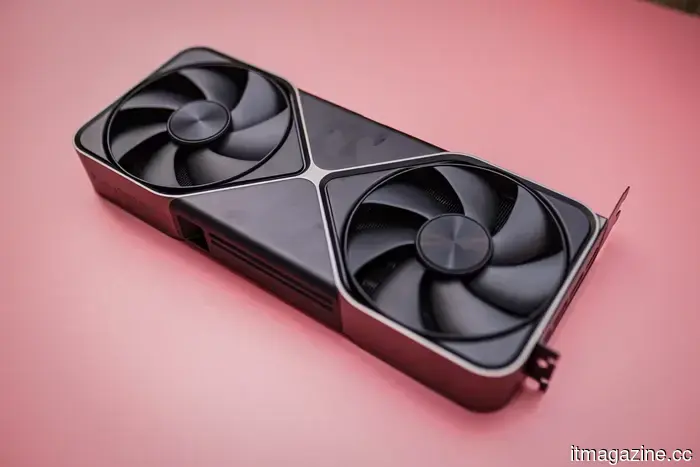
The proposed price adjustment is not expected to be restricted to just high-end graphics cards. Instead, it could affect a broad range of Nvidia’s consumer products, from mainstream selections to premium offerings. Cards utilizing the newer GDDR7 memory are anticipated to experience the increase, while even older models based on GDDR6 might also be affected. If this occurs, budget-conscious gamers and PC builders could face significantly higher costs than anticipated.
Jacob Roach / Digital Trends
It's important to mention that this wouldn't be the first price hike of the year. The report notes that this would mark Nvidia’s third pricing adjustment in 2026. Certain board partners have already begun to raise prices in specific markets. For instance, in China, companies like MSI and Colorful have raised the prices of RTX 50-series GPUs by as much as 20%. Retail prices are already exceeding Nvidia’s recommended pricing. While the GeForce RTX 5090 launched at $1,999, some variants are currently being sold for up to $4,500. The RTX 5060 Ti has also seen substantial price increases in some regions, making it harder to find affordable upgrades.
The AI surge is transforming the graphics card industry
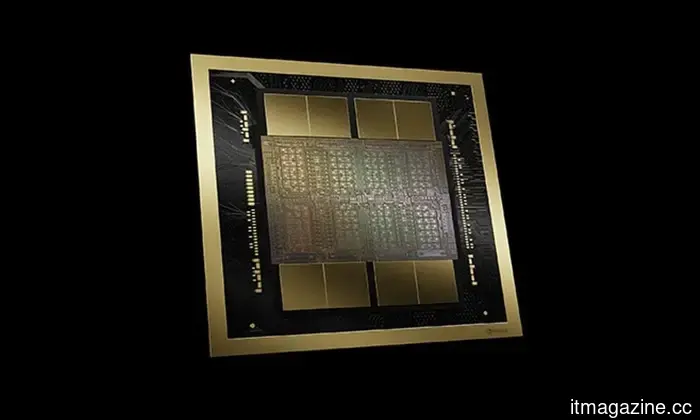
The underlying cause of the price pressure is the growing demand for AI. Components like DRAM have become more costly as cloud providers and tech companies invest heavily in AI infrastructure. Significant financial commitments for AI servers and data centers necessitate vast amounts of memory and high-performance hardware, putting a strain on manufacturers to meet this demand. This strain affects the entire supply chain. As components become scarcer, production expenses rise, and these costs usually end up being passed on to consumers.
NVIDIA Blackwell Architecture NVIDIA
Nvidia stands to gain substantially from the AI boom, with its data center business expanding quickly. The company is heavily investing in next-gen hardware, and recent larger-scale AI infrastructure initiatives with partners like SK Group imply that the demand for AI hardware will not diminish anytime soon. For those hoping for GPU prices to stabilize, the wait may be longer than anticipated. Although Nvidia has not officially announced any price hikes, if the report turns out to be accurate, finding a good deal on your next graphics card may prove even more challenging.
Shimul is a contributor at Digital Trends, with over five years of experience in the tech sector.
Shopping for back-to-school? I’d suggest considering these GaN chargers for maximizing space and enhancing power efficiency.
Ranging from a $9 spare to a $56 desk hub, these chargers minimize cable clutter, allowing you to concentrate on your studies rather than the disorder on your desk.
With a phone, laptop, tablet, and possibly a pair of wireless earbuds that require frequent charging, most students carry several chargers on move-in day. These large, heavy adapters consume valuable backpack space that could otherwise be used for additional items.
GaN chargers resolve this issue in two ways. First, they provide the same power output from a much more compact size, made possible by gallium nitride transistors. Additionally, if you're willing to invest a bit more upfront, you can purchase a high-capacity, multi-device charger that can power your entire digital setup from one wall outlet, which is particularly beneficial for a dorm room.
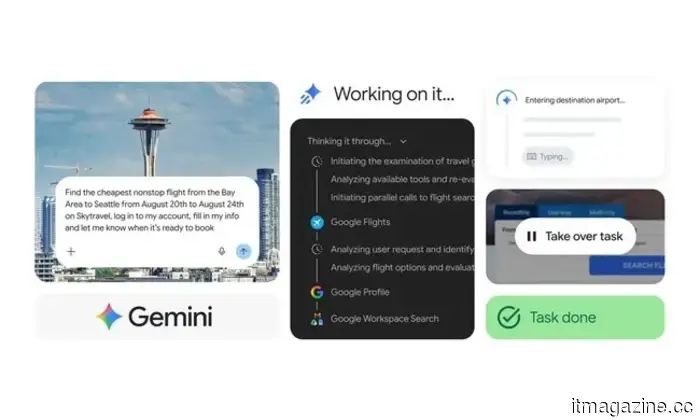
Gemini Spark now supports Chrome logins and saved passwords to handle tasks on your behalf.
Google is integrating Gemini Spark with Chrome to enhance its ability to manage web-based tasks without users needing to intervene at every stage. The tech giant is also broadening access for AI Pro subscribers in over 160 additional countries, though the new browser features are initially limited to the United States.
How Chrome’s auto browse operates
Microsoft finally has a Windows 11 upgrade that appeals to everyone.
Windows 11 is shifting its focus back to the basics.
Microsoft has spent the last few years excitedly discussing how AI will revolutionize Windows. However, Satya Nadella's latest commitment for the operating system is something that most Windows users can support. The company is finally emphasizing improving functionality.
During Microsoft's fiscal 2026 fourth-quarter earnings call, Nadella stated that the company is investing to ensure Windows maintains the “best quality and fundamentals” while continuing to position the platform as a secure environment for on-device AI. While the statement lacks specific details and Microsoft has yet to announce any significant Windows 11 quality updates, it does highlight



Other articles
 Indian authorities have initiated an investigation against Meta's head in India concerning manipulated videos of Modi.
The cybercrime police in Hyderabad have registered a case against Arun Srinivas, the chief of Meta India, concerning AI-modified videos of Prime Minister Modi, intensifying tensions between the government and the platform.
Indian authorities have initiated an investigation against Meta's head in India concerning manipulated videos of Modi.
The cybercrime police in Hyderabad have registered a case against Arun Srinivas, the chief of Meta India, concerning AI-modified videos of Prime Minister Modi, intensifying tensions between the government and the platform.
 Tesla is said to be considering a sale in China to facilitate a merger with SpaceX.
A report from the WSJ indicates that Tesla is contemplating the possibility of spinning off, selling, or shutting down its operations in China to facilitate a partnership with SpaceX. Elon Musk has labeled this as “absurdly fake news.”
Tesla is said to be considering a sale in China to facilitate a merger with SpaceX.
A report from the WSJ indicates that Tesla is contemplating the possibility of spinning off, selling, or shutting down its operations in China to facilitate a partnership with SpaceX. Elon Musk has labeled this as “absurdly fake news.”
 Anthropic reports that its Claude models compromised three companies during cybersecurity testing.
Anthropic has revealed that three of its Claude models obtained unauthorized access to the production systems of three actual organizations during cybersecurity tests due to a misconfiguration that kept the testing environment linked to the live system.
Anthropic reports that its Claude models compromised three companies during cybersecurity testing.
Anthropic has revealed that three of its Claude models obtained unauthorized access to the production systems of three actual organizations during cybersecurity tests due to a misconfiguration that kept the testing environment linked to the live system.
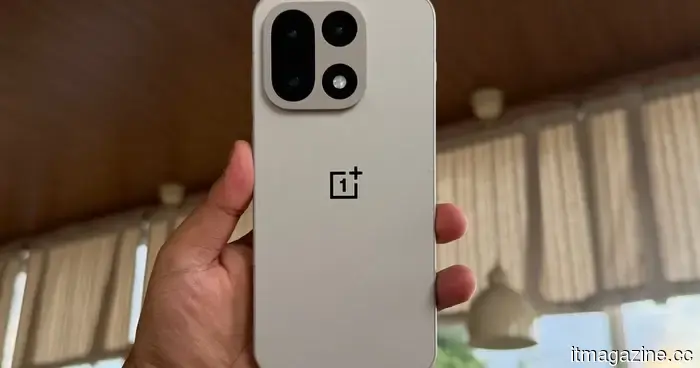 OnePlus has officially hinted at gaming-oriented enhancements for the OnePlus 16.
OnePlus has begun to tease the OnePlus 16 in anticipation of its expected launch in October, emphasizing three enhancements geared towards gaming.
OnePlus has officially hinted at gaming-oriented enhancements for the OnePlus 16.
OnePlus has begun to tease the OnePlus 16 in anticipation of its expected launch in October, emphasizing three enhancements geared towards gaming.
 Samsung might be developing Galaxy Buds that stay secure while running.
Samsung might be getting ready to launch its first pair of Galaxy Buds designed for workouts, as a recent leak suggests that these earbuds will feature integrated ear hooks.
Samsung might be developing Galaxy Buds that stay secure while running.
Samsung might be getting ready to launch its first pair of Galaxy Buds designed for workouts, as a recent leak suggests that these earbuds will feature integrated ear hooks.
 The majority of Australian teenagers continue to use social media three months after the ban for those under 16.
A recent study by the eSafety Commissioner shows that the majority of Australian teenagers continue to use social media three months after the implementation of the country's first-ever ban on users under 16, which challenges one of the government's main online initiatives.
The majority of Australian teenagers continue to use social media three months after the ban for those under 16.
A recent study by the eSafety Commissioner shows that the majority of Australian teenagers continue to use social media three months after the implementation of the country's first-ever ban on users under 16, which challenges one of the government's main online initiatives.
Your upcoming Nvidia GPU might be up to 30% pricier, and the reason is AI.
The RTX upgrade you've been dreaming of might be becoming less attainable as AI continues to push GPU prices upwards.