
The Lava Tokenization Sandbox provides Electric Blue with the necessary infrastructure for a €500 million launch in Germany.
TL;DR: Last year, Germany reduced over 2,700 GWh of solar generation and needs to expand battery storage from about 30 GWh to between 100 and 170 GWh by 2030. Electric Blue believes tokenization could assist in financing this expansion. As the first energy project within Lava Network’s Tokenization Sandbox, it aims to raise up to €500 million for battery assets, commencing with a 6 MW project in Saxony-Anhalt. The sandbox has received over 40 institutional applications, including a $5.4 billion real estate project in the Dominican Republic.
Germany faces a battery challenge. In the previous year, the country curtailed more than 2,700 GWh of solar generation while experiencing 573 hours of negative electricity prices, indicating a grid that produces power with no storage capabilities. Fraunhofer ISE estimates that the roughly 29.8 GWh of installed battery storage must increase to between 100 and 170 GWh by 2030.
Leadership is necessary. Electric Blue proposes that tokenization may be part of the solution.
Electric Blue has launched as the first energy deployment within Lava Network’s Tokenization Sandbox, a decentralized infrastructure protocol announced today. The company aims to secure up to €500 million in tokenized financing for battery storage assets across Germany, beginning with a much smaller 6 MW / 18 MWh project in Oranienbaum-Wörlitz, expected to be operational by late 2026 or early 2027. When fully developed, Electric Blue anticipates that the program could support around 580 MW of battery capacity and about 1,750 MWh of storage capacity.
What Lava does: Lava provides decentralized RPC and API infrastructure, facilitating communication between applications and blockchain networks without relying on a single centralized provider. The sandbox allows selected institutions to access this infrastructure to test asset issuance and settlement with reliable connectivity prior to launching live projects. Since its introduction in June, Lava has attracted over 40 institutional applications from organizations considering real-world asset (RWA) tokenization.
"When we launched the Sandbox, our objective was to assist institutions in moving beyond theoretical discussions and start evaluating tokenization in practical environments," stated Nimrod Knoller, head of the Lava Foundation.
In addition to the energy deployment, Lava’s first cohort includes a partnership with BHL, which is exploring blockchain infrastructure for Alba Bay – a planned $5.4 billion master development in the Dominican Republic encompassing around 40 million square meters and 40,000 residential units, led by Israeli entrepreneur Yossi Abadi. The remainder of the cohort is focused on finance, featuring Bitbond, APPLAYER, and AEREDIUM on payments and settlement; SHIFT, an Israeli platform examining tokenized bonds and equities; and Toto Finance, which tokenizes physical commodities like gold, silver, copper, and diamonds. Around 40 more organizations are undergoing evaluation.
The case for tokenized infrastructure: Grid-scale batteries are capital-intensive and fixed in location while generating predictable revenue from arbitrage and grid services – characteristics that investors typically appreciate but find challenging to access in small increments. Tokenization aims to reduce that exposure and expedite settlement.
Currently, the Oranienbaum-Wörlitz project has a clear commissioning date, positioning it ahead of many similar initiatives. If it launches as scheduled and the financing structure withstands scrutiny from German regulators, it will represent one of the more significant data points produced by the tokenization sector.
Other articles
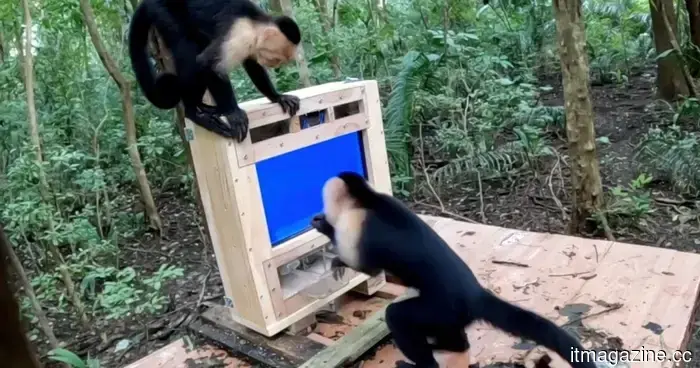 AI is not merely being imposed on us; even monkeys in the forest are now part of the test audience for scientific research.
AI has already infiltrated nearly every facet of our lives. Currently, it is found in the rainforest, where wild capuchin monkeys are using an AI-equipped touchscreen to obtain banana rewards as part of an innovative research project.
AI is not merely being imposed on us; even monkeys in the forest are now part of the test audience for scientific research.
AI has already infiltrated nearly every facet of our lives. Currently, it is found in the rainforest, where wild capuchin monkeys are using an AI-equipped touchscreen to obtain banana rewards as part of an innovative research project.
 Gemini on Mac can now transcribe your speech and respond to what it observes.
Google is enhancing the Gemini application for Mac by introducing system-wide dictation activated by the Fn key, along with an optional mode that enables Gemini to gather context from the current display for more intricate tasks.
Gemini on Mac can now transcribe your speech and respond to what it observes.
Google is enhancing the Gemini application for Mac by introducing system-wide dictation activated by the Fn key, along with an optional mode that enables Gemini to gather context from the current display for more intricate tasks.
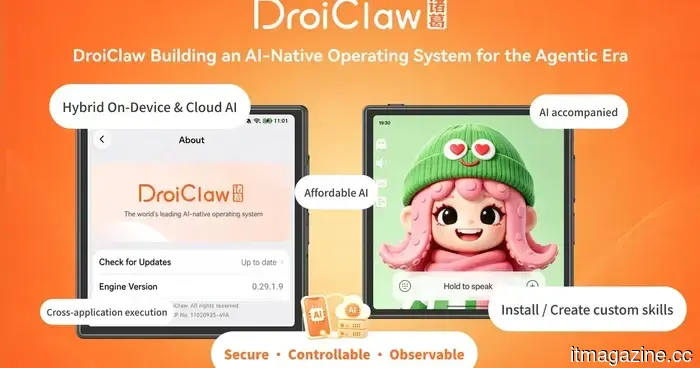 DroiClaw is transforming smart devices from being app-based to utilizing AI-native operating systems.
Transferring data between applications and repetitive prompts may soon become obsolete. Although AI has already changed the way we work and interact, DroiClaw is designing smartphones from scratch with the aim of integrating artificial intelligence as the core of the operating system.
DroiClaw is transforming smart devices from being app-based to utilizing AI-native operating systems.
Transferring data between applications and repetitive prompts may soon become obsolete. Although AI has already changed the way we work and interact, DroiClaw is designing smartphones from scratch with the aim of integrating artificial intelligence as the core of the operating system.
 Meta's revenue exceeded expectations, although free cash flow plummeted by 91%.
Meta's revenue increased by 28% to reach $60.8 billion; however, profit declined by 14%, and free cash flow plummeted by 91% to $784 million due to rising expenses associated with its AI development. As a result, the stock fell.
Meta's revenue exceeded expectations, although free cash flow plummeted by 91%.
Meta's revenue increased by 28% to reach $60.8 billion; however, profit declined by 14%, and free cash flow plummeted by 91% to $784 million due to rising expenses associated with its AI development. As a result, the stock fell.
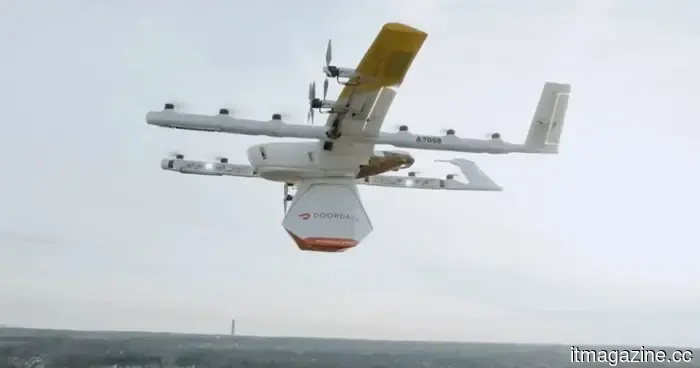 DoorDash aims to deliver your food order using a drone in the future.
DoorDash received FAA clearance to launch DoorDash Air, an internal drone delivery service, positioning itself alongside Wing, Zipline, and Amazon as one of just eight certified drone operators in the US.
DoorDash aims to deliver your food order using a drone in the future.
DoorDash received FAA clearance to launch DoorDash Air, an internal drone delivery service, positioning itself alongside Wing, Zipline, and Amazon as one of just eight certified drone operators in the US.
 Lilian Weng departs from Thinking Machines and re-enters OpenAI within days.
Lilian Weng left Thinking Machines due to stress and health issues, only to rejoin OpenAI shortly after to focus on recursive self-improvement.
Lilian Weng departs from Thinking Machines and re-enters OpenAI within days.
Lilian Weng left Thinking Machines due to stress and health issues, only to rejoin OpenAI shortly after to focus on recursive self-improvement.
The Lava Tokenization Sandbox provides Electric Blue with the necessary infrastructure for a €500 million launch in Germany.
Electric Blue represents the inaugural live deployment within Lava Network's Tokenization Sandbox, aiming for up to €500 million in tokenized funding for battery energy storage throughout Germany. Since June, the sandbox has received more than 40 applications from institutions.