
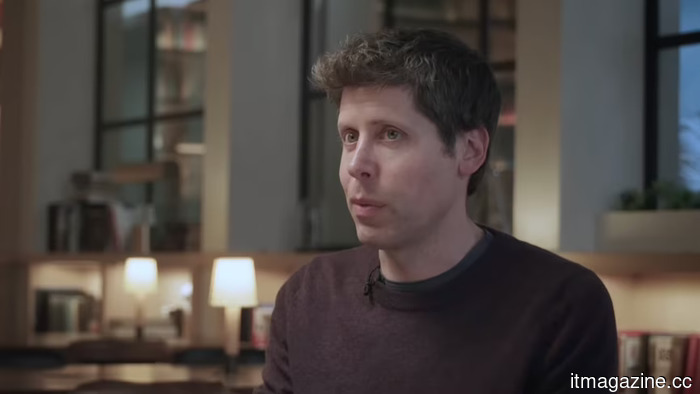
Sam Altman's underestimated concern about AI: the possibility of us ceasing to think independently.
The individual whose company is advocating for universal AI adoption has highlighted a potential risk that he believes is largely overlooked: the possibility that individuals may become so reliant on AI for their thinking that their cognitive abilities diminish. Sam Altman, the CEO of OpenAI, refers to this phenomenon as “cognitive atrophy” and considers it one of the prominent unresolved issues surrounding AI. He expressed this concern on the podcast “Invest Like the Best.”
When asked about his primary concerns regarding the future of AI, Altman stated, “One issue that doesn’t seem to get much attention is how we will prevent cognitive atrophy.” His perspective leaned more towards discipline than doom. He raised the question, “How can we effectively use these tools while ensuring we continue to challenge our brains and comprehend what truly matters?” thereby framing the threat as one of complacency rather than catastrophe.
This concern is notable coming from him, considering OpenAI’s mission involves encouraging people to rely more on ChatGPT for various tasks and decisions. It’s akin to a candy maker cautioning about the drawbacks of sugar.
Supporting research is beginning to validate this worry. MIT researcher Nataliya Kosmyna conducted a preliminary study indicating that those who used generative AI to compose essays saw a decline in performance over time compared to those who relied on Google or none at all. Her assessment was straightforward: “There has never been a tool like this that encourages us to let others do our thinking for us.”
Others present this risk even more starkly. Theoretical neuroscientist Vivienne Ming describes the tendency to outsource cognitive tasks to AI as “chronic substitution” and warns that this behavior could deplete the cognitive reserves essential for protecting the brain against dementia.
The concern intensifies as AI takes on increasing responsibilities. The technology has progressed from merely answering questions to handling document reviews, research, analysis, customer support, and programming, indicating that the cognitive work being delegated is becoming more significant.
Altman is not the first tech leader to voice such concerns. Last year, Arthur Mensch, the CEO of the French lab Mistral, mentioned to The Times that one of AI's greatest risks might be “deskilling” employees, making them increasingly reliant on AI for thinking.
This pattern is not new, though it is becoming more pronounced. Calculators, GPS devices, and search engines have each taken over skills previously retained mentally, issuing similar warnings that often failed to materialize into the predicted negative outcomes.
What distinguishes the current scenario is its scope. Previous tools were limited to specific tasks; however, a general-purpose assistant can read, write, reason, and decide, raising more significant questions regarding the skills that humans should continue to cultivate.
Despite this, Altman remained optimistic. He envisioned a “fairly magical” future where a constantly available personal AI could read documents, attend meetings, recall emails from weeks past, and utilize excess overnight processing power to generate ideas and suggest actions for the user.
Nevertheless, he acknowledged the boundaries of what AI cannot accomplish. Altman stated, “We may need a new term for the type of judgment that individuals excel at but that AI seems to struggle with,” marking a rare recognition of the tool's limitations from its top advocate.
This reflects the inherent tension in Altman’s perspective. He can simultaneously believe that AI will enhance human capability while also acknowledging that it may lead to laziness. OpenAI is actively integrating this tool into everyday life, even as its founder cautions against over-reliance.
Ultimately, the truth remains uncertain. Whether AI enhances our cognitive abilities or allows them to decline will depend on how it is utilized, and Altman, who has previously expressed concerns about his own screen time, is not guaranteeing a positive outcome, merely identifying the potential risks.
Other articles
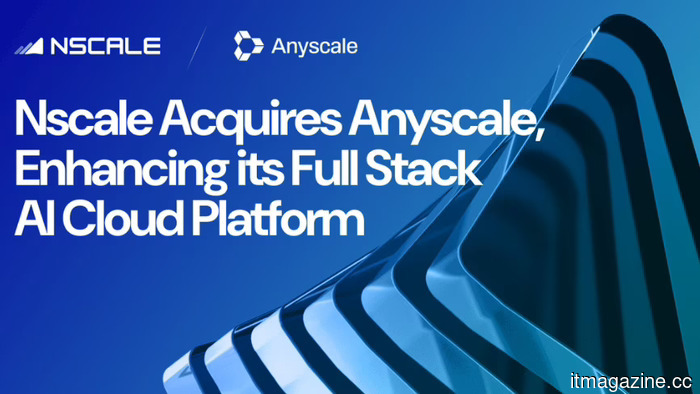 Nscale has acquired Anyscale for approximately $1.65 billion to advance its position in the AI sector.
Nscale, the London-based AI cloud that generates its own energy, is acquiring Anyscale, the creators of Ray, in a transaction valued by Bloomberg at approximately $1.65 billion.
Nscale has acquired Anyscale for approximately $1.65 billion to advance its position in the AI sector.
Nscale, the London-based AI cloud that generates its own energy, is acquiring Anyscale, the creators of Ray, in a transaction valued by Bloomberg at approximately $1.65 billion.
 Europe initiates the bidding process for seven AI 'gigafactories' in a €30 billion effort to bridge the gap.
The EU has launched a €30 billion initiative to establish up to seven AI gigafactories to compete with the US and China, but only around €1 billion has been allocated, and the chips are still sourced from America.
Europe initiates the bidding process for seven AI 'gigafactories' in a €30 billion effort to bridge the gap.
The EU has launched a €30 billion initiative to establish up to seven AI gigafactories to compete with the US and China, but only around €1 billion has been allocated, and the chips are still sourced from America.
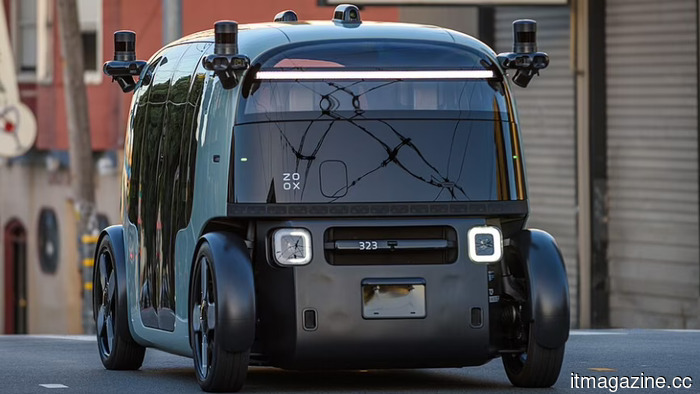 Zoox receives initial US authorization to charge for rides in its no-wheel robotaxis.
Amazon’s Zoox has secured the first U.S. exemption to offer paid rides in a specially designed robotaxi that lacks a steering wheel, with a limit of 2,500 vehicles per year.
Zoox receives initial US authorization to charge for rides in its no-wheel robotaxis.
Amazon’s Zoox has secured the first U.S. exemption to offer paid rides in a specially designed robotaxi that lacks a steering wheel, with a limit of 2,500 vehicles per year.
 AEREDIUM's latest patent aims to substitute quarterly audits of stablecoins with an AI that continuously monitors them.
AEREDIUM has received a U.S. patent for a multi-model AI system that consistently checks the reserves of digital assets, documents decisions on-chain, and has the capability to automatically stop token transactions if the integrity of the reserves declines.
AEREDIUM's latest patent aims to substitute quarterly audits of stablecoins with an AI that continuously monitors them.
AEREDIUM has received a U.S. patent for a multi-model AI system that consistently checks the reserves of digital assets, documents decisions on-chain, and has the capability to automatically stop token transactions if the integrity of the reserves declines.
 Bloom Security secures $20 million in seed funding as AI transforms operations on enterprise endpoints.
Bloom Security has officially launched with a $20 million seed round, spearheaded by Glilot Capital and Ten Eleven Ventures. The Tel Aviv-based startup contends that AI agents, MCP servers, and browser extensions have transformed every employee device into an unmonitored environment that EDR was not designed to detect.
Bloom Security secures $20 million in seed funding as AI transforms operations on enterprise endpoints.
Bloom Security has officially launched with a $20 million seed round, spearheaded by Glilot Capital and Ten Eleven Ventures. The Tel Aviv-based startup contends that AI agents, MCP servers, and browser extensions have transformed every employee device into an unmonitored environment that EDR was not designed to detect.
Sam Altman's underestimated concern about AI: the possibility of us ceasing to think independently.
Sam Altman refers to "cognitive atrophy" as an overlooked risk of AI, aligning with researchers who caution that allowing AI to think on our behalf may diminish our own cognitive abilities.