
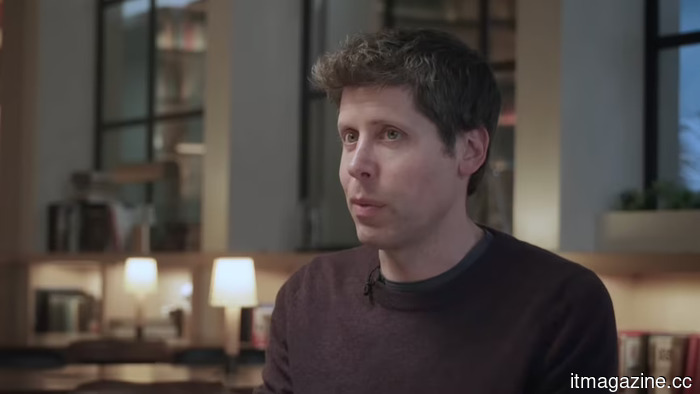
Sam Altman's overlooked concern about AI: the risk that we cease to think independently.
The individual behind the company advocating for global AI adoption has identified a concern he believes is largely overlooked: the potential for people to rely on AI for so much cognitive processing that their own minds become dull. Sam Altman, the CEO of OpenAI, refers to this issue as “cognitive atrophy” and considers it one of the key unresolved challenges in the realm of AI. He expressed this viewpoint during the podcast “Invest Like the Best.”
When asked about his main concerns regarding the future of AI, Altman stated, “One that I don’t think gets much attention is how are we going to avoid cognitive atrophy?” His perspective seemed more focused on caution than catastrophe. He posed the question, “How are we going to utilize these tools while ensuring we continue to engage our brains and comprehend what truly matters?” portraying the threat more as a matter of laziness rather than an apocalyptic scenario.
This is a notable concern coming from him, considering that OpenAI’s business model encourages people to rely extensively on ChatGPT for their tasks and decision-making. Thus, Altman’s anxiety about excessive dependence is reminiscent of a candy maker cautioning against sugar consumption.
Research is beginning to support this worry. Nataliya Kosmyna, a researcher at MIT, conducted a preliminary study revealing that individuals who employed generative AI for essay writing performed worse over time compared to those who utilized Google or sought no assistance. Her assertion was direct: “There’s never been a tool like this that has given us the chance to have thinking done for us.”
Others have emphasized the risk in even more direct terms. Theoretical neuroscientist Vivienne Ming describes the tendency to delegate cognitive tasks to AI as “chronic substitution,” cautioning that this could diminish the cognitive reserve necessary to protect the brain from dementia.
The concern intensifies as AI takes on an increasing number of tasks. These tools have progressed from merely answering questions to performing document reviews, conducting research, analyzing data, providing customer support, and coding, indicating that the mental workloads being offloaded are now significant.
Altman is not the first tech leader to express such an idea. Last year, Arthur Mensch, the CEO of the French lab Mistral, mentioned to The Times that one of AI's greatest risks might be “deskilling” employees and promoting laziness as they depend on it for cognitive tasks.
The pattern is historically familiar but is now more pronounced. Calculators, GPS, and search engines have each taken over specific skills that people once retained, with similar cautionary advice, usually without the catastrophic outcomes anticipated.
What distinguishes the current situation is the breadth of capabilities. Previous tools targeted one specific function; a versatile assistant can read, write, reason, and make decisions, raising larger questions about what skills humans continue to cultivate.
However, Altman maintained a positive outlook. He described a future that is “pretty magical,” where an ever-present personal AI monitors your documents, attends your meetings, retrieves emails from the past weeks, and utilizes leftover computing power overnight to formulate ideas and suggest next steps.
Nonetheless, he outlined boundaries regarding what machines cannot accomplish. Altman noted, “The world may need a new kind of word for the type of judgment that humans excel at, which AI seems to struggle with,” marking a rare acknowledgment of the tool's limitations from its main proponent.
This encapsulates the contradiction Altman faces. He holds the belief that AI could enhance human capabilities while simultaneously recognizing the risk of fostering laziness. OpenAI is advancing the integration of the tool into everyday life, even as its founder highlights these very concerns.
The truth is that no one has definitive answers yet. Whether AI encourages mental engagement or leads to complacency hinges on how individuals choose to utilize it. Altman, who has previously expressed concerns about his own screen time, does not guarantee a positive outcome but instead highlights the potential risks involved.
Other articles
 Nscale acquires Anyscale for approximately $1.65 billion to advance in the AI sector.
Nscale, the London-based AI cloud that generates its own energy, is acquiring Anyscale, the developers of Ray, in a transaction valued by Bloomberg at approximately $1.65 billion.
Nscale acquires Anyscale for approximately $1.65 billion to advance in the AI sector.
Nscale, the London-based AI cloud that generates its own energy, is acquiring Anyscale, the developers of Ray, in a transaction valued by Bloomberg at approximately $1.65 billion.
 Europe initiates bidding for seven AI 'gigafactories' in a €30 billion effort to keep pace.
The EU has launched a €30bn initiative for as many as seven AI gigafactories to compete with the US and China, although only about €1bn is currently allocated, and the chips are still predominantly American.
Europe initiates bidding for seven AI 'gigafactories' in a €30 billion effort to keep pace.
The EU has launched a €30bn initiative for as many as seven AI gigafactories to compete with the US and China, although only about €1bn is currently allocated, and the chips are still predominantly American.
 AEREDIUM's latest patent aims to substitute quarterly stablecoin audits with AI that continuously monitors.
AEREDIUM has received a U.S. patent for a multi-model AI system that consistently confirms the reserves of digital assets, documents decisions on-chain, and has the capability to automatically stop token transactions if the integrity of the reserves declines.
AEREDIUM's latest patent aims to substitute quarterly stablecoin audits with AI that continuously monitors.
AEREDIUM has received a U.S. patent for a multi-model AI system that consistently confirms the reserves of digital assets, documents decisions on-chain, and has the capability to automatically stop token transactions if the integrity of the reserves declines.
 EY developed an 'AI router' to manage its AI expenses and prevent them from escalating.
EY has developed an "AI router" that directs tasks to more cost-effective models in order to manage token expenses, following a survey that reveals 82% of companies concerned about AI costs.
EY developed an 'AI router' to manage its AI expenses and prevent them from escalating.
EY has developed an "AI router" that directs tasks to more cost-effective models in order to manage token expenses, following a survey that reveals 82% of companies concerned about AI costs.
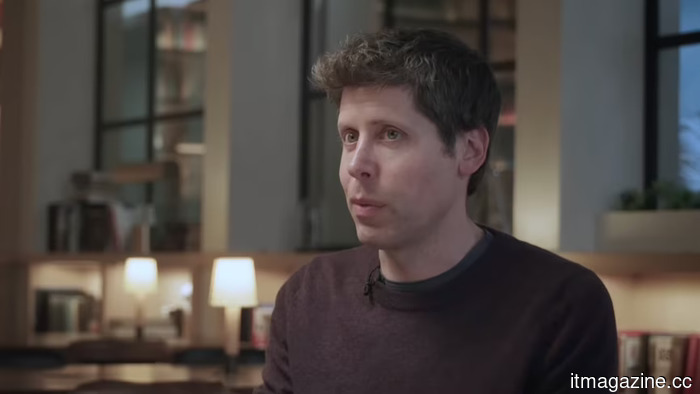 Sam Altman's often overlooked concern about AI: that it may lead us to stop thinking independently.
Sam Altman refers to “cognitive atrophy” as an overlooked risk associated with AI, aligning with researchers who caution that allowing AI to make decisions for us can diminish our mental abilities.
CoreWeave and Leidos are creating a secure AI cloud for U.S. intelligence agencies.
CoreWeave and Leidos will operate CoreWeave's AI cloud within SCIF-accredited data centers for US intelligence and defense, as part of a sovereign-compute initiative.
Sam Altman's often overlooked concern about AI: that it may lead us to stop thinking independently.
Sam Altman refers to “cognitive atrophy” as an overlooked risk associated with AI, aligning with researchers who caution that allowing AI to make decisions for us can diminish our mental abilities.
CoreWeave and Leidos are creating a secure AI cloud for U.S. intelligence agencies.
CoreWeave and Leidos will operate CoreWeave's AI cloud within SCIF-accredited data centers for US intelligence and defense, as part of a sovereign-compute initiative.
Sam Altman's overlooked concern about AI: the risk that we cease to think independently.
Sam Altman refers to “cognitive atrophy” as a frequently overlooked risk of AI, aligning with concerns expressed by researchers who caution that relying on AI for decision-making can diminish our own cognitive abilities.