

AEREDIUM's latest patent aims to substitute quarterly audits of stablecoins with an AI that continuously monitors them.
**Summary:** The USPTO has awarded AEREDIUM a patent for an autonomous reserve auditing system that utilizes four independent AI models which must agree before a verdict is rendered. If reserves go beyond set thresholds, the system can direct a smart contract to block pending transactions. The outcomes are documented on two separate blockchains. This marks the company’s seventh U.S. patent and initially focuses on stablecoins, with potential applications for all reserve-backed digital assets.
The stablecoin sector has traditionally operated under a familiar trust framework where accounting firms conduct periodic reviews of reserve balances and release attestations weeks after collecting data. Given the 24/7 nature of this asset class, this method is becoming increasingly outdated. AEREDIUM, an Australian infrastructure firm, believes that AI can significantly transform this model.
On July 29, 2026, AEREDIUM announced that the U.S. Patent and Trademark Office granted U.S. Patent No. 12,694,407 B1, titled “Autonomous Auditing of Digital Asset Reserves Using a Multi-Model Architecture.” This innovative patent, developed by AEREDIUM's Founder and CEO Albert Dadon, encompasses an AI framework intended for ongoing verification of digital asset reserves, documenting audit outcomes on-chain, and automatically applying established reserve integrity rules as needed.
Rather than scheduling reserve verification monthly or quarterly, AEREDIUM’s method continuously assesses reserve integrity and logs its results on-chain, thus creating a live, cryptographically secure audit trail.
**Four AI Models Instead of One**
Central to the patented system are four distinct AI models, each tasked with evaluating reserves from unique angles. One specializes in fraud detection, another recognizes unusual or novel behavior, a third anticipates reserve health before issues arise, and a compliance engine verifies every decision against established regulatory frameworks.
The system necessitates that at least three of the four AI models concur before a decision is made, while the compliance engine holds the power to override the other models if regulatory standards are breached. AEREDIUM aims to minimize the risk of a single AI malfunction or manipulation compromising the audit’s integrity.
**From Reports to Real-Time Enforcement**
A key feature of the patent is its capability to perform more than just generate reports. In instances where reserve conditions fall below acceptable levels, the platform can automatically direct a smart contract to decline pending token transactions. This proactive approach seeks to prevent further activity until the issue is addressed, rather than discovering reserve discrepancies after they occur.
The system provides one of four verdicts: PASS, CAUTION, ALERT, or HALT, with a HALT resulting in the automatic rejection of pending transactions. Each verdict is permanently logged on a blockchain throughout the audit cycle and anchored to a second independent blockchain, producing an immutable public record that cannot be altered or deleted, even by the issuer.
AEREDIUM claims that audit cycles are accomplished in minutes rather than months, enabling users to confirm the status of reserves whenever they hold or transact with a digital asset.
**Why It Matters**
Reserve transparency has emerged as a critical issue in digital assets in recent years. While many issuers share attestations from reputable accounting firms, these reports act as historical snapshots instead of continuous verification. In fast-moving markets, reserve statuses can change well before the next attestation is available.
AEREDIUM posits that ongoing AI-driven verification could establish a new infrastructure layer for tokenized financial assets, especially as institutions increase their utilization of stablecoins and other reserve-backed digital assets.
“This patent makes trust a live attribute of the asset itself,” stated Albert Dadon, AEREDIUM's Founder and CEO. “Rather than asking users to rely on periodic reports, the system continually verifies reserve integrity and permanently logs every verdict on-chain.”
**Looking Beyond Stablecoins**
While the immediate application is in stablecoins, the underlying technology is applicable to any digital asset backed by reserves or collateral. As tokenized investments, money market funds, treasury products, and other real-world assets transition to blockchain technology, the demand for continuous verification may expand.
This patent represents AEREDIUM’s seventh U.S. patent and, as per the company, serves as a fundamental part of its institutional settlement framework, which integrates hardware, cryptography, and autonomous oversight for securing digital asset transactions.
Whether AI-driven auditing becomes the industry standard is yet to be determined, but AEREDIUM is wagering that trust in digital assets will increasingly rely on continuous verification instead of sporadic disclosures.
Other articles
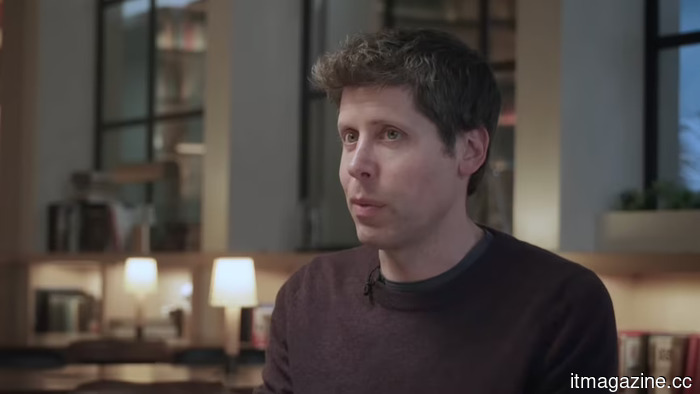 Sam Altman's overlooked concern about AI: the risk that we cease to think independently.
Sam Altman refers to “cognitive atrophy” as a frequently overlooked risk of AI, aligning with concerns expressed by researchers who caution that relying on AI for decision-making can diminish our own cognitive abilities.
CoreWeave and Leidos are creating a secure AI cloud for U.S. intelligence agencies.
CoreWeave and Leidos will operate CoreWeave's AI cloud within SCIF-accredited data centers for US intelligence and defense, as part of a sovereign-compute initiative.
Sam Altman's overlooked concern about AI: the risk that we cease to think independently.
Sam Altman refers to “cognitive atrophy” as a frequently overlooked risk of AI, aligning with concerns expressed by researchers who caution that relying on AI for decision-making can diminish our own cognitive abilities.
CoreWeave and Leidos are creating a secure AI cloud for U.S. intelligence agencies.
CoreWeave and Leidos will operate CoreWeave's AI cloud within SCIF-accredited data centers for US intelligence and defense, as part of a sovereign-compute initiative.
 Bloom Security secures $20 million in seed funding as AI transforms operations on the enterprise endpoint.
Bloom Security has come out of stealth mode with a $20 million seed round, primarily funded by Glilot Capital and Ten Eleven Ventures. The Tel Aviv-based startup claims that AI agents, MCP servers, and browser extensions have transformed every employee's device into an unmonitored environment that traditional EDR solutions were not designed to detect.
Bloom Security secures $20 million in seed funding as AI transforms operations on the enterprise endpoint.
Bloom Security has come out of stealth mode with a $20 million seed round, primarily funded by Glilot Capital and Ten Eleven Ventures. The Tel Aviv-based startup claims that AI agents, MCP servers, and browser extensions have transformed every employee's device into an unmonitored environment that traditional EDR solutions were not designed to detect.
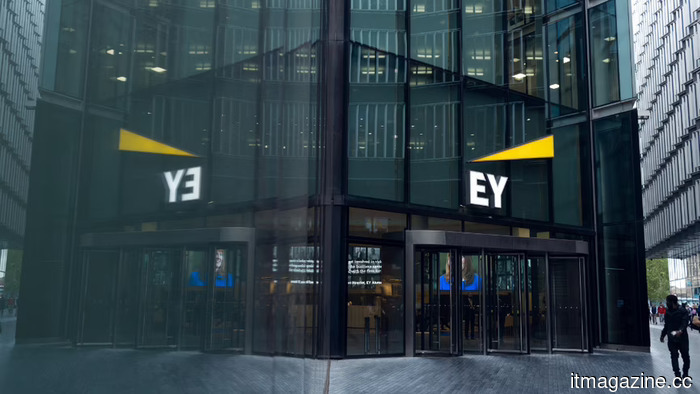 EY developed an 'AI router' to prevent its artificial intelligence expenses from escalating.
EY has created an "AI router" that directs tasks to more affordable models to manage token expenses, following a survey that reveals 82% of companies are concerned about AI costs.
EY developed an 'AI router' to prevent its artificial intelligence expenses from escalating.
EY has created an "AI router" that directs tasks to more affordable models to manage token expenses, following a survey that reveals 82% of companies are concerned about AI costs.
 Europe launches bidding for seven AI 'gigafactories' in a €30 billion effort to catch up.
The EU has initiated a €30 billion initiative to establish up to seven AI gigafactories aimed at competing with the US and China, despite only around €1 billion being allocated, and the chips still being sourced from America.
Europe launches bidding for seven AI 'gigafactories' in a €30 billion effort to catch up.
The EU has initiated a €30 billion initiative to establish up to seven AI gigafactories aimed at competing with the US and China, despite only around €1 billion being allocated, and the chips still being sourced from America.
 Bloom Security secures $20 million in seed funding as AI transforms operations on enterprise endpoints.
Bloom Security has officially launched with a $20 million seed round, spearheaded by Glilot Capital and Ten Eleven Ventures. The Tel Aviv-based startup contends that AI agents, MCP servers, and browser extensions have transformed every employee device into an unmonitored environment that EDR was not designed to detect.
Bloom Security secures $20 million in seed funding as AI transforms operations on enterprise endpoints.
Bloom Security has officially launched with a $20 million seed round, spearheaded by Glilot Capital and Ten Eleven Ventures. The Tel Aviv-based startup contends that AI agents, MCP servers, and browser extensions have transformed every employee device into an unmonitored environment that EDR was not designed to detect.
AEREDIUM's latest patent aims to substitute quarterly audits of stablecoins with an AI that continuously monitors them.
AEREDIUM has received a U.S. patent for a multi-model AI system that consistently checks the reserves of digital assets, documents decisions on-chain, and has the capability to automatically stop token transactions if the integrity of the reserves declines.