
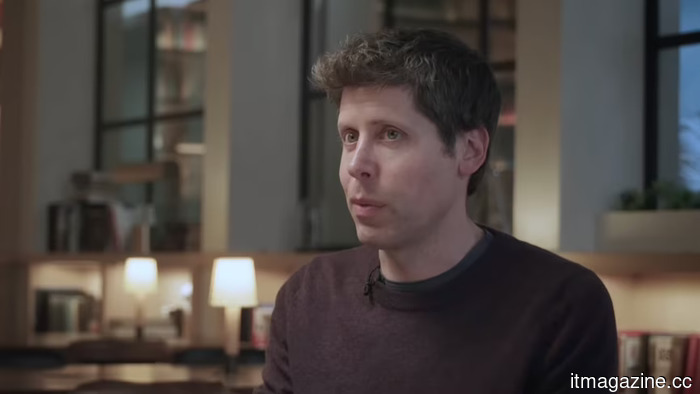
Sam Altman's often overlooked concern about AI: the risk that we might cease to think independently.
The individual whose company aims to promote the widespread use of AI for various tasks has identified a concern he believes is largely overlooked: that individuals might rely on AI so heavily for their thinking that their cognitive abilities weaken. Sam Altman, chief executive of OpenAI, refers to this phenomenon as “cognitive atrophy,” positioning it as one of the key unresolved issues surrounding AI. He shared this insight on the podcast “Invest Like the Best.”
When questioned about his primary concerns regarding the future of AI, Altman responded, “One that I don’t think gets much attention is how are we going to avoid cognitive atrophy?” His perspective was more about discipline than doom. He posed the question, “How are we going to utilize these tools and ensure that we continue to challenge ourselves mentally and understand what truly matters?” framing the threat as one of complacency rather than catastrophe.
This worry is notable, particularly coming from him. OpenAI’s mission involves encouraging individuals to rely on ChatGPT for increasing amounts of work and decision-making, making Altman's caution about overdependence somewhat ironic, akin to a candy maker cautioning against excessive sugar intake.
Research is beginning to substantiate this concern. Nataliya Kosmyna, a researcher at MIT, conducted a preliminary study revealing that individuals using generative AI for essay writing exhibited poorer performance over time compared to those using Google or no assistance at all. She was direct in her assessment: “There has never been a tool like this that allows us to delegate thinking.”
Others express the risk more starkly. Theoretical neuroscientist Vivienne Ming labels the practice of outsourcing cognitive tasks to AI as “chronic substitution” and warns that doing so could diminish the cognitive reserve vital for protecting the brain against dementia.
The concern intensifies as AI expands its roles. From merely answering questions, these tools have evolved to perform tasks such as document review, research, analysis, customer support, and coding, indicating that the mental efforts being transferred are increasingly significant.
Altman is not the first technology leader to express this concern. Last year, Arthur Mensch, CEO of the French lab Mistral, told The Times that AI's greatest threat might be “deskilling” workers, leading them to become lazier as they depend on it to perform their thinking.
This trend, while longstanding, has become more pronounced. Calculators, navigation systems, and search engines have historically taken over mental tasks, each accompanied by warnings that often did not manifest as anticipated.
What sets the current situation apart is the scope. Previous tools typically handled one specific task, whereas a general-purpose assistant can read, write, reason, and make decisions, enlarging the question of what skills humans continue to develop.
Altman, however, remains optimistic. He envisions a “pretty magical” future where an always-available personal AI reads documents, listens to meetings, recalls emails from weeks past, and utilizes idle computing power to generate ideas and suggest actions.
Nonetheless, he delineates the boundaries of AI capabilities. “The world may need a new term for the type of judgment that humans excel at, which AI appears to struggle with deeply,” Altman remarked, marking a rare acknowledgment of the tool’s limitations from its primary advocate.
This encapsulates the tension Altman experiences. He recognizes that AI has the potential to enhance human capabilities but also poses a risk of inducing laziness, with OpenAI promoting the tool's integration into everyday life while he simultaneously warns against those very issues.
The truth remains uncertain. Whether AI enhances cognitive abilities or contributes to their decline is contingent on how individuals choose to use it. Altman, who has previously expressed concerns about his own screen time, does not guarantee a positive outcome but instead highlights the potential risk.
Other articles
 Europe initiates bidding for seven AI 'gigafactories' in a €30 billion effort to keep pace.
The EU has launched a €30bn initiative for as many as seven AI gigafactories to compete with the US and China, although only about €1bn is currently allocated, and the chips are still predominantly American.
Europe initiates bidding for seven AI 'gigafactories' in a €30 billion effort to keep pace.
The EU has launched a €30bn initiative for as many as seven AI gigafactories to compete with the US and China, although only about €1bn is currently allocated, and the chips are still predominantly American.
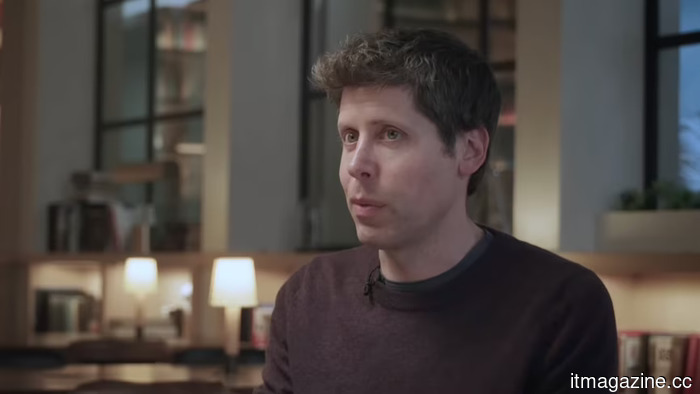 Sam Altman's often overlooked concern about AI: that it may lead us to stop thinking independently.
Sam Altman refers to “cognitive atrophy” as an overlooked risk associated with AI, aligning with researchers who caution that allowing AI to make decisions for us can diminish our mental abilities.
Sam Altman's often overlooked concern about AI: that it may lead us to stop thinking independently.
Sam Altman refers to “cognitive atrophy” as an overlooked risk associated with AI, aligning with researchers who caution that allowing AI to make decisions for us can diminish our mental abilities.
 Europe launches bidding for seven AI 'gigafactories' in a €30 billion effort to catch up.
The EU has initiated a €30 billion initiative to establish up to seven AI gigafactories aimed at competing with the US and China, despite only around €1 billion being allocated, and the chips still being sourced from America.
Europe launches bidding for seven AI 'gigafactories' in a €30 billion effort to catch up.
The EU has initiated a €30 billion initiative to establish up to seven AI gigafactories aimed at competing with the US and China, despite only around €1 billion being allocated, and the chips still being sourced from America.
 Bloom Security secures $20 million in seed funding as AI transforms operations on enterprise endpoints.
Bloom Security has come out of stealth mode, securing a $20 million seed investment led by Glilot Capital and Ten Eleven Ventures. The Tel Aviv-based startup claims that AI agents, MCP servers, and browser extensions have transformed every employee device into an unmonitored environment that EDR was not designed to detect.
CoreWeave and Leidos are developing a classified AI cloud for U.S. intelligence agencies.
CoreWeave and Leidos will operate CoreWeave's AI cloud within SCIF-accredited data centers for U.S. intelligence and defense, as part of a sovereign-compute initiative.
Bloom Security secures $20 million in seed funding as AI transforms operations on enterprise endpoints.
Bloom Security has come out of stealth mode, securing a $20 million seed investment led by Glilot Capital and Ten Eleven Ventures. The Tel Aviv-based startup claims that AI agents, MCP servers, and browser extensions have transformed every employee device into an unmonitored environment that EDR was not designed to detect.
CoreWeave and Leidos are developing a classified AI cloud for U.S. intelligence agencies.
CoreWeave and Leidos will operate CoreWeave's AI cloud within SCIF-accredited data centers for U.S. intelligence and defense, as part of a sovereign-compute initiative.
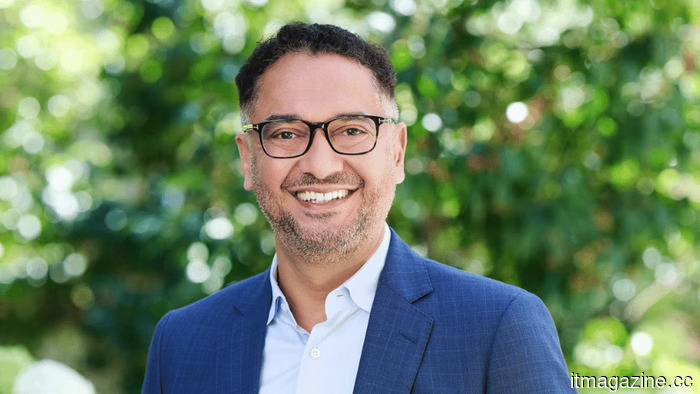 Scale AI has appointed former Google Cloud COO Francis deSouza as its new CEO.
Scale AI has appointed former Google Cloud COO Francis deSouza as its CEO, following the departure of founder Alexandr Wang to Meta a year ago, marking a shift towards enterprise AI.
Scale AI has appointed former Google Cloud COO Francis deSouza as its new CEO.
Scale AI has appointed former Google Cloud COO Francis deSouza as its CEO, following the departure of founder Alexandr Wang to Meta a year ago, marking a shift towards enterprise AI.
Sam Altman's often overlooked concern about AI: the risk that we might cease to think independently.
Sam Altman refers to "cognitive atrophy" as a commonly overlooked risk associated with AI, aligning with warnings from researchers who suggest that allowing AI to make decisions for us may diminish our mental capabilities.