
CoreWeave and Leidos are developing a classified AI cloud for U.S. intelligence agencies.
The AI cloud is entering a secure environment. CoreWeave leases premium GPUs to leading AI laboratories and is now looking to operate that same cloud within the secure facilities that house America’s confidential information, with assistance from contractor Leidos.
The two companies revealed their partnership on Thursday. CoreWeave plans to install its AI platform in Sensitive Compartmented Information Facilities (SCIFs), which are secure locations for storing and analyzing classified information. Leidos will manage aspects that a typical cloud service provider cannot, such as accreditation, secure architecture, cyber operations, and mission integration.
The primary clients are America’s intelligence agencies and the Department of Defense, commonly referred to as the Pentagon. Both companies refer to this initiative as providing “sovereign” AI capabilities. This encompasses the same technology stack that CoreWeave rents to commercial labs, modified to meet the stringent requirements of classified operations.
Their planned offerings include five main components. They aim to provide a classified cloud for training and executing models, as well as tools to assist analysts in integrating intelligence, interpreting imagery, and making decisions. The remaining features focus on security and simulation, including cyber ranges for simulating AI attacks, synthetic data, digital twins for training purposes, and a final component that connects the central cloud to remote, deployed units in the field.
Sachin Jain, CoreWeave’s COO, stated that federal teams require “secure, scalable platforms” to effectively implement AI. He mentioned the company's goal to provide tools used by the world's leading AI labs to “highly secure government environments.”
The main challenge lies not in hardware but in obtaining necessary clearances. A commercial AI cloud is designed for openness with large shared spaces, flexible capacity, and public internet access. In contrast, classified operations require the opposite: hardware must be located in a facility approved for sensitive data, operated by cleared personnel, and disconnected from the public internet. Regulatory oversight and model governance must be inherently integrated, not added later.
This discrepancy is why a government cannot simply lease a portion of a standard cloud region, and it explains why an integrator like Leidos is part of the collaboration.
Leidos possesses the necessary resources for this endeavor, having reported approximately $17.2 billion in revenue last year and employing over 50,000 individuals. “This marks the next evolution of mission technology,” said Jason O’Connor, president of Leidos Intelligence, referring to “sovereign AI computing at scale, secure by design.”
For CoreWeave, securing federal contracts addresses a specific issue: concentration. The company has seen rapid growth by providing computing resources to a select few major clients, reporting $2.08 billion in first-quarter revenue, a 112% increase from the previous year, with a backlog amounting to $99.4 billion. Much of this revenue is tied to major clients like Meta, which made a $21 billion commitment, and a multi-year partnership with Anthropic. Expanding into government sales will help mitigate this risk.
Additionally, this aligns with a broader strategy. CoreWeave established a dedicated federal division last year, compliant with FedRAMP and other governmental certifications. Other companies, including military-focused cyber startups and chip manufacturers supplying supercomputers to the military, are competing for the same budgetary resources.
Washington is also streamlining its software contracts, and the demand for sovereign AI capabilities is expanding beyond the U.S., extending to Europe’s military AI initiatives and beyond.
As for current agreements, there isn’t much finalized yet. CoreWeave's filings indicate that the arrangement hinges on definitive contracts that have not yet been executed. Deployment will adhere to “mission requirements and federal appropriation priorities,” meaning progress will proceed at the pace of governmental processes rather than commercial negotiations.
CoreWeave has substantial capacity to leverage, having exceeded 1GW of active power in the first quarter and secured over 3.5GW. CEO Michael Intrator has indicated a goal of surpassing 8GW by 2030. However, the portion designated for classified operations will be relatively small, limited more by the requirements of where an accredited system can legally be placed than by power capacity.
Other articles
 EY developed an 'AI router' to manage its AI expenses and prevent them from escalating.
EY has developed an "AI router" that directs tasks to more cost-effective models in order to manage token expenses, following a survey that reveals 82% of companies concerned about AI costs.
EY developed an 'AI router' to manage its AI expenses and prevent them from escalating.
EY has developed an "AI router" that directs tasks to more cost-effective models in order to manage token expenses, following a survey that reveals 82% of companies concerned about AI costs.
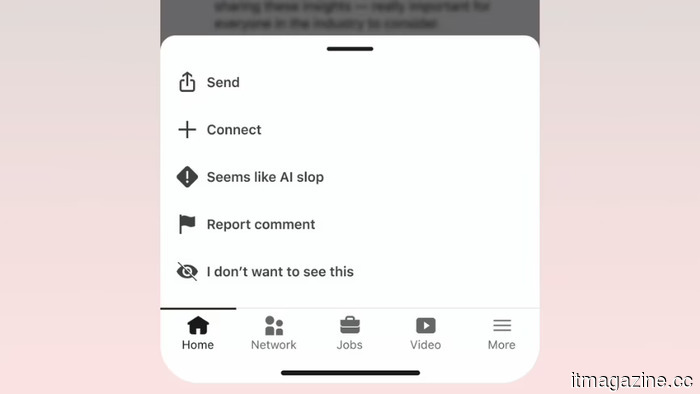 LinkedIn introduces a 'This appears to be AI-generated content' button.
LinkedIn has introduced a “Seems like AI slop” button to identify posts generated by artificial intelligence, in response to its crackdown in May and a report indicating that 41% of long-form posts are AI-generated.
LinkedIn introduces a 'This appears to be AI-generated content' button.
LinkedIn has introduced a “Seems like AI slop” button to identify posts generated by artificial intelligence, in response to its crackdown in May and a report indicating that 41% of long-form posts are AI-generated.
 Bloom Security secures $20 million in seed funding as AI transforms operations on enterprise endpoints.
Bloom Security has come out of stealth mode, securing a $20 million seed investment led by Glilot Capital and Ten Eleven Ventures. The Tel Aviv-based startup claims that AI agents, MCP servers, and browser extensions have transformed every employee device into an unmonitored environment that EDR was not designed to detect.
Bloom Security secures $20 million in seed funding as AI transforms operations on enterprise endpoints.
Bloom Security has come out of stealth mode, securing a $20 million seed investment led by Glilot Capital and Ten Eleven Ventures. The Tel Aviv-based startup claims that AI agents, MCP servers, and browser extensions have transformed every employee device into an unmonitored environment that EDR was not designed to detect.
 I got my hands on Dell’s latest slim laptops, and the new 14S strikes a great balance at a price point below that of the XPS models.
Dell's latest 14S and 16S feature sleek aluminum designs, capacious batteries, OLED display choices, and quicker Intel processors, all at prices lower than the high-end XPS 14.
I got my hands on Dell’s latest slim laptops, and the new 14S strikes a great balance at a price point below that of the XPS models.
Dell's latest 14S and 16S feature sleek aluminum designs, capacious batteries, OLED display choices, and quicker Intel processors, all at prices lower than the high-end XPS 14.
 EY developed an 'AI router' to prevent their AI expenses from escalating.
EY has developed an "AI router" that directs tasks to more affordable models in order to manage token expenses, as its survey reveals that 82% of companies are concerned about AI costs.
EY developed an 'AI router' to prevent their AI expenses from escalating.
EY has developed an "AI router" that directs tasks to more affordable models in order to manage token expenses, as its survey reveals that 82% of companies are concerned about AI costs.
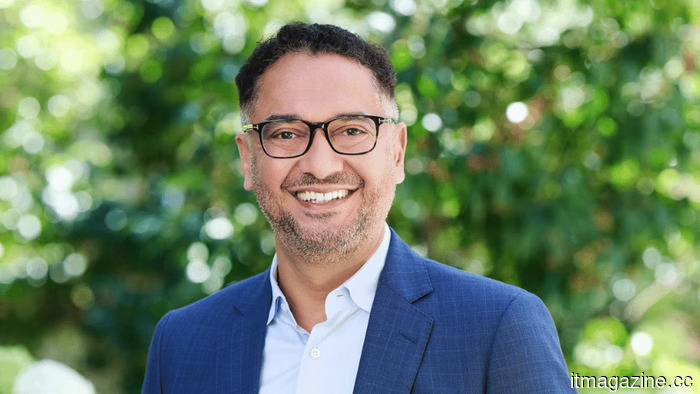 Scale AI has appointed former Google Cloud COO Francis deSouza as its new CEO.
Scale AI has appointed former Google Cloud COO Francis deSouza as its CEO, following the departure of founder Alexandr Wang to Meta a year ago, marking a shift towards enterprise AI.
Scale AI has appointed former Google Cloud COO Francis deSouza as its new CEO.
Scale AI has appointed former Google Cloud COO Francis deSouza as its CEO, following the departure of founder Alexandr Wang to Meta a year ago, marking a shift towards enterprise AI.
CoreWeave and Leidos are developing a classified AI cloud for U.S. intelligence agencies.
CoreWeave and Leidos will operate CoreWeave's AI cloud within SCIF-accredited data centers for U.S. intelligence and defense, as part of a sovereign-compute initiative.