
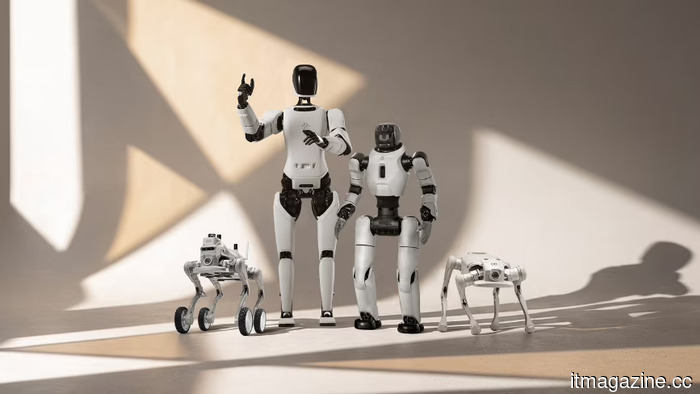
China warns of countermeasures in response to the US ban on robots.
The United States aimed to exclude Chinese robots, prompting Beijing to warn of significant retaliation. China has issued a threat of "resolute" consequences following Washington's decision to prohibit imports of Chinese-produced humanoid robots. According to reports from the New York Times and CNBC, Beijing's commerce ministry described the action as discriminatory and detrimental to trade relations. The ministry has called for the U.S. to reverse its decision, threatening counteractions if it does not comply. It accused the U.S. of excessively interpreting the concept of national security and stated that the decision disrupts global supply chains.
Details of the U.S. ban
The move was triggered by an FCC ruling this week that added foreign-made “advanced robotic devices” to its restricted Covered List, preventing new humanoid robots and robotic dogs from obtaining the necessary import approval to be sold in the U.S. Models that have already received approval can continue to be sold.
The scope of the rule is broader than initially appeared, encompassing nearly all new wireless, software-controlled robots weighing over 4.4 pounds that can perceive their surroundings, including robot lawnmowers, sidewalk delivery bots, and Chinese robotic vacuums. Although the FCC did not specifically name China, Chinese companies dominate this sector.
The concerns from Washington stem from two main fears. One is that connected robots could be used for data collection purposes; the other is that robotics is critical in an AI-centered economy. The Chinese firm Unitree, a leading player in this field, has already raised concerns with the Pentagon due to purported military connections.
China's leverage
China's threat is significant as it possesses real leverage. Analysts point out that two clear areas of leverage are rare earth materials, for which China controls supply, and access to the market for American companies like Tesla and Nvidia, both of which would be painful for the U.S.
The timing of the ban is particularly unfortunate for Chinese robotic manufacturers, as noted by Marc Einstein from Counterpoint, who remarked that this is detrimental to Chinese humanoid producers planning initial public offerings (IPOs) imminently. Companies like Unitree and Agibot have submitted IPO applications, and Hong Kong-listed UBTech saw a temporary drop of over 6 percent.
The challenging reality
However, there is a complication that makes enforcement of the ban difficult. It has become almost impossible to manufacture a competitive humanoid robot without components sourced from China, such as sensors and joints. Furthermore, China boasts a lead in robotics, with more factory robots in operation than the remainder of the world combined.
This conflict arises at a sensitive time. Former President Trump is set to host Xi Jinping in September, with existing tensions already elevated. Treasury Secretary Scott Bessent has suggested the possibility of sanctions related to the alleged "theft" of AI models. Trump himself hinted at a more lenient approach on AI regulations this week to ensure the U.S. maintains its leadership in the sector.
Robotics has emerged as a distinct front in the ongoing tech conflict. The United States has established boundaries around its market, while China is indicating that it can make crossing those boundaries costly.
Other articles
 The Top Password Managers for 2026
The way we protect our online accounts is evolving quicker than many individuals perceive. With more advanced security tools and passwordless login options, modern password managers are transforming into much more than mere password storage solutions, making them deserving of your attention before your next sign-in.
The Top Password Managers for 2026
The way we protect our online accounts is evolving quicker than many individuals perceive. With more advanced security tools and passwordless login options, modern password managers are transforming into much more than mere password storage solutions, making them deserving of your attention before your next sign-in.
 Winamp has returned, now featuring streaming powered by Deezer.
Winamp is set to make a return: a new player expected in 2027 will include a subscription powered by Deezer, in addition to your local files, radio, and podcasts.
Winamp has returned, now featuring streaming powered by Deezer.
Winamp is set to make a return: a new player expected in 2027 will include a subscription powered by Deezer, in addition to your local files, radio, and podcasts.
 Samsung presents a bleak forecast regarding pricing for mobile and PC devices.
Samsung anticipates that memory supply issues will worsen in 2027 and continue into 2028, increasing pressure on prices for phones and PCs.
Samsung presents a bleak forecast regarding pricing for mobile and PC devices.
Samsung anticipates that memory supply issues will worsen in 2027 and continue into 2028, increasing pressure on prices for phones and PCs.
 The head of Mazda has indicated that the MX-5 Miata may potentially be offered in an electric version.
Mazda indicates that the upcoming MX-5 Miata is being developed with an electric future in consideration, while maintaining its lightweight sports car heritage.
The head of Mazda has indicated that the MX-5 Miata may potentially be offered in an electric version.
Mazda indicates that the upcoming MX-5 Miata is being developed with an electric future in consideration, while maintaining its lightweight sports car heritage.
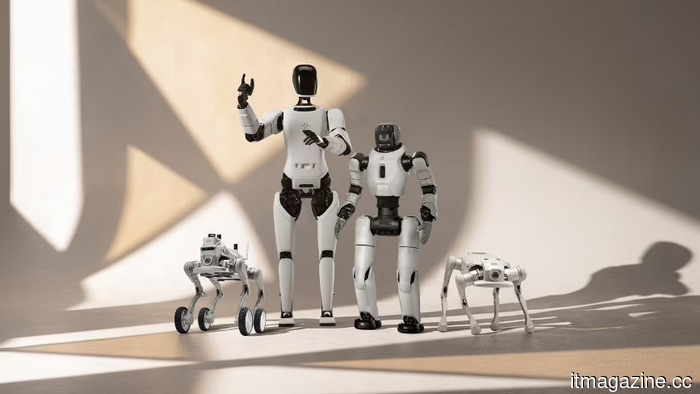 China warns of reprisals in response to the US ban on robots.
China has issued a warning of retaliation in response to the US prohibition on Chinese robot imports, using rare earths and access to the Tesla and Nvidia markets as potential leverage, according to the New York Times.
China warns of reprisals in response to the US ban on robots.
China has issued a warning of retaliation in response to the US prohibition on Chinese robot imports, using rare earths and access to the Tesla and Nvidia markets as potential leverage, according to the New York Times.
 EXCLUSIVE: Jennifer Hale, the star of X-Men ’97, discusses season 2 and her return as Jean Grey.
Jennifer Hale discusses her role as Jean Grey in season 2 of X-Men '97, her return to Marvel's legendary mutant story, and what fans might look forward to next.
EXCLUSIVE: Jennifer Hale, the star of X-Men ’97, discusses season 2 and her return as Jean Grey.
Jennifer Hale discusses her role as Jean Grey in season 2 of X-Men '97, her return to Marvel's legendary mutant story, and what fans might look forward to next.
China warns of countermeasures in response to the US ban on robots.
China has warned of potential retaliation in response to the US prohibition on Chinese robot imports, using rare earths and access to Tesla and Nvidia markets as bargaining chips, according to the NYT.