

Australia is suing Telegram for allowing terrorist content to remain accessible on the app.
The eSafety regulator has initiated civil proceedings seeking as much as A$54.6 million, claiming that Telegram hosted videos related to mass shootings and Islamic State content while ignoring removal requests. Telegram has stated that it will contest the allegations.
Australia's online safety regulator has taken Telegram to court, asserting that the messaging platform allowed the presence of terrorist and violent extremist videos despite being asked to remove them. On July 30, eSafety Commissioner Julie Inman Grant filed civil penalty actions in the Federal Court, marking one of the most aggressive legal moves against the app concerning illegal content.
The material involved in the case is troubling. eSafety contends that Telegram did not remove recordings of the 2022 white-supremacist mass shooting in Buffalo, the 2019 Christchurch mosque shooting, and Islamic State beheadings—some of the most infamous extremist media available online.
The regulator claims it gave the company ample opportunity to comply, starting to urge Telegram to adhere to requests in March 2024, but noted that the platform was “non-responsive for months.” Inman Grant characterized this as “a permissive hosting environment for terrorist content.”
The legal foundation is rooted in Australia’s Online Safety Act, enacted in 2021, which mandates platforms to eliminate illegal and pro-terrorism content once notified. This is the same legislation that the regulator has invoked in other cases, similar to how Ofcom has scrutinized Telegram in the UK.
The financial stakes are considerable, as Telegram could face a maximum penalty of approximately A$54.6 million, or about $38 million, if the court rules against it—an amount that far exceeds the smaller fines previously imposed by eSafety for procedural lapses.
This is not the first confrontation between eSafety and Telegram. The regulator has previously fined the platform for slow responses regarding its handling of child abuse and terrorism-related material, a precursor to the more stringent actions currently before the court.
Inman Grant emphasized the fundamental obligation of platforms, stating, “When platforms are alerted to terrorist content, they must act,” framing the case as an endeavor to enforce a rule that the company is already aware of.
Telegram, however, is standing firm. “We reject these allegations and will contest them in court,” the company declared, noting that in 2026 it blocked over 150,000 “terrorist-related communities,” while touting its broader anti-terrorism efforts.
This type of defense is not new. Telegram has consistently maintained that it actively removes genuinely illegal content at scale while resisting more expansive demands, a position that has led to conflicts with governments from Canberra to Brussels.
The timing is notable, as Telegram is facing challenges on multiple fronts. In the same week, Russia's FSB charged its founder, Pavel Durov, with facilitating terrorism—an accusation the company termed a pretext—while being perceived as too lenient in Australia and too defiant in Moscow.
Australia has emerged as one of the most assertive regulators of online platforms globally. The eSafety office has taken action against X over content orders and is equipping itself with enhanced authorities and larger fines while overseeing various issues, from child safety to a pioneering social media ban for individuals under 16.
The fight against extremist content predates the AI era but remains relevant. Telegram’s lax moderation has led many governments to accuse it of being more accommodating to terrorists than it admits, a claim the company disputes, although it acknowledges the challenge of not capturing every instance.
Europe has enacted stricter regulations, with the EU requiring platforms to eliminate flagged terrorist content within an hour, part of a global transition that regards hosting delays as violations rather than acceptable delays in good faith.
What Australia’s case will examine is enforcement rather than principle. Few would argue that beheading videos should remain accessible; the real issue is whether a foreign-based platform can be held accountable in an Australian court for the speed of its response.
The proceedings are set to progress through the Federal Court. Telegram has vowed to contest the issue, eSafety is aiming for a substantial penalty, and the outcome will determine whether Australia’s online safety framework truly possesses authority or merely a loud voice.
Other articles
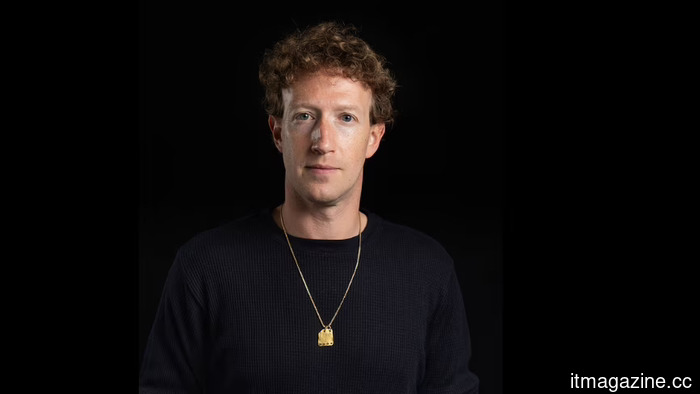 Meta raises its minimum investment in AI as revenue increases, but cash flow declines sharply.
Meta has adjusted its 2026 capital expenditure forecast to a range of $130–145 billion by increasing the lower end. Revenue for Q2 increased by 28%, while free cash flow decreased by 91% due to rising expenditures on AI.
Meta raises its minimum investment in AI as revenue increases, but cash flow declines sharply.
Meta has adjusted its 2026 capital expenditure forecast to a range of $130–145 billion by increasing the lower end. Revenue for Q2 increased by 28%, while free cash flow decreased by 91% due to rising expenditures on AI.
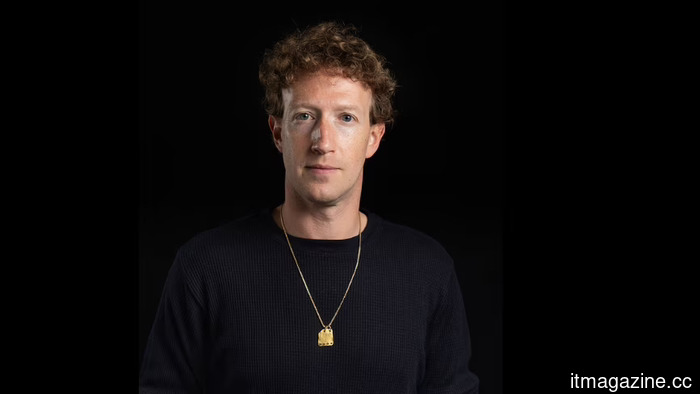 Meta increases its baseline for AI expenditure as revenues rise, although cash flow decreases significantly.
Meta has revised its 2026 capital expenditure forecast to a range of $130–145 billion, increasing the lower limit. In the second quarter, revenue increased by 28%, while free cash flow dropped by 91% due to rising expenses related to AI.
G2A.COM's AI agent, Dave, assists sellers in addressing 14,400 support tickets within a span of 63 days.
G2A.COM introduces Dave, an AI support agent that operates independently, successfully resolving 54% of seller issues and reducing ticket volume by 30% during a 63-day trial conducted in 180 countries. The system integrates with transaction data to prevent inaccuracies.
Meta increases its baseline for AI expenditure as revenues rise, although cash flow decreases significantly.
Meta has revised its 2026 capital expenditure forecast to a range of $130–145 billion, increasing the lower limit. In the second quarter, revenue increased by 28%, while free cash flow dropped by 91% due to rising expenses related to AI.
G2A.COM's AI agent, Dave, assists sellers in addressing 14,400 support tickets within a span of 63 days.
G2A.COM introduces Dave, an AI support agent that operates independently, successfully resolving 54% of seller issues and reducing ticket volume by 30% during a 63-day trial conducted in 180 countries. The system integrates with transaction data to prevent inaccuracies.
 Atlassian places its engineers on an AI budget as the expenses of ‘tokenmaxxing’ take a toll.
Atlassian is providing its R&D employees with limited “AI wallets” ranging from $500 to $2,000 each month, a budget-friendly response to rising AI expenses in the tech industry, addressing the issue of “tokenmaxxing.”
Atlassian places its engineers on an AI budget as the expenses of ‘tokenmaxxing’ take a toll.
Atlassian is providing its R&D employees with limited “AI wallets” ranging from $500 to $2,000 each month, a budget-friendly response to rising AI expenses in the tech industry, addressing the issue of “tokenmaxxing.”
 Aligning the model was never intended to control it.
Model alignment influences AI behavior, yet it cannot track who utilized which model, the data it was based on, or the governing policy in place. Effective governance revolves around the model itself.
G2A.COM's independent AI agent, Dave, assists sellers in addressing 14,400 support tickets within a span of 63 days.
G2A.COM has introduced Dave, an autonomous AI support agent that addressed 54% of seller issues and reduced ticket volume by 30% during a 63-day trial conducted in 180 countries. The system integrates with transaction data to prevent inaccuracies.
Aligning the model was never intended to control it.
Model alignment influences AI behavior, yet it cannot track who utilized which model, the data it was based on, or the governing policy in place. Effective governance revolves around the model itself.
G2A.COM's independent AI agent, Dave, assists sellers in addressing 14,400 support tickets within a span of 63 days.
G2A.COM has introduced Dave, an autonomous AI support agent that addressed 54% of seller issues and reduced ticket volume by 30% during a 63-day trial conducted in 180 countries. The system integrates with transaction data to prevent inaccuracies.
Australia is suing Telegram for allowing terrorist content to remain accessible on the app.
Australia’s eSafety Commissioner has initiated civil proceedings against Telegram, claiming the platform did not take down terrorist videos. Telegram has stated that it will challenge the case.