
Meta raises its minimum investment in AI as revenue increases, but cash flow declines sharply.
Meta informed investors that it plans to increase its spending on artificial intelligence this year, which has led to a tighter capital-expenditure forecast for 2026 by raising the minimum estimate instead of the maximum. The company now anticipates expenditures between $130 billion and $145 billion, up from the previous lower limit of $125 billion, which is nearly twice what was projected a year ago.
This expenditure is directed towards a rapidly growing sector. In the second quarter, Meta reported revenues of $60.8 billion, marking a 28% increase from the previous year and its fastest growth since late 2021, driven by resilient advertising and AI-enhanced recommendations that kept users engaged.
The advertising sector played a crucial role in this growth. Enhanced AI recommendations improved user engagement on Instagram and Facebook, and a robust ad market allowed Meta to convert that increased attention into its most rapid revenue growth in recent years.
However, this growth has not benefitted the cash flow. The free cash flow dropped to $784 million, a staggering 91% decrease from $8.55 billion a year ago, indicating how significantly the AI expansion is consuming the funds generated by the advertisements.
Profitability also suffered. Earnings of $6.18 per share fell short of analysts' expectations of $7.22, partially impacted by legal expenses, despite the revenue surpassing forecasts.
These legal costs are substantial, as Meta recorded a $2.4 billion charge for the quarter, while a coalition of U.S. states is seeking up to $1.4 trillion in penalties, alleging that its products are intentionally addictive to younger users, a legal issue that looms over every quarter.
On a positive note, the user base continues to grow. Meta reported 3.6 billion daily active users across its apps, a 3% increase year on year, a reassuring sign following a previous quarter when daily user numbers had declined.
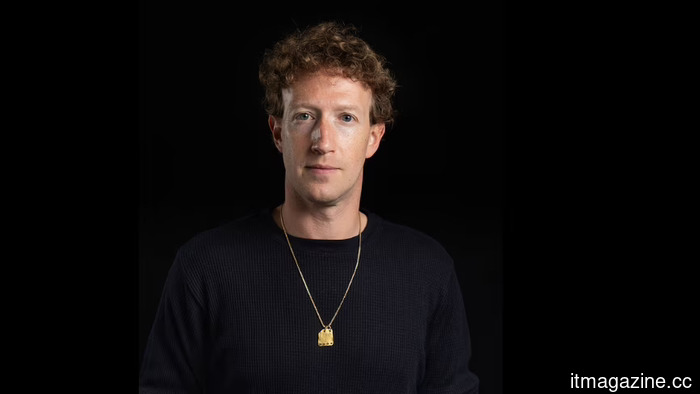
During the call, Zuckerberg clarified the allocation of expenditure. He mentioned that a significant portion of computing resources would be dedicated to training Meta's models, supporting the core advertising business, and powering the anticipated "personal agents" that he believes will evolve into key consumer products.
He also outlined a future plan. Meta intends to "develop a large business catering to large clients," referring to the potential of renting out AI computing resources, a cloud-like initiative that could transform its extensive infrastructure into an income source rather than merely an expense.
This framing addresses investors' concerns. With capital expenditures doubling and cash flow diminishing, investors are eager to know when spending will start yielding earnings. Zuckerberg's response is that the same data centers will eventually cover their costs.
The adjustment of the forecast itself serves as an indicator. By raising the lower end of the range rather than the upper, Meta essentially assures stakeholders that the expenditures will not be understated, reaffirming its commitment to development despite uncertain returns.
This trend is not unique to Meta. In the tech sector, second-quarter results have similarly showcased a pattern of soaring AI investments outpacing generated cash, reflecting a collective industry gamble.
Meta's situation is particularly unique in one way. The company is spending like a cloud service provider without yet being classified as one, channeling resources from an advertising model towards superintelligence aspirations and asking shareholders to have faith that both sectors will eventually align.
For the moment, the market appears accustomed to the situation. Strong revenues, declining profits, increasing capital expenditures, and a CEO asserting that the investments are not a risk but a strategic advantage persist quarter after quarter.
Wall Street has adapted to this balance, at least for now. Meta's stock has remained relatively stable throughout the spending surge, based on the premise that a company achieving 28% revenue growth can afford substantial investment, as long as growth does not falter.
The eventual reckoning, should it occur, will center on timing. Meta can sustain this expansion at present, but the question raised by its dwindling free cash flow is how many more quarters it can maintain this level of spending before needing to see a return on investment.
Other articles
 I doubted that the budget Alienware 15 would perform well. I was mistaken.
The Dell Alienware 15 (2026) impressed us with its high-quality design, strong initial impact, and competitive pricing. Here’s our firsthand experience.
I doubted that the budget Alienware 15 would perform well. I was mistaken.
The Dell Alienware 15 (2026) impressed us with its high-quality design, strong initial impact, and competitive pricing. Here’s our firsthand experience.
 Aligning the model was never intended to control it.
Model alignment influences AI behavior, but it is unable to track who utilized which model, the data involved, and the governing policies in place. True governance revolves around the model itself.
Aligning the model was never intended to control it.
Model alignment influences AI behavior, but it is unable to track who utilized which model, the data involved, and the governing policies in place. True governance revolves around the model itself.
 The live-shopping app Whatnot is currently in discussions to almost double its valuation to $20 billion.
Whatnot, the livestream shopping platform, is discussing a funding round that would value the company at approximately $20 billion, an increase from $11.5 billion at the end of 2024, as live commerce expands in the West.
The live-shopping app Whatnot is currently in discussions to almost double its valuation to $20 billion.
Whatnot, the livestream shopping platform, is discussing a funding round that would value the company at approximately $20 billion, an increase from $11.5 billion at the end of 2024, as live commerce expands in the West.
 The live-shopping platform Whatnot is in discussions to almost double its valuation to $20 billion.
Whatnot, the livestream-shopping platform, is negotiating to raise capital at a valuation of approximately $20 billion, an increase from $11.5 billion in late 2024, as live commerce expands in the West.
The live-shopping platform Whatnot is in discussions to almost double its valuation to $20 billion.
Whatnot, the livestream-shopping platform, is negotiating to raise capital at a valuation of approximately $20 billion, an increase from $11.5 billion in late 2024, as live commerce expands in the West.
 Australia is suing Telegram for allowing terrorist content to remain accessible on the app.
Australia’s eSafety Commissioner has initiated civil proceedings against Telegram, claiming the platform did not take down terrorist videos. Telegram has stated that it will challenge the case.
Australia is suing Telegram for allowing terrorist content to remain accessible on the app.
Australia’s eSafety Commissioner has initiated civil proceedings against Telegram, claiming the platform did not take down terrorist videos. Telegram has stated that it will challenge the case.
 Atlassian places its engineers on an AI budget as the expenses of ‘tokenmaxxing’ take a toll.
Atlassian is providing its R&D employees with limited “AI wallets” ranging from $500 to $2,000 each month, a budget-friendly response to rising AI expenses in the tech industry, addressing the issue of “tokenmaxxing.”
Atlassian places its engineers on an AI budget as the expenses of ‘tokenmaxxing’ take a toll.
Atlassian is providing its R&D employees with limited “AI wallets” ranging from $500 to $2,000 each month, a budget-friendly response to rising AI expenses in the tech industry, addressing the issue of “tokenmaxxing.”
Meta raises its minimum investment in AI as revenue increases, but cash flow declines sharply.
Meta has adjusted its 2026 capital expenditure forecast to a range of $130–145 billion by increasing the lower end. Revenue for Q2 increased by 28%, while free cash flow decreased by 91% due to rising expenditures on AI.