
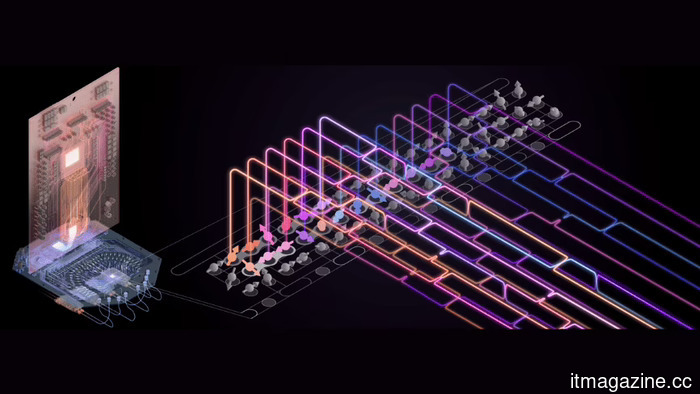
A self-operating quantum chip and the IBM agreement it clarifies.
Six days ago, IBM announced its intention to acquire a quantum-computing lab known for developing a specific type of qubit that IBM does not currently produce. This week, the lab highlighted its capabilities. HRL Laboratories revealed a groundbreaking achievement in Nature on Wednesday: a silicon quantum processor that effectively operates autonomously. The Malibu-based research facility is jointly owned by Boeing and General Motors. IBM had reached an agreement to acquire it on July 23, prior to the publication of the research.
The wiring dilemma
Every quantum computer encounters a similar scaling issue. The qubits are housed in a refrigerator maintained at near absolute zero, while the electronics that manage them operate at room temperature, situated in racks. Each qubit requires individual control lines running down into the cold environment. As the number of qubits expands to the millions necessary for a functional machine, the wiring becomes an unmanageable mess.
HRL tackled this problem by relocating the controller into the cold environment. They developed a custom chip that operates at approximately 4 kelvin, situated alongside the qubits in the fridge. This chip generated all control signals for an 18-qubit device and, importantly, performed error correction autonomously, without real-time assistance from room-temperature electronics, according to the company. HRL claims this is a significant milestone.
Maintaining the qubits' temperature
Placing warm electronics next to cold qubits may seem counterintuitive. Even at 4 kelvin, the controller is warmer compared to the qubits. To address this, HRL designed a new superconducting ribbon cable. This cable transmits hundreds of control signals to the qubits while transferring minimal heat, allowing the delicate quantum states to remain intact.
The data supports this assertion. HRL reports that control errors are ten times lower than any earlier demonstration with this type of qubit. Each operation is completed in under a microsecond. When the team expanded its error-correcting code by adding more qubits, the error rate reduced by nearly five times. This “error suppression” is crucial for all quantum computers, and the results corresponded with the team's models.
Focus on manufacturability, not just performance
HRL emphasizes the importance of cost alongside performance. The qubit chip, cable, and controller are all created using standard semiconductor fabrication processes. This is central to their proposal.
"The technologies that facilitated conventional computing were not only the highest performing but also the ones that could be produced affordably and at scale. We believe quantum computing will take a similar trajectory. Our objective is to manufacture these powerful computers using standard microchip production lines and fit each unit within a single refrigerator. This strategy will keep production expenses low and make the technology accessible for a broader range of business and scientific challenges," stated Rob Vasquez, HRL’s CEO. His premise is straightforward: the successful quantum machine will be the one that can actually be constructed, much like silicon dominated traditional computing.
IBM's motivation for the acquisition
This acquisition aligns with IBM's strategic plans. The company has placed its quantum roadmap on a different type of qubit, specifically superconducting qubits. Its major machine, Starling, is slated for 2029, while HRL’s silicon spin qubits represent a competitive approach. Acquiring HRL acts as both a safeguard and a strategic expansion.
Since both qubit types utilize silicon, HRL’s control chips, interconnects, and packaging will be beneficial to IBM, regardless of which technology prevails. Jay Gambetta, IBM’s research chief, remarked that the HRL team “brings a wide array of technologies that will enhance IBM’s long-term objectives.”
The acquisition also provides IBM with an alternative strategy in a competitive landscape, particularly as governments are increasingly viewing quantum technology as strategic. The financial details of the deal were not disclosed, but it is expected to be finalized by the end of September. Boeing and GM will continue their collaboration with IBM afterwards. The timing is notable: IBM finalized the acquisition on July 23, and the public learned of the achievement just six days later.
Other articles
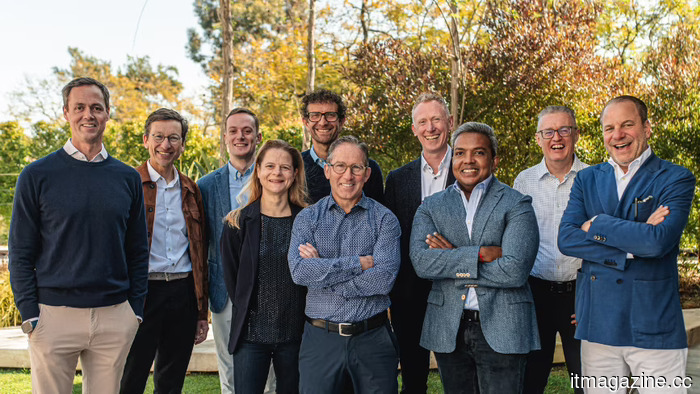 Highland Europe has finalized a €1.1 billion fund dedicated to continuing support for European scale-ups.
Highland Europe has completed the closing of its sixth fund, totaling €1.1 billion, to support growth-stage technology in Europe. This comes after a year marked by exits, including the sale of Nexthink for approximately $3 billion, and the promotion of two partners.
Highland Europe has finalized a €1.1 billion fund dedicated to continuing support for European scale-ups.
Highland Europe has completed the closing of its sixth fund, totaling €1.1 billion, to support growth-stage technology in Europe. This comes after a year marked by exits, including the sale of Nexthink for approximately $3 billion, and the promotion of two partners.
 Blue Owl's Stack is pursuing a $5.9 billion loan, contributing to the surge in debt for AI data centers.
Blue Owl's data center division, Stack, is looking for a loan of approximately $5.9 billion, according to Bloomberg, just months after securing a $2.1 billion deal, as the demand for funding to enhance AI capabilities increases.
Blue Owl's Stack is pursuing a $5.9 billion loan, contributing to the surge in debt for AI data centers.
Blue Owl's data center division, Stack, is looking for a loan of approximately $5.9 billion, according to Bloomberg, just months after securing a $2.1 billion deal, as the demand for funding to enhance AI capabilities increases.
 Meta claims that its AI is increasing the amount of time you spend on Instagram.
According to Meta, time spent on Instagram increased by double digits last quarter, fueled by enhanced personalized AI recommendations, despite the company facing lawsuits concerning that design.
Meta claims that its AI is increasing the amount of time you spend on Instagram.
According to Meta, time spent on Instagram increased by double digits last quarter, fueled by enhanced personalized AI recommendations, despite the company facing lawsuits concerning that design.
 Relation introduces MORGAN, a cell model, along with a $110 million agreement with GSK.
Relation has revealed MORGAN, an AI "foundation model of the cell," along with a GSK partnership valued at up to $110 million to generate the data necessary for its training.
Relation introduces MORGAN, a cell model, along with a $110 million agreement with GSK.
Relation has revealed MORGAN, an AI "foundation model of the cell," along with a GSK partnership valued at up to $110 million to generate the data necessary for its training.
 Mark Zuckerberg predicts that billions will possess a personal AI agent within the next five years.
Mark Zuckerberg forecasted that billions will possess a personal AI agent within the next five years, despite Meta experiencing a 91% decline in free cash flow and a 10% drop in its stock price.
Mark Zuckerberg predicts that billions will possess a personal AI agent within the next five years.
Mark Zuckerberg forecasted that billions will possess a personal AI agent within the next five years, despite Meta experiencing a 91% decline in free cash flow and a 10% drop in its stock price.
 Waymo aims to make your upcoming robotaxi experience resemble your living room rather than a traditional taxi.
Waymo has introduced its Ojai in-car experience, incorporating Google Gemini, adaptive multi-screen controls, and a revamped interface to enhance the personalization of future robotaxi rides.
Waymo aims to make your upcoming robotaxi experience resemble your living room rather than a traditional taxi.
Waymo has introduced its Ojai in-car experience, incorporating Google Gemini, adaptive multi-screen controls, and a revamped interface to enhance the personalization of future robotaxi rides.
A self-operating quantum chip and the IBM agreement it clarifies.
HRL announced a silicon quantum processor capable of performing its own error correction internally while in the fridge. This development came just six days after IBM reached an agreement to acquire HRL.