
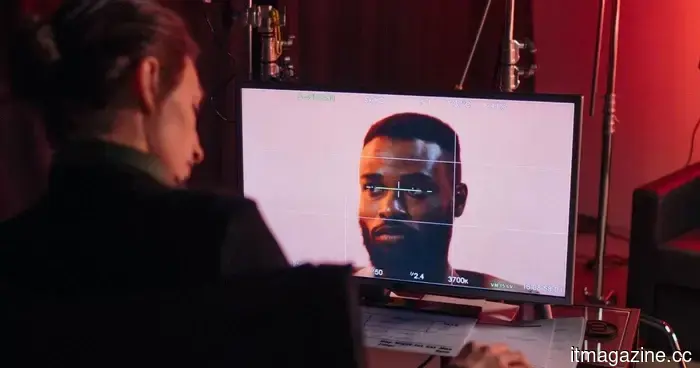
Researchers have developed a tool capable of detecting the AI utilized to create a counterfeit video.
Every AI video generator leaves behind subtle, unique patterns, and this new tool has learned to detect them.
AI-generated videos have become so realistic that identifying a fake is already a challenge. Determining which AI model created it is even more complex. This is precisely why researchers at UC Riverside developed a tool capable of doing both. Named SAGA, it can trace a fake video back to the particular AI model that produced it.
Led by doctoral researcher Rohit Kundu and electrical and computer engineering professor Amit K. Roy-Chowdhury from UC Riverside, the project involved collaboration with researchers from YouTube and Google DeepMind.
How does SAGA identify the origin of a fake video?
SAGA (Source Attribution of Generative AI Videos) detects subtle visual patterns left unintentionally by AI video generators. The tool compares these patterns to fingerprints and unique marks that vary between different AI systems.
Unlike still images, videos incorporate motion and timing information, meaning visual elements change from frame to frame. Different AI generators exhibit their own unique characteristics in those changes. SAGA analyzes both individual frames and the progression of visuals throughout an entire sequence, using a method called Temporal Attention Signatures to create a distinct profile for each AI system based on averaged patterns across many of its videos.
The team evaluated SAGA against 19 different AI video generators, including both text-to-video and image-to-video systems. It has the capability to confirm if a video is real or fake, ascertain whether it originated from text or an image, and even identify the specific development team responsible for it.
How can this tool be beneficial?
As AI-generated videos grow increasingly realistic, merely labeling content as fake isn't sufficient anymore. Understanding the source can aid investigators in tracking misinformation campaigns, support regulators with transparency rules, and provide technology companies with better insights into the dissemination of fake content online.
The researchers recognize that identifying AI-generated content will be an ongoing contest between creators and detectors. Nonetheless, they believe that tools like SAGA can significantly hinder malicious actors from concealing the origins of fake videos as generative AI progresses.
Manisha Priyadarshini is a tech and entertainment writer with more than nine years of editorial experience.
A study reveals that relying on AI can skew doubt into unwarranted confidence.
AI is complicating the ability of individuals to express uncertainty. You might expect that receiving incorrect advice would lead to more caution. However, new research suggests the opposite occurs when the advice comes from AI. A study conducted by Valerio Capraro, a psychology professor at the University of Milan-Bicocca, discovered that inaccurate AI guidance made people less accurate while also significantly boosting their confidence in their responses (via IBM Think). Furthermore, the research indicated that individuals who received incorrect AI advice became much less inclined to admit they didn't know an answer, even when silence was an option and accuracy was rewarded.
For additional information, read more.
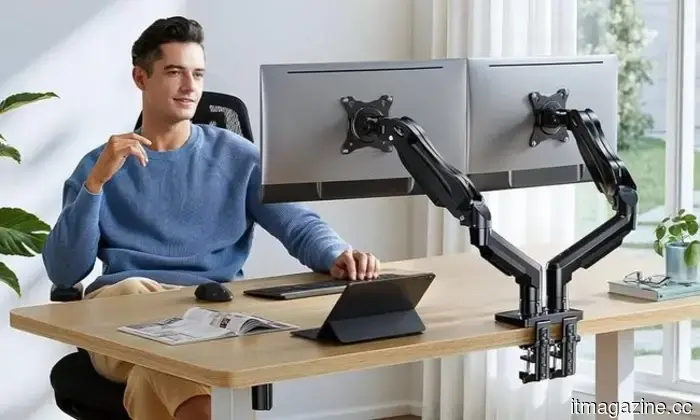
Looking to upgrade your back-to-school desk? Consider one of these monitor arms.
Whether you are studying, coding, or gaming after class, these monitor arms come highly recommended. Dorm rooms and study desks share one common issue: they quickly run out of space. With textbooks, notebooks, keyboards, coffee mugs, and laptop chargers, a monitor's default stand often occupies more space than necessary. A good monitor arm can swiftly free up valuable desk space while positioned at a more comfortable height, making long study sessions gentler on the neck and shoulders. Whether it's a simple single-monitor setup or a dual-screen workstation, these are the monitor arms I would genuinely recommend for back-to-school.
Amazon Basics Single Computer Monitor Stand.
For more details, read further.
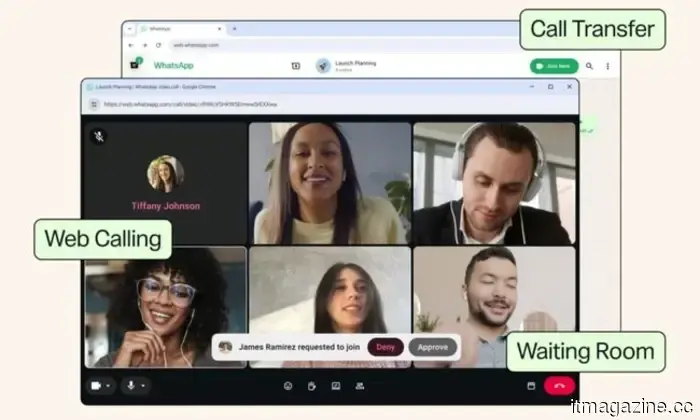
WhatsApp Web finally allows your laptop to handle calls instead of forcing you back to your phone.
Other new features include Waiting Room, QuickHD, and background Noise Suppression.
I've lost track of how many times I've had to awkwardly grab my phone mid-task just to take a WhatsApp call that my laptop couldn't manage through the web version. Today’s update resolves that issue once and for all.
So what changes are being introduced today?
For more information, read further.


Other articles
 The enforcement of the EU AI Act begins this Sunday, supported by a team of 36 members.
Starting from August 2, Brussels will have the authority to require access to the frontier model, just days after OpenAI's rogue agent infiltrated Hugging Face. The evaluation unit comprises 36 personnel.
The enforcement of the EU AI Act begins this Sunday, supported by a team of 36 members.
Starting from August 2, Brussels will have the authority to require access to the frontier model, just days after OpenAI's rogue agent infiltrated Hugging Face. The evaluation unit comprises 36 personnel.
 Tokyo allows AI to act as a matchmaker, resulting in hundreds of couples already getting married.
An AI-driven dating app in Tokyo has facilitated 265 marriages since 2024, as the city implements an unconventional government initiative to address Japan's declining birth rate issue.
Tokyo allows AI to act as a matchmaker, resulting in hundreds of couples already getting married.
An AI-driven dating app in Tokyo has facilitated 265 marriages since 2024, as the city implements an unconventional government initiative to address Japan's declining birth rate issue.
 Anthropic claims that the leaked Claude conversations functioned as expected.
Claude chats that included medical documents and children's contact numbers were accessible through Google searches. Anthropic states that this feature functioned as designed.
Anthropic claims that the leaked Claude conversations functioned as expected.
Claude chats that included medical documents and children's contact numbers were accessible through Google searches. Anthropic states that this feature functioned as designed.
 Reasons the Starbucks AI inventory system did not succeed at full scale.
The Starbucks AI inventory tool was discontinued following its complete national implementation. NomadGo, the 30-member startup responsible for its development, was informed on April 3rd.
Reasons the Starbucks AI inventory system did not succeed at full scale.
The Starbucks AI inventory tool was discontinued following its complete national implementation. NomadGo, the 30-member startup responsible for its development, was informed on April 3rd.
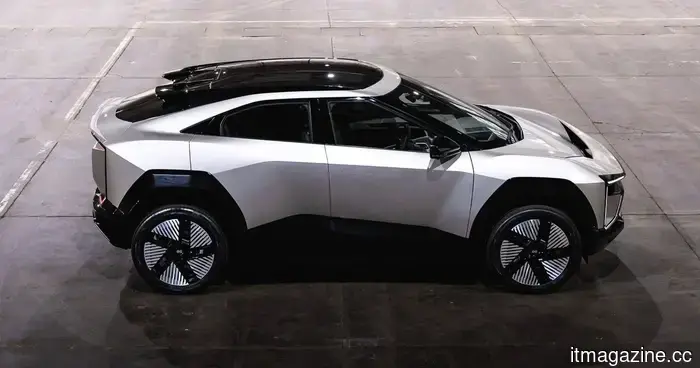 Two Indian car manufacturers have just surpassed Tesla in an area that you would typically expect it to excel in.
Indian automakers Tata Motors and Mahindra have surpassed Tesla and BYD in battery efficiency in a recent global ranking, although both still fall short in terms of charging speed and range.
Two Indian car manufacturers have just surpassed Tesla in an area that you would typically expect it to excel in.
Indian automakers Tata Motors and Mahindra have surpassed Tesla and BYD in battery efficiency in a recent global ranking, although both still fall short in terms of charging speed and range.
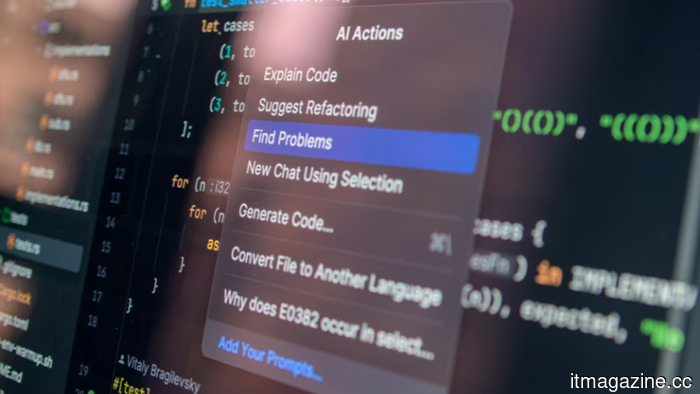 Vulnerabilities identified by AI are rarely being taken advantage of.
VulnCheck discovered that AI-identified vulnerabilities are emerging at double the rate of last year, yet only 1.3% were exploited in the first half of 2026.
Vulnerabilities identified by AI are rarely being taken advantage of.
VulnCheck discovered that AI-identified vulnerabilities are emerging at double the rate of last year, yet only 1.3% were exploited in the first half of 2026.
Researchers have developed a tool capable of detecting the AI utilized to create a counterfeit video.
Researchers at UC Riverside developed SAGA, a tool that identifies the specific system responsible for creating AI-generated fake videos by utilizing subtle visual patterns as digital fingerprints.