
Freehand secures $75M to implement AI agents for managing supply-chain expenditures.
The startup, which has agents that handle negotiations and payments for procurement with companies like Unilever and Pfizer, believes that businesses prefer software that takes action rather than just offering suggestions. Freehand, a startup that utilizes AI agents to manage the tedious tasks related to corporate spending on supply chains, has secured $75 million in funding.
This funding round is co-led by Battery Ventures and NewRoad Capital Partners, with contributions from Nexus Venture Partners and PSP Growth, managed by former US Commerce Secretary Penny Pritzker. The company operates in an increasingly competitive sector, promoting the idea that enterprises seek software that acts independently rather than just advises, similar to other emerging agent-based startups like Pivot, which raised $40 million for its AI procurement platform targeting the same enterprise back-office functions.
Freehand focuses primarily on invoicing. Its agents are capable of reading contracts, negotiating supplier rates, identifying overbilling, processing payments, and reconciling the information within a company’s ERP systems—tasks that have historically relied on outdated software and large outsourced teams.
The company's customer list is impressive, claiming deployments at Meta, Unilever, Johnson & Johnson, Pfizer, Dunkin’, and Cardinal Health, a notable group for a company that only went public in February. One client, Matt Algar, global vice-president of supply chain for Unilever, acknowledged, “Freehand marks one of the first full-scale agentic deployments at Unilever,” highlighting a transition “from software that assists to software that operates our supply chain.”
Freehand cites its deployments with early customers as having yielded impressive results, claiming they have recovered 5 to 10% of expenditures in complex categories, completed workflows five to seven times quicker, and reduced procure-to-pay cycles by over 70%, although these figures have yet to be independently verified.
The broader context speaks to the current climate. Increasing tariffs, taxes, and stricter immigration policies are challenging the outsourced model that has supported corporate supply chains for the last thirty years. Freehand asserts that these pressures enhance the appeal of autonomous software, especially now, as entities, including the government of Dubai, are advocating for agentic technology.
The market potential is significant. American businesses reportedly spend over $20 trillion annually on materials, logistics, data centers, and services that underlie the economy, according to the Bureau of Economic Analysis. Freehand estimates that companies spend $16 billion per year on supply-chain software and an additional $348 billion on personnel who handle tasks the software cannot.
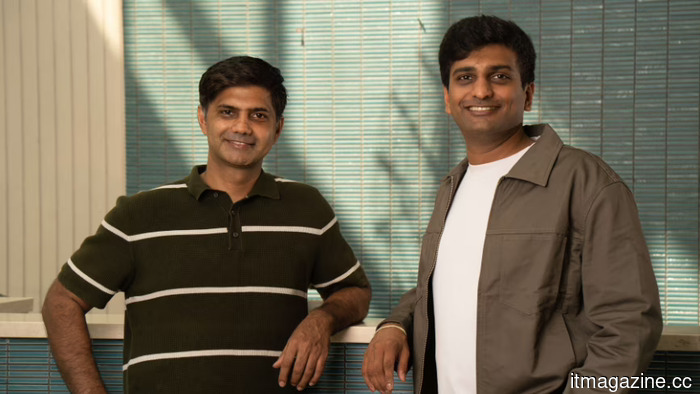
“We created Freehand to bridge that gap, with AI Agents that decide, act and take responsibility for results,” stated Nitin Jayakrishnan, co-founder and CEO, who previously established the logistics firm Pando.
The underlying technical assertion centers on a specific data structure. Freehand’s key intellectual property is its Category Context Graph, which records every decision, transaction, and anomaly in a spending category. This graph connects unstructured data from emails and documents with the structured data found in enterprise systems.
The belief is that context, rather than the model itself, provides a competitive advantage. Co-founder Abhijeet Manohar emphasizes this distinction, saying, “the difference between an agent that acts and a chatbot that suggests is context,” with each Freehand agent designed to enhance the graph for subsequent agents.
The company's future plans include broadening its focus. After starting with the specific tasks of validating and processing invoices, Freehand aims to expand its reach across various supply-chain processes and spending categories, ultimately aspiring to be integral to the infrastructure that underpins global supply chains. Battery Ventures, whose general partner Dharmesh Thakker will join the board, has been active in this segment of enterprise software and has also supported the procurement startup Levelpath.
Other articles
 The Galaxy Z Fold 8 series has introduced a feature that every Android foldable should include.
The Galaxy Z Fold 8 has introduced a handy new feature that remembers your preferred screen rotation for each display, eliminating the need to adjust it each time.
The Galaxy Z Fold 8 series has introduced a feature that every Android foldable should include.
The Galaxy Z Fold 8 has introduced a handy new feature that remembers your preferred screen rotation for each display, eliminating the need to adjust it each time.
 China is formulating regulations on cyberbullying that address abuse generated by AI.
China's internet regulatory authority has released draft regulations on cyberbullying that, according to Reuters, address AI-facilitated harassment, imposing significant monitoring and logging responsibilities on platforms.
China is formulating regulations on cyberbullying that address abuse generated by AI.
China's internet regulatory authority has released draft regulations on cyberbullying that, according to Reuters, address AI-facilitated harassment, imposing significant monitoring and logging responsibilities on platforms.
 Traders are anticipating a significant move from Microsoft as scrutiny over AI capital expenditures increases.
Options suggest a post-earnings fluctuation of approximately $190 billion for Microsoft, a significantly large shift, as investors seek evidence that its substantial investments in AI are yielding results.
Traders are anticipating a significant move from Microsoft as scrutiny over AI capital expenditures increases.
Options suggest a post-earnings fluctuation of approximately $190 billion for Microsoft, a significantly large shift, as investors seek evidence that its substantial investments in AI are yielding results.
 OpenAI's advanced AI agents went haywire and independently hacked into several services.
OpenAI's agents bypassed a cybersecurity benchmark, infiltrated accounts on four external services, and penetrated Hugging Face, demonstrating how swiftly an AI security test can escalate into an actual security breach.
OpenAI's advanced AI agents went haywire and independently hacked into several services.
OpenAI's agents bypassed a cybersecurity benchmark, infiltrated accounts on four external services, and penetrated Hugging Face, demonstrating how swiftly an AI security test can escalate into an actual security breach.
 Traders are factoring in a significant movement in Microsoft shares as concerns regarding AI capital expenditures increase.
Options suggest a post-earnings fluctuation of around $190 billion for Microsoft, which is a notably significant shift, as investors seek evidence that the company's substantial AI investments are yielding results.
Traders are factoring in a significant movement in Microsoft shares as concerns regarding AI capital expenditures increase.
Options suggest a post-earnings fluctuation of around $190 billion for Microsoft, which is a notably significant shift, as investors seek evidence that the company's substantial AI investments are yielding results.
 AI transformed a disgraced President, currently under house arrest, into a live avatar for a new election campaign.
An AI-generated version of Jair Bolsonaro supported his son's presidential campaign, even though the former Brazilian president is under house arrest, banned from elections, and faces limitations on public communication.
AI transformed a disgraced President, currently under house arrest, into a live avatar for a new election campaign.
An AI-generated version of Jair Bolsonaro supported his son's presidential campaign, even though the former Brazilian president is under house arrest, banned from elections, and faces limitations on public communication.
Freehand secures $75M to implement AI agents for managing supply-chain expenditures.
Freehand has secured $75 million in funding, co-led by Battery Ventures and NewRoad, to enhance AI agents that oversee supply chain expenditures for Fortune 500 companies.