

New York school halts the deployment of humanoid robot 'Sally' following objections from the state and the union.
A humanoid robot named Sally was supposed to start in a Western New York high school classroom this fall, complete with silicone skin and long brown hair. Instead, her introduction has been put on hold.
A plan that had quietly received approval from the Salamanca school board back in June transformed into a public debate over student privacy, screen time, and the company that created her. Now, the state's top education official has requested the district to pause.
The Salamanca City Central School District is located on the Seneca Nation reservation in rural southwestern New York and serves about 1,300 students, approximately one-third of whom identify as American Indian or Alaska Native.
They announced the delay on Friday following a letter from New York State Education Commissioner Betty Rosa.
“The Department is concerned about the potential impact that a humanoid robot may have in a high school classroom,” Rosa stated, noting that many parents, teachers, and stakeholders were "understandably worried about the presence of artificial intelligence technology in classrooms."
This unease regarding AI in education extends far beyond Salamanca.
Sally was developed by Realbotix, a firm based in Toronto, which has spent the last year advocating for the inclusion of friendly, physical humanoid robots in classrooms instead of laboratories.
The district invested $57,590 for the robot and a corresponding AI teaching assistant, discounted from the original $95,000 price, and intended to use her in high school AI and robotics courses based on a curriculum from Apple co-founder Steve Wozniak.
Sally remains seated but can move her upper body and face, with the district asserting that she does not utilize facial recognition, does not record any information, and operates on a closed network without internet access.
In addition to the robot, the package provided an AI assistant that students could access as an avatar on their laptops, offering homework assistance, feedback, and real-time translations in over 100 languages.
What shifted a modest pilot program into a statewide issue was less about the hardware and more about the company's background. Realbotix, formerly known as Tokens.com, purchased Simulcra in 2024, the parent company of RealDoll, which produces highly realistic sex dolls and companion robots.
Realbotix asserts that the two divisions do not share staff, facilities, or technology, and that it aims for a complete separation by September; however, this connection was sufficient to prompt reactions from teachers' unions.
“A robot produced by a company linked to sex dolls has no place in our classrooms,” remarked Melinda Person, president of New York State United Teachers.
Superintendent Mark Beehler has defended the initiative as a learning opportunity for students to coexist with technology rather than ignore it.
“Many schools are choosing the easy route of outright bans,” he stated, “but I have observed that students will find ways to bypass most rules set by schools.”
He emphasized that Realbotix would not have access to any personally identifiable student information and that Sally was not intended to replace a teacher but to work alongside one.
In Salamanca, opinions were divided, with some parents appreciating the early exposure to AI as beneficial for future careers, while others questioned why the district was investing in a robot instead of hiring more teachers.
The department, however, was not convinced, at least for now, and raised concerns that are now prevalent in discussions around classroom technology: data privacy, screen time, and the readiness of such tools for children.
Half of American parents already express concerns that their children rely on AI too much, and researchers have identified risks associated with general-purpose AI being integrated into schoolwork.
Salamanca indicated it would use the delay to refine student data privacy agreements and continue discussions with parents before making further decisions.
For now, Sally waits. Realbotix CEO Andrew Kiguel expressed a wish for the program to be “demonstrably safe, fully district-approved, and strongly backed by teachers.”
Whether Salamanca's classrooms will welcome their robot this fall, or at all, is no longer solely up to the district to determine.
Other articles
 Samsung might finally provide the Galaxy S27 Ultra with a significant battery enhancement through the use of silicon-carbon technology.
Information that has been leaked indicates that the Galaxy S27 Pro might have a battery capacity of 5,200mAh, whereas the Ultra version could potentially exceed 5,700mAh.
Samsung might finally provide the Galaxy S27 Ultra with a significant battery enhancement through the use of silicon-carbon technology.
Information that has been leaked indicates that the Galaxy S27 Pro might have a battery capacity of 5,200mAh, whereas the Ultra version could potentially exceed 5,700mAh.
 Apple's soon-to-be CEO aims to expand the company's ventures in film and television.
During the premiere of Ted Lasso, the new Apple CEO John Ternus indicated a commitment to maintaining continuity in a streaming division that, despite winning awards, continues to operate at a loss.
Apple's soon-to-be CEO aims to expand the company's ventures in film and television.
During the premiere of Ted Lasso, the new Apple CEO John Ternus indicated a commitment to maintaining continuity in a streaming division that, despite winning awards, continues to operate at a loss.
 X Money has officially arrived, and it offers much more than just a digital wallet.
X Money has officially debuted in the US, offering peer-to-peer payments, a Visa debit card, and high-yield savings accounts for qualified X Premium users.
X Money has officially arrived, and it offers much more than just a digital wallet.
X Money has officially debuted in the US, offering peer-to-peer payments, a Visa debit card, and high-yield savings accounts for qualified X Premium users.
 China has accused the United States of engaging in 'AI hegemonism' and has warned of potential counteractions.
China's commerce ministry has accused Washington of promoting 'AI hegemonism' and has warned of potential counteractions in response to US investigations into the alleged imitation of Anthropic’s Claude.
China has accused the United States of engaging in 'AI hegemonism' and has warned of potential counteractions.
China's commerce ministry has accused Washington of promoting 'AI hegemonism' and has warned of potential counteractions in response to US investigations into the alleged imitation of Anthropic’s Claude.
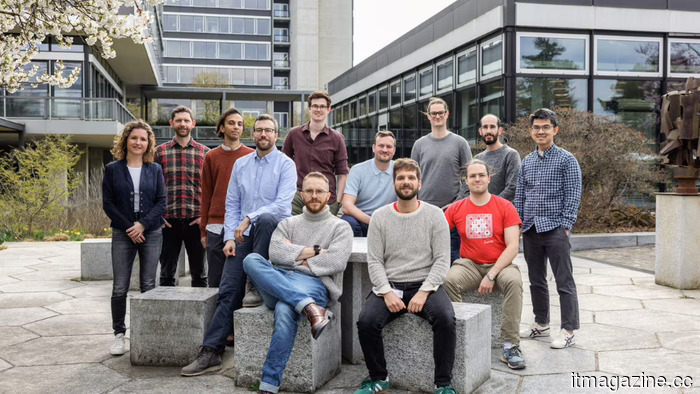 ZuriQ secures $25.5 million to expand its 2D quantum architecture.
ZuriQ, a spin-out from ETH Zürich, has secured $25.5 million in seed funding to expand its trapped-ion quantum processors designed with a native two-dimensional architecture.
ZuriQ secures $25.5 million to expand its 2D quantum architecture.
ZuriQ, a spin-out from ETH Zürich, has secured $25.5 million in seed funding to expand its trapped-ion quantum processors designed with a native two-dimensional architecture.
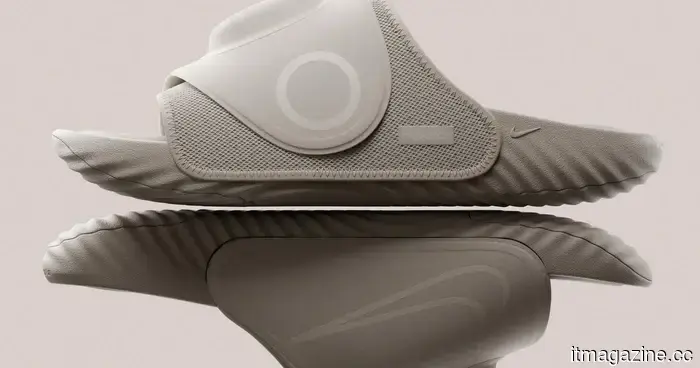 Nike’s latest slide offers a spa-like experience for your feet.
Nike and Hyperice's latest Air Zoom Hyperslide combines plush Air Zoom cushioning with heat and vibration therapy, providing fatigued feet with an effective recovery experience following workouts, travel, or a long day.
Nike’s latest slide offers a spa-like experience for your feet.
Nike and Hyperice's latest Air Zoom Hyperslide combines plush Air Zoom cushioning with heat and vibration therapy, providing fatigued feet with an effective recovery experience following workouts, travel, or a long day.
New York school halts the deployment of humanoid robot 'Sally' following objections from the state and the union.
Salamanca halted its plans to place a Realbotix humanoid called Sally in a high school classroom after intervention from the state education commissioner.