

Core Scientific shifts to AMD with a 2.5GW AI data center agreement, following the breakdown of the CoreWeave deal just months prior.
Nine months after its shareholders rejected a nearly $9 billion acquisition by CoreWeave, Core Scientific has secured a much larger partnership with a chipmaker attempting to challenge Nvidia’s dominance in artificial intelligence.
On Tuesday, the former bitcoin miner announced it had entered into a data-centre agreement with AMD, which could eventually amount to 2.5 gigawatts of capacity across the Southern United States. Investors viewed this as a validation for the deal Core Scientific had previously declined.
Central to this partnership is a series of long-term leases for 529 megawatts of essential IT capacity, with AMD directly assuming 377MW and a group of undisclosed neocloud operators taking the remaining 152MW. The locations include Pecos and Hunt County in Texas, Muskogee in Oklahoma, Auburn in Alabama, and Dalton in Georgia, with leases spanning 15 years and three optional five-year renewals, potentially extending the partnership for three decades. Revenue generation is projected to commence in 2027.
What transforms a significant colocation agreement into a noteworthy one, at least as framed by both companies, is the option and equity associated with it. AMD retains the right to utilize up to 1,925MW of additional capacity until December 2028, contributing to the overall announced 2.5GW. Additionally, AMD receives a warrant for up to 30 million Core Scientific shares at $23.47 each, with 12,222 shares vesting for every megawatt it activates.
Approximately 6.5 million of those shares vested immediately upon signing the leases. This equity-for-capacity model closely resembles the structure Nvidia employed when it acquired a $2.1 billion warrant in IREN, linking the chipmaker’s potential gains to the success of the landlord housing its silicon.
Neither company disclosed a financial valuation for the agreement, with much of the characterization coming from Core Scientific, which indicated that the new contracts expand its leased capacity to approximately 1.1GW and elevate its contracted revenue beyond $24 billion. These figures come from the company itself rather than independent audits, reflecting a directional trend more than a confirmed outcome.
The hardware is confirmed, as the capacity will support AMD’s Instinct GPUs, EPYC processors, and ROCm software. For AMD, the attraction lies in assured real estate during a time when it is striving to gain recognition against Nvidia in training and inference.
Over the past two years, AMD has been acquiring and forming partnerships to bolster its credibility, whether through the purchase of Silo AI or promising Anthropic up to two gigawatts of its latest accelerators. Securing power ahead of demand alleviates one of the more significant bottlenecks.
For Core Scientific, this agreement marks a unique and quietly successful year. The company was the focus of CoreWeave’s acquisition attempt in 2025, after the GPU cloud proposed an all-stock deal worth around $9 billion to integrate the miner’s energy-intensive sites.
Core Scientific's investors were not convinced that the offered price reflected the true value of the land and power, leading to a vote against the merger on October 30, which resulted in its termination. However, the two companies are not entirely estranged, as Core Scientific continues to host CoreWeave’s GPUs under a separate agreement for several hundred megawatts.
The transition from crypto mining to AI infrastructure is a shift that the entire industry is undergoing, with Nscale’s swift ascent along the crypto-to-neocloud trajectory demonstrating the significant rewards available in this market.
One noteworthy aspect to monitor is that 152MW of the new capacity will be allocated to neocloud operators instead of directly to AMD, and the chipmaker has committed to providing credit support in the event of a default by any of those tenants. This indicates AMD's commitment to nurturing the ecosystem surrounding its hardware.
Core Scientific's shares surged by as much as 10% following the announcement, while AMD's shares fell by over 5%. The company that could not convince its shareholders to accept a $9 billion sale now appears to be worth significantly more on its own.
Other articles
 Queensland and the Northern Territory oppose Australia's regulations on data centre energy usage.
Australia's groundbreaking regulations requiring data centres to supply as much power as they consume have faced resistance, as Queensland and the Northern Territory oppose many of the proposed measures.
Queensland and the Northern Territory oppose Australia's regulations on data centre energy usage.
Australia's groundbreaking regulations requiring data centres to supply as much power as they consume have faced resistance, as Queensland and the Northern Territory oppose many of the proposed measures.
 Microsoft aims for AI to identify hackers before they launch any attacks.
Microsoft's latest initiative, Project Perception, employs AI agents to track down hackers before they can launch an attack, potentially transforming the landscape of cybersecurity.
Microsoft aims for AI to identify hackers before they launch any attacks.
Microsoft's latest initiative, Project Perception, employs AI agents to track down hackers before they can launch an attack, potentially transforming the landscape of cybersecurity.
 Amkor plans to invest as much as $3 billion, which is nearly 40% of its revenue.
Amkor announced a record revenue of $1.9 billion for Q2 and saw its net income triple. The capex forecast for 2026 is set at $3 billion, which is approximately 40% of its annualized sales.
Amkor plans to invest as much as $3 billion, which is nearly 40% of its revenue.
Amkor announced a record revenue of $1.9 billion for Q2 and saw its net income triple. The capex forecast for 2026 is set at $3 billion, which is approximately 40% of its annualized sales.
 Mate Security surpasses $50 million in funding as the AI security operations startup prepares for Black Hat USA.
Mate Security has successfully secured $35 million in a Series A funding round led by Canaan Partners, resulting in total funding exceeding $50 million. Founded by former employees of Wiz and Microsoft, the startup develops AI-driven security operations that incorporate an organizational context layer, enabling AI agents to make reliable decisions for security teams.
Mate Security surpasses $50 million in funding as the AI security operations startup prepares for Black Hat USA.
Mate Security has successfully secured $35 million in a Series A funding round led by Canaan Partners, resulting in total funding exceeding $50 million. Founded by former employees of Wiz and Microsoft, the startup develops AI-driven security operations that incorporate an organizational context layer, enabling AI agents to make reliable decisions for security teams.
 Microsoft aims for AI to identify hackers before they launch an attack.
Microsoft's latest initiative, Project Perception, employs AI agents to track down hackers before they launch their attacks, potentially transforming the landscape of cybersecurity.
Microsoft aims for AI to identify hackers before they launch an attack.
Microsoft's latest initiative, Project Perception, employs AI agents to track down hackers before they launch their attacks, potentially transforming the landscape of cybersecurity.
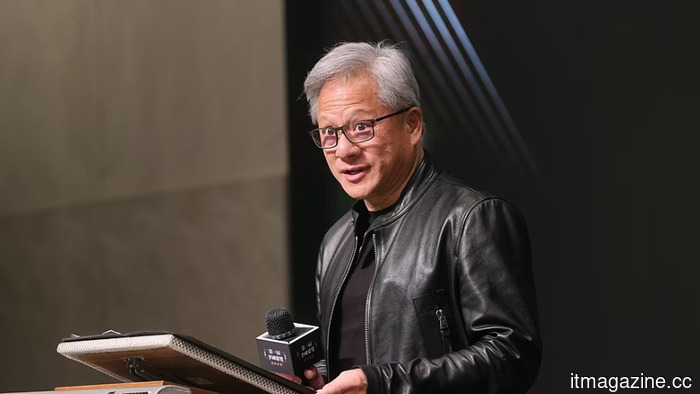 Nvidia's $750 billion AI agreements have driven its credit default swaps to an all-time high.
Nvidia's CDS spread reached an all-time high of 82 bps following $750 billion in AI transactions that sparked concerns about circular financing. Jensen Huang described the criticism as "ridiculous."
Nvidia's $750 billion AI agreements have driven its credit default swaps to an all-time high.
Nvidia's CDS spread reached an all-time high of 82 bps following $750 billion in AI transactions that sparked concerns about circular financing. Jensen Huang described the criticism as "ridiculous."
Core Scientific shifts to AMD with a 2.5GW AI data center agreement, following the breakdown of the CoreWeave deal just months prior.
Core Scientific has finalized a data-center agreement with AMD that could amount to 2.5GW, just nine months after shareholders turned down a $9 billion acquisition of CoreWeave.