
Amkor plans to invest as much as $3 billion, which is nearly 40% of its revenue.
Amkor Technology announced record results for the second quarter on Monday. Revenue hit $1.9 billion, a 26% increase compared to the previous year, and net income more than tripled. Operating income nearly doubled to $200 million, with earnings of $0.70 per diluted share, up from $0.22. EBITDA was reported at $400 million.
However, the focus is more on the company's future plans. Amkor anticipates capital expenditures between $2.5 billion and $3 billion for 2026. Given the first half revenue of $3.58 billion, this budget could represent 35% to 42% of annualized sales.
The landscape of packaging has shifted from being considered the low-cost segment. Amkor, as an Outsourced Semiconductor Assembly and Test (OSAT) provider, has traditionally operated at the low-margin end of the industry.
Now, gross margins tell a new story, having climbed to 16.8% from 12.0% a year prior, an increase of 480 basis points. The guidance for the third quarter suggests margins will be between 18.5% and 19.5%.
Nevertheless, the company's risk factors, included in the same report, continue to caution investors about “the historical downward pressure on the prices of our packaging and test services,” indicating that this concern pertains to the past.
Advanced products drove the quarter's success. This category, which includes flip chip and wafer-level processing, generated $1,557 million, constituting 82% of total sales.
The planned expenditures are already in motion. Amkor invested $688 million in property and equipment during the first half of the year. To meet the full-year target, an additional $1.8 billion to $2.3 billion is needed, approximately three times the pace of the first half.
A portion of this spending is already secured, as capital expenditure payable—money owed for previously ordered equipment—rose from $243 million in December to $621 million in June.
The balance sheet reflects these changes as well. Long-term debt increased from $1.28 billion to $2.33 billion after the company raised $1.15 billion during the first half. Cash and short-term investments are at $2.5 billion, which equals the total debt.
Customers are partially financing this expansion. Nvidia has committed $1.5 billion to enhance Amkor's packaging capacity in the U.S., structured as a prepayment. Additionally, TSMC signed a ten-year agreement in June for advanced packaging in Arizona, while Amkor’s Peoria plant received $407 million under the CHIPS Act.
The rationale is geographic; advanced packaging has been concentrated in a few Asian locations for years, creating a single point of failure in the AI supply chain.
One figure requires further clarification. Last year's second quarter included a $32 million benefit from a payment related to the Nanium acquisition. Excluding this, the previous year's operating income base drops to about $60 million, indicating underlying growth of roughly 233%, which is more significant than the headline figure.
The primary risk lies elsewhere. Amkor indicates to investors a “lack of backlog” and that customer commitments are short-term. It is allocating $3 billion based on orders that may not require fulfillment.
Markets have previously reacted negatively to such patterns. TSMC, despite posting record revenue, saw its shares decline due to concerns about capital expenditures, while chip stocks have fluctuated based on AI demand metrics.
On the positive side, Amkor's top ten customers accounted for 66% of sales, a decrease from 72% a year prior, indicating that growth is becoming more diversified.
Revenue breakdown shows that communications, primarily smartphones and tablets, still represent 42% of the revenue, with computing and automotive/industrial each accounting for 22%. Consumer revenue has decreased to 14% from 18%.
Kevin Engel, president and CEO, noted that the company set revenue records in computing, automotive, and industrial sectors, highlighting customer initiatives in AI and high-performance computing.
Looking ahead, the guidance for the third quarter suggests revenue will be between $1.95 billion and $2.05 billion, with net income projected at $180 million to $205 million, or $0.72 to $0.82 per share.
The broader question remains whether packaging capacity will continue to be limited. TSMC is constructing its own facility in Chiayi and has increased prices across advanced manufacturing.
Margins like those of Amkor are likely to attract competition. The upcoming quarters will reveal whether the bottleneck persists or if the industry will expand to alleviate it, causing prices to decline.
Other articles
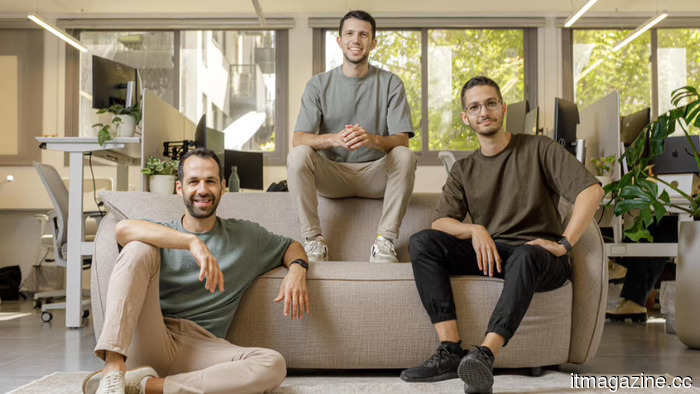 Mate Security surpasses $50 million in funding as the AI security operations startup prepares for Black Hat USA.
Mate Security has secured $35 million in a Series A funding round led by Canaan Partners, raising its total funding to over $50 million. The startup, founded by former employees of Wiz and Microsoft, develops AI-driven security operations centered on an organizational context layer, enabling AI agents to make reliable decisions for security teams.
Mate Security surpasses $50 million in funding as the AI security operations startup prepares for Black Hat USA.
Mate Security has secured $35 million in a Series A funding round led by Canaan Partners, raising its total funding to over $50 million. The startup, founded by former employees of Wiz and Microsoft, develops AI-driven security operations centered on an organizational context layer, enabling AI agents to make reliable decisions for security teams.
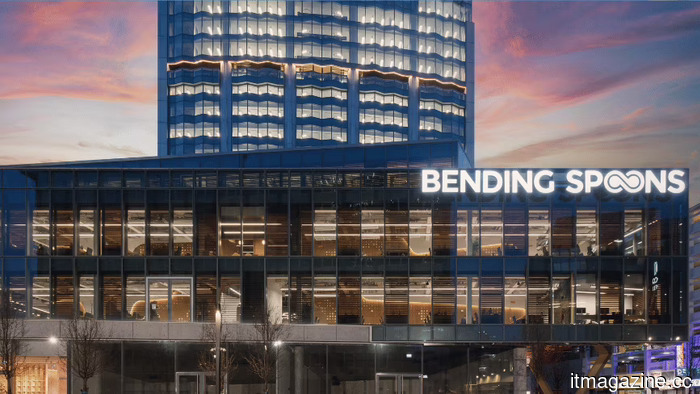 Italy supports a €500 million investment for the firm that owns AOL.
SACE, the export credit agency owned by Italy's treasury, provided a guarantee of €500 million for Bending Spoons. The Milan-based purchaser owns AOL, Evernote, Vimeo, and Eventbrite.
X Money has the ability to terminate your account based on your posted content.
X Money's official support pages state that a suspension due to Child Safety or Violent and Hateful Entities results in the termination of access and the mailing of your remaining balance.
Italy supports a €500 million investment for the firm that owns AOL.
SACE, the export credit agency owned by Italy's treasury, provided a guarantee of €500 million for Bending Spoons. The Milan-based purchaser owns AOL, Evernote, Vimeo, and Eventbrite.
X Money has the ability to terminate your account based on your posted content.
X Money's official support pages state that a suspension due to Child Safety or Violent and Hateful Entities results in the termination of access and the mailing of your remaining balance.
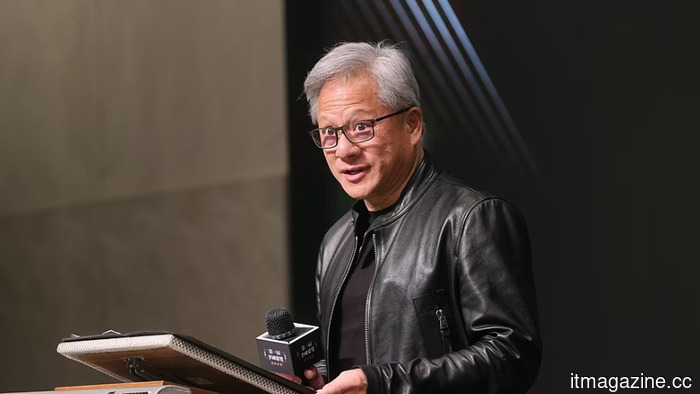 Nvidia's $750 billion AI agreements have driven its credit default swaps to an all-time high.
Nvidia's CDS spread reached an all-time high of 82 bps following $750 billion in AI transactions that sparked concerns about circular financing. Jensen Huang described the criticism as "ridiculous."
Coforge reports that AI has improved margins, while competitors are experiencing 'AI deflation'.
Coforge reported a 49% increase in rupee revenue and a 414 basis points improvement in EBIT margin. The company completed a $2.35 billion acquisition and did not provide any figures for organic growth.
Nvidia's $750 billion AI agreements have driven its credit default swaps to an all-time high.
Nvidia's CDS spread reached an all-time high of 82 bps following $750 billion in AI transactions that sparked concerns about circular financing. Jensen Huang described the criticism as "ridiculous."
Coforge reports that AI has improved margins, while competitors are experiencing 'AI deflation'.
Coforge reported a 49% increase in rupee revenue and a 414 basis points improvement in EBIT margin. The company completed a $2.35 billion acquisition and did not provide any figures for organic growth.
 A UK MP is requesting the High Court to compel xAI to halt Grok from producing sexualized images of her.
Labour MP Jess Asato is seeking a court order that would require xAI to implement permanent safeguards in Grok, as part of a case examining the liability of an AI company for its outputs.
A UK MP is requesting the High Court to compel xAI to halt Grok from producing sexualized images of her.
Labour MP Jess Asato is seeking a court order that would require xAI to implement permanent safeguards in Grok, as part of a case examining the liability of an AI company for its outputs.
Amkor plans to invest as much as $3 billion, which is nearly 40% of its revenue.
Amkor announced a record revenue of $1.9 billion for Q2 and saw its net income triple. The capex forecast for 2026 is set at $3 billion, which is approximately 40% of its annualized sales.