

China's lunar mission has just provided developers with access to a nearly cutting-edge AI model for download.
Kimi K3 is now accessible for download, modification, and independent hosting.
Moonshot AI has made the complete weights for Kimi K3 available, allowing developers to download, modify, fine-tune, and host the model on their own. This release comes shortly after K3's initial launch, during which Moonshot’s benchmarks ranked it competitively alongside Claude Fable 5 and GPT-5.6 Sol, and even surpassed them in some tests. K3 features 2.8 trillion parameters and boasts a context window of 1 million tokens.
While downloading K3 is straightforward, running it presents challenges.
The open weights provide public access to the trained parameters that define a model’s behavior. This enables companies to adapt K3 with private data, create customized tools, or offer hosted versions under Moonshot’s license without solely relying on its API. However, K3 is not entirely open-source, as Moonshot has yet to disclose the full training data or all aspects of the training process.
The model's weights, along with a technical report, have been released. Kimi K3 represents our most advanced model: a 2.8T MoE model featuring innate visual understanding and a 1M-token context window. The new model architecture claims to deliver 2.5 times greater intelligence per compute unit, as opposed to merely increasing parameters.
K3 can be accessed via Hugging Face, but it is too large for standard personal computers. Its mixture-of-experts architecture activates 104 billion parameters simultaneously, while the MXFP4 weights are anticipated to require around 1.4TB of storage, excluding runtime overhead. Moonshot asserts that K3's new architecture offers approximately 2.5 times more intelligence per compute unit than Kimi K2. Nonetheless, self-hosting will necessitate a substantial multi-GPU server infrastructure.
K3's release arrives amidst an ongoing debate in the US regarding Chinese AI and open-weight models.
This release coincides with a widening discussion in the US over the security implications of open-weight AI models, particularly concerning accusations against Moonshot for allegedly using restricted Nvidia hardware to train K3 from Anthropic’s Fable model. Moonshot has yet to respond publicly to these allegations.
In the meantime, Nvidia CEO Jensen Huang is advocating for a movement in the US to safeguard open-weight AI models. The number of companies endorsing a letter published on July 24 reportedly increased from 25 to 50 within a day, adding notable names such as OpenAI, Google, AMD, Cisco, Cloudflare, GitHub, Block, and Ollama. This coalition is urging Washington to refrain from imposing broad restrictions on downloadable models, contending that open weights foster innovation, enhance cybersecurity research, and enable the deployment of AI on private infrastructures.
K3 offers developers a robust model, but its substantial size will limit its usability. Cloud service providers and larger organizations are likely to be the initial adopters for large-scale implementation. Notably, Amazon and Anthropic did not sign the letter, indicating that significant technology companies continue to have differing opinions on the open release of advanced AI models.





Other articles
 China has accused the United States of engaging in 'AI hegemonism' and has warned of potential counteractions.
China's commerce ministry has accused Washington of promoting 'AI hegemonism' and has warned of potential counteractions in response to US investigations into the alleged imitation of Anthropic’s Claude.
China has accused the United States of engaging in 'AI hegemonism' and has warned of potential counteractions.
China's commerce ministry has accused Washington of promoting 'AI hegemonism' and has warned of potential counteractions in response to US investigations into the alleged imitation of Anthropic’s Claude.
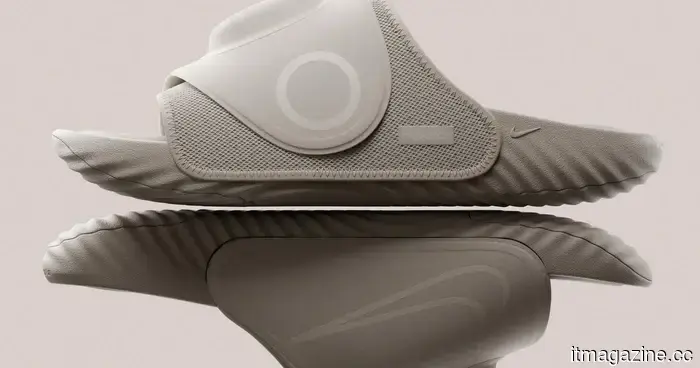 Nike’s latest slide offers a spa-like experience for your feet.
Nike and Hyperice's latest Air Zoom Hyperslide combines plush Air Zoom cushioning with heat and vibration therapy, providing fatigued feet with an effective recovery experience following workouts, travel, or a long day.
Nike’s latest slide offers a spa-like experience for your feet.
Nike and Hyperice's latest Air Zoom Hyperslide combines plush Air Zoom cushioning with heat and vibration therapy, providing fatigued feet with an effective recovery experience following workouts, travel, or a long day.
 T-Mobile has announced that it has resolved the nationwide signal outage following several hours of disruption.
T-Mobile has announced that its service has been completely restored following a nationwide outage that left many users without signal and iPhones displaying SOS mode.
T-Mobile has announced that it has resolved the nationwide signal outage following several hours of disruption.
T-Mobile has announced that its service has been completely restored following a nationwide outage that left many users without signal and iPhones displaying SOS mode.
 Looking for a laptop for back-to-school? Here are my recommended options.
Searching for a new laptop this Back-to-School period? Here are my top recommendations for students, featuring the best choices among Windows, Chromebook, and Mac laptops.
Looking for a laptop for back-to-school? Here are my recommended options.
Searching for a new laptop this Back-to-School period? Here are my top recommendations for students, featuring the best choices among Windows, Chromebook, and Mac laptops.
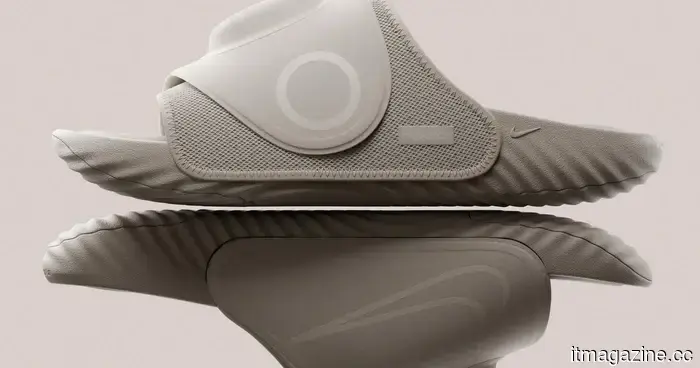 Nike's latest slide feels like a spa day for your feet.
Nike and Hyperice's latest Air Zoom Hyperslide combines comfortable Air Zoom cushioning with heat and vibration therapy, providing tired feet with an effective recovery treatment after workouts, traveling, or a long day.
Nike's latest slide feels like a spa day for your feet.
Nike and Hyperice's latest Air Zoom Hyperslide combines comfortable Air Zoom cushioning with heat and vibration therapy, providing tired feet with an effective recovery treatment after workouts, traveling, or a long day.
 New York school halts the deployment of humanoid robot 'Sally' following objections from the state and the union.
Salamanca halted its plans to place a Realbotix humanoid called Sally in a high school classroom after intervention from the state education commissioner.
New York school halts the deployment of humanoid robot 'Sally' following objections from the state and the union.
Salamanca halted its plans to place a Realbotix humanoid called Sally in a high school classroom after intervention from the state education commissioner.
China's lunar mission has just provided developers with access to a nearly cutting-edge AI model for download.
Moonshot has made the weights for Kimi K3 available, enabling developers to download, fine-tune, and host the 2.8-trillion-parameter model.