
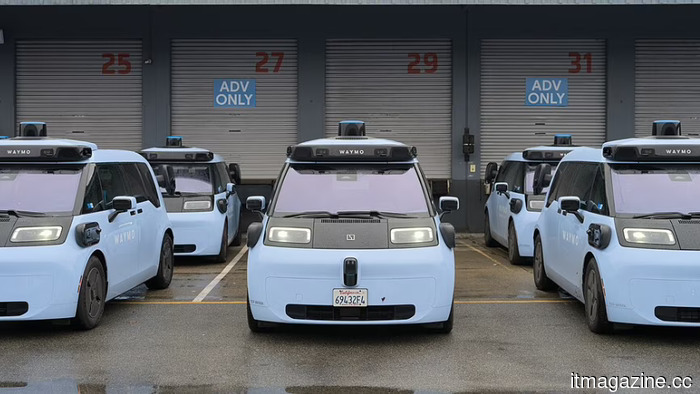
Waymo will conclude its exclusivity agreement with Uber in Austin and Atlanta, and will introduce its own app in January 2028.
Waymo plans to launch its own app in Austin and Atlanta in January 2028, terminating its exclusive deal with Uber for robotaxi services in those cities. The company has informed Uber of this intention, and an Uber representative confirmed the news to CNBC and Bloomberg, noting that this change would allow Uber to include other autonomous vehicle providers on its platform in those markets. Following this announcement, Uber's shares dropped by over four percent, closing below $66, their lowest point in more than a year.
The current contract between the two companies ensures that Waymo's existing fleet will remain available on the Uber app until at least May 2028, so there won't be an immediate change for riders. However, this notice formalizes a trend seen over recent months, as Waymo has not announced new Uber cities since launching its Atlanta service last June, preferring instead to expand independently into six other markets. The Financial Times previously reported that Waymo was looking into completely terminating the partnership.
Behind the scenes, Uber has expressed frustration with Waymo for various reasons, including unsustainable economics, ongoing safety issues, and a lack of transparency about incidents, according to Bloomberg. These incidents include robotaxis navigating flooded roads despite a software recall, illegally overtaking school buses in Austin, and numerous empty vehicles repeatedly driving in a cul-de-sac in Atlanta in May — which Waymo attributed to Uber’s routing. Uber noted that it learned about the school bus incidents via media reports rather than through direct communication.
Following a quiet withdrawal from Phoenix last month, where their partnership lasted nearly three years, Waymo now operates in 11 U.S. metropolitan areas independently of Uber, providing over 500,000 paid rides weekly, making a limited partnership less justifiable. Lyft CEO David Risher described their relationship with Waymo in November as a "situationship," acknowledging that Waymo has the upper hand in partnerships because it controls the vehicles, software, and increasingly, the rider relationship.
Uber has been developing its contingency plans for months by investing in competitors like Avride and Nuro, as well as striking a deal worth over a billion dollars for up to 50,000 robotaxis built by Rivian. However, none of these partners operate at the scale of Waymo, and many won't have vehicles available until late this year or later. Uber’s stock has seen a roughly 20 percent decline this year, driven mainly by investor concerns that Waymo's growth may eventually impact the business that only recorded its first annual profit in 2023.
Other articles
 OpenAI experiences another outage with ChatGPT, Codex, and APIs all going down simultaneously.
OpenAI's status page indicated increased error rates in its APIs, ChatGPT, and Codex on Saturday, marking the most recent in a series of outages throughout July.
OpenAI experiences another outage with ChatGPT, Codex, and APIs all going down simultaneously.
OpenAI's status page indicated increased error rates in its APIs, ChatGPT, and Codex on Saturday, marking the most recent in a series of outages throughout July.
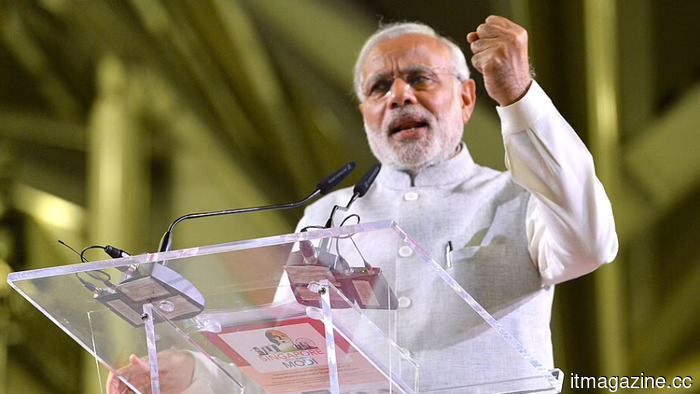 Modi sets a new Instagram Reel record amid student protests across India.
Modi's Instagram Reel garnered over 300 million views within 24 hours as CJP student demonstrations call for the resignation of the education minister across India.
China has imposed a $765 million fine on Trip.com for exploiting its dominant position in the hotel booking market.
China has imposed a fine of $765 million on Trip.com Group after the State Administration for Market Regulation (SAMR) determined that the travel platform had misused its market power by placing restrictions on hotel operators.
Modi sets a new Instagram Reel record amid student protests across India.
Modi's Instagram Reel garnered over 300 million views within 24 hours as CJP student demonstrations call for the resignation of the education minister across India.
China has imposed a $765 million fine on Trip.com for exploiting its dominant position in the hotel booking market.
China has imposed a fine of $765 million on Trip.com Group after the State Administration for Market Regulation (SAMR) determined that the travel platform had misused its market power by placing restrictions on hotel operators.
 Samsung and Broadcom have entered into a $200 billion agreement covering memory, foundry, and packaging technologies.
Samsung has entered into a Memorandum of Understanding (MOU) with Broadcom valued at over $200 billion, covering memory, foundry, and advanced packaging for AI chips through the year 2030.
Samsung and Broadcom have entered into a $200 billion agreement covering memory, foundry, and packaging technologies.
Samsung has entered into a Memorandum of Understanding (MOU) with Broadcom valued at over $200 billion, covering memory, foundry, and advanced packaging for AI chips through the year 2030.
 Nvidia allocates $1 billion to Naver and finalizes a $500 billion agreement with SK Group.
Nvidia is investing $1 billion in Naver's AI data center and establishing a $500 billion commercial partnership with SK Group during the visit to Korea by US representatives.
Nvidia allocates $1 billion to Naver and finalizes a $500 billion agreement with SK Group.
Nvidia is investing $1 billion in Naver's AI data center and establishing a $500 billion commercial partnership with SK Group during the visit to Korea by US representatives.
 According to a gas giant, people actually favor communicating with AI over speaking to a support representative as the company reduces its workforce.
British Gas is reducing its customer service positions by 1,300, as the CEO asserts that there is a shift towards using digital channels and AI technologies.
According to a gas giant, people actually favor communicating with AI over speaking to a support representative as the company reduces its workforce.
British Gas is reducing its customer service positions by 1,300, as the CEO asserts that there is a shift towards using digital channels and AI technologies.
Waymo will conclude its exclusivity agreement with Uber in Austin and Atlanta, and will introduce its own app in January 2028.
Waymo plans to introduce its own application in Austin and Atlanta in January 2028, which will terminate its exclusivity with Uber and allow both companies to explore their own competing robotaxi approaches.