
The postponement of Google's Gemini reveals a more significant issue: employee morale.
Google is falling behind in a race it once dominated, and the issue may lie with its own employees. According to six current and former DeepMind staff members who spoke to Axios, low morale is hampering the lab’s model releases. The immediate concern is Gemini 3.5 Pro, which Bloomberg reports is months behind schedule. Although Google released a series of smaller, more affordable models this week, the reception was mixed. Competitors quickly jumped in, with Meta's Alexandr Wang posting on X, "Gemini who?"
This situation is particularly painful as financial resources are dwindling. While Google surpassed earnings expectations on Wednesday, its free cash flow went negative due to AI expenditures, with a forecasted spending of $190 billion this year. Despite an 82% growth in cloud revenue, search performance fell short, raising doubts about the return on capital expenditures.
A talent exodus is also a significant issue. The battle for AI talent has hit Google hard, resulting in the loss of high-profile individuals. Notably, Gemini co-lead Noam Shazeer has moved to OpenAI, and Nobel Prize-winning chemist John Jumper has joined Anthropic. An employee remarked to Axios that the company's models are lagging behind those of competitors.
A recurring point of contention is an April agreement allowing the Pentagon to use Google's technology. Several employees indicated that they resigned over this, and sources noted it frequently arises in exit interviews. Those opposed described it as a "constant battle" contributing to "emotional burnout." Former DeepMind scientist Alex Turner, who left due to the military collaboration, remarked that CEO Demis Hassabis does not have the same strong internal presence as Sam Altman and Dario Amodei have with their teams.
In response, Google contests this depiction. The company argues that morale is not hindering its models and that departures over the Pentagon deal are not widespread. It claims turnover among AI staff is lower than it was a year ago, with more than 90% of individuals offered AI roles choosing to accept them. A spokesperson mentioned, "We’re feeling good about this week’s Flash launches, our roadmap, and the incredible demand." Hassabis has also introduced an AI safety framework recently.
There is validity in both perspectives. Leadership in AI can be unpredictable, and Google has previously been surpassed, notably by Anthropic’s Mythos, and may soon be outpaced by OpenAI again. However, the lower-cost models it recently unveiled do address a significant market demand regarding expenses.
Ultimately, the situation is clear-cut. While Google can cope with being overtaken on a leaderboard, it cannot afford to lose its top talent or its investors’ patience.
Other articles
 Samsung ignited the competitive foldable market, but I’m more enthusiastic about an impending unique competitor.
The speculated Mix Fold 5 from Xiaomi may combine wide dimensions similar to the Galaxy Z Fold 8 with its own premium chipset, a 200MP camera, and a significantly larger 6,000mAh battery.
Samsung ignited the competitive foldable market, but I’m more enthusiastic about an impending unique competitor.
The speculated Mix Fold 5 from Xiaomi may combine wide dimensions similar to the Galaxy Z Fold 8 with its own premium chipset, a 200MP camera, and a significantly larger 6,000mAh battery.
 Xbox is experimenting with game streaming that includes advertisements. Amazon is integrating Luna with Prime Video. Both companies acknowledge that cloud gaming has not yet succeeded.
Microsoft will trial ad-supported cloud game streaming. Amazon is integrating Luna with Prime Video. Both companies are exploring new strategies following years of minimal adoption.
Xbox is experimenting with game streaming that includes advertisements. Amazon is integrating Luna with Prime Video. Both companies acknowledge that cloud gaming has not yet succeeded.
Microsoft will trial ad-supported cloud game streaming. Amazon is integrating Luna with Prime Video. Both companies are exploring new strategies following years of minimal adoption.
 Nvidia's open-source simulator reduces the training time for robots to just 2 minutes.
Nvidia has released a medical-physics simulator as open-source software that reduces the training time for surgical robots from 5 hours to less than 2 minutes. Medtronic and J&J are currently utilizing this technology.
Nvidia's open-source simulator reduces the training time for robots to just 2 minutes.
Nvidia has released a medical-physics simulator as open-source software that reduces the training time for surgical robots from 5 hours to less than 2 minutes. Medtronic and J&J are currently utilizing this technology.
 Ford and Geely will collaborate on the production of electric vehicles at Ford's facility in Spain. Ford holds a 66% stake, while Geely owns 34%.
Ford and Geely have revealed a partnership to manufacture electric vehicles at Ford's Valencia facility, with Ford owning a 66% stake. Four models are expected to be launched by 2028, and operations are set to commence in the first half of 2027.
Ford and Geely will collaborate on the production of electric vehicles at Ford's facility in Spain. Ford holds a 66% stake, while Geely owns 34%.
Ford and Geely have revealed a partnership to manufacture electric vehicles at Ford's Valencia facility, with Ford owning a 66% stake. Four models are expected to be launched by 2028, and operations are set to commence in the first half of 2027.
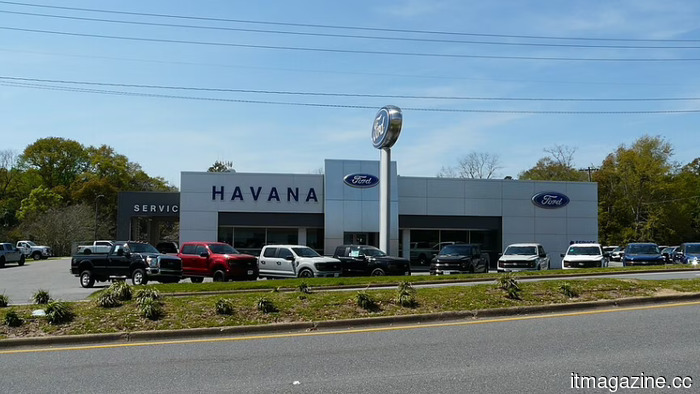 Ford and Geely will collaborate to manufacture electric vehicles at Ford's facility in Spain. Ford holds a 66% stake, while Geely owns 34%.
Ford and Geely have revealed a partnership to manufacture electric vehicles at Ford's Valencia facility. Ford will retain a 66% stake. Four models are set to be launched starting in 2028, with operations commencing in the first half of 2027.
Apple is revamping all its Macs, starting with the introduction of a touchscreen.
Apple is revamping its entire Mac lineup throughout this autumn and into next year, introducing its first touchscreen OLED MacBook. The catalyst for this change is the growing demand for AI.
Ford and Geely will collaborate to manufacture electric vehicles at Ford's facility in Spain. Ford holds a 66% stake, while Geely owns 34%.
Ford and Geely have revealed a partnership to manufacture electric vehicles at Ford's Valencia facility. Ford will retain a 66% stake. Four models are set to be launched starting in 2028, with operations commencing in the first half of 2027.
Apple is revamping all its Macs, starting with the introduction of a touchscreen.
Apple is revamping its entire Mac lineup throughout this autumn and into next year, introducing its first touchscreen OLED MacBook. The catalyst for this change is the growing demand for AI.
The postponement of Google's Gemini reveals a more significant issue: employee morale.
Insiders informed Axios that low morale, a disputed Pentagon agreement, and an exodus of talent are hindering the progress of Google's AI models, as the company's cash flow becomes negative. Google denies these claims.