
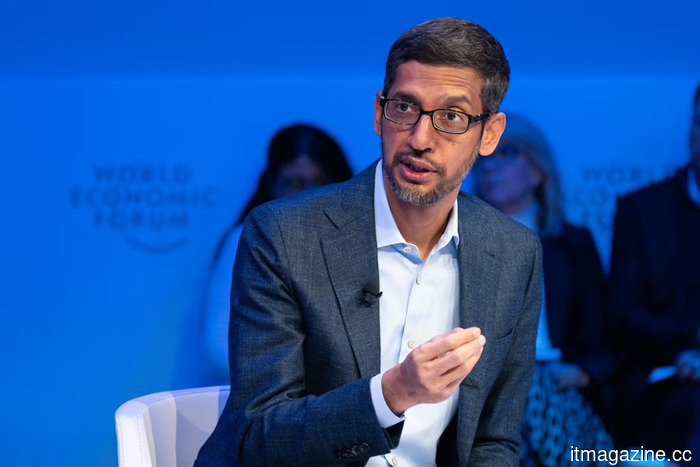
Pichai addresses skeptics, asserting that Google is not falling behind in the AI competition as the cloud sector sees an 82% increase.
Sundar Pichai used Alphabet’s earnings call on Wednesday to defend a position he usually doesn’t find himself in: asserting that Google is not lagging in the realm of artificial intelligence. Analysts inquired about the delay of the upcoming Gemini model and whether Google had discreetly surrendered the lead to OpenAI and Anthropic.
“We’ve had clearly frontier models,” Pichai stated during the call. “There are many aspects where we are still at the frontier; there are areas where we recognize the need for improvement, such as in coding and agentic coding.” This acknowledgment was notably frank for a company that often highlights its invention of the transformer.
His comments responded to sharp inquiries from JPMorgan’s Doug Anmuth and Barclays’ Ross Sandler, who pressed him regarding the postponed Gemini Pro and a release timeline that has lagged behind competitors. Google’s forthcoming Pro model is months overdue, and coding is precisely the area where OpenAI’s Codex and Anthropic’s Claude have been attracting developers.
Pichai’s response was to promise more expedited developments. He mentioned that Google has initiated its most ambitious pre-training run ever for Gemini 4, telling analysts, “I think people will be pleased” upon its arrival, and indicated that future models would be released nearly on a monthly basis.
He also highlighted demand as counter-evidence to critics. Pichai noted that Google is “supply constrained,” which he framed as a sign of progress rather than pressure. Gemini models now process 22 billion API tokens each minute, and nearly 500 cloud customers have processed over a trillion tokens collectively over the past year.
The underlying metrics were robust. Alphabet recorded revenue of $119.8 billion for the quarter, reflecting a 24% increase year-over-year, while Google Cloud surged 82% to $24.8 billion, which surpassed the approximately 64% growth analysts had anticipated. The cloud backlog reached $514 billion.
Advertising, still a key driver, performed well alongside the cloud sector. YouTube generated $11.06 billion in ad revenue, up from $9.79 billion a year prior, and the broader advertising segment continued to rise even as search shifted towards AI-generated responses.
User engagement also remained strong. The Gemini app reached 950 million monthly active users, with its daily total tripling over the past year, and nearly 90% of Fortune 100 companies are now using Gemini Enterprise. Pichai would like investors to perceive Google’s comprehensive strategy, which includes custom chips, models, and agents.
The net income totaled an impressive $112.1 billion, although much of this figure resulted from an accounting anomaly, with roughly $80 billion stemming from an unrealized gain on Alphabet’s approximately 14% stake in Anthropic, whose valuation tripled during the quarter.
What concerned the market was the increased spending. Alphabet raised its 2026 capital expenditure projections by about $15 billion, bringing the range to between $195 billion and $205 billion, continuing a trend of record AI spending across major tech firms, with management indicating that the expenditures would continue to rise in 2027.
The message to investors was that the limitation lies in chips and data centers, not demand, and that Google plans to continue investing to maintain its lead. Wall Street remained unconvinced, with shares dropping over 3% in after-hours trading and declining roughly 9% since late April due to the Gemini delays and several senior exits.
This worry is not new. The next Gemini Pro was originally expected in June, and its postponement has coincided with a series of departures within Google’s AI division, creating a narrative where the company that published the transformer paper struggles to convert research into marketable products. The acknowledgment regarding coding was revealing. A year ago, Google was exceeding expectations and nearing Nvidia as the most valuable company globally; now, its CEO is fielding questions about whether it can keep up. The upcoming Gemini release will need to substantiate his claims.
Other articles
 Электрифицированные автомобили питают рынок автомобилей Европы, поскольку китайские бренды достигли рекордной доли.
Электрические и гибридные автомобили стали двигателем роста продаж новых автомобилей в Европе в первой половине 2026 года, в то время как китайские бренды примерно удвоили свою долю до рекорда июня, показывают данные ACEA.
Электрифицированные автомобили питают рынок автомобилей Европы, поскольку китайские бренды достигли рекордной доли.
Электрические и гибридные автомобили стали двигателем роста продаж новых автомобилей в Европе в первой половине 2026 года, в то время как китайские бренды примерно удвоили свою долю до рекорда июня, показывают данные ACEA.
 Трамп сообщает о доходе в $1,4 млрд от криптовалюты, так как цифровые активы превосходят недвижимость.
Финансовое раскрытие Дональда Трампа за 2025 год указывает на примерно 1,4 миллиарда долларов дохода от криптовалюты, в основном благодаря мемкойну $TRUMP и World Liberty Financial.
Трамп сообщает о доходе в $1,4 млрд от криптовалюты, так как цифровые активы превосходят недвижимость.
Финансовое раскрытие Дональда Трампа за 2025 год указывает на примерно 1,4 миллиарда долларов дохода от криптовалюты, в основном благодаря мемкойну $TRUMP и World Liberty Financial.
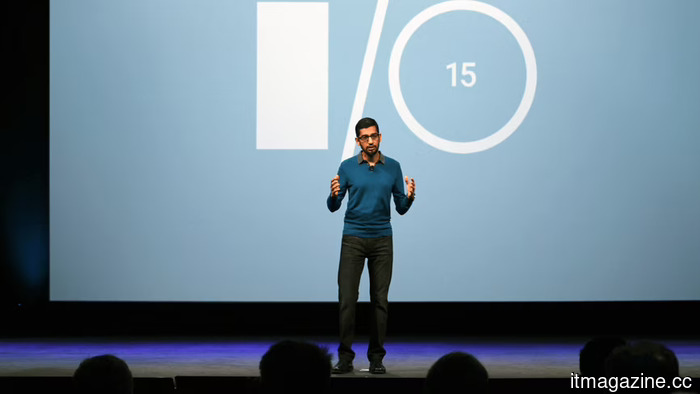 Alphabet повышает прогноз капитальных затрат до 205 миллиардов долларов, так как Google Cloud увеличивается на 82%
Alphabet превзошел ожидания по выручке и увеличил Google Cloud на 82%, но рекордный прогноз капитальных затрат в $205 млрд и отрицательный свободный денежный поток отправили акции вниз примерно на 5%.
Alphabet повышает прогноз капитальных затрат до 205 миллиардов долларов, так как Google Cloud увеличивается на 82%
Alphabet превзошел ожидания по выручке и увеличил Google Cloud на 82%, но рекордный прогноз капитальных затрат в $205 млрд и отрицательный свободный денежный поток отправили акции вниз примерно на 5%.
 Нарциссизм, макиавеллизм и люди, которые больше всего полагаются на ИИ
Новое психологическое исследование связывает тёмные личностные черты с проблемным использованием ИИ через два механизма: вертикальный индивидуализм и нетерпимость к неопределённости.
Нарциссизм, макиавеллизм и люди, которые больше всего полагаются на ИИ
Новое психологическое исследование связывает тёмные личностные черты с проблемным использованием ИИ через два механизма: вертикальный индивидуализм и нетерпимость к неопределённости.
 Intel и AMD заключают многолетние контракты на процессоры с китайскими дата-центрами на фоне роста цен
Intel и AMD подписывают долгосрочные контракты на серверные процессоры с китайскими покупателями, так как цены выросли более чем на 40% в этом году, сообщает Reuters.
Intel и AMD заключают многолетние контракты на процессоры с китайскими дата-центрами на фоне роста цен
Intel и AMD подписывают долгосрочные контракты на серверные процессоры с китайскими покупателями, так как цены выросли более чем на 40% в этом году, сообщает Reuters.
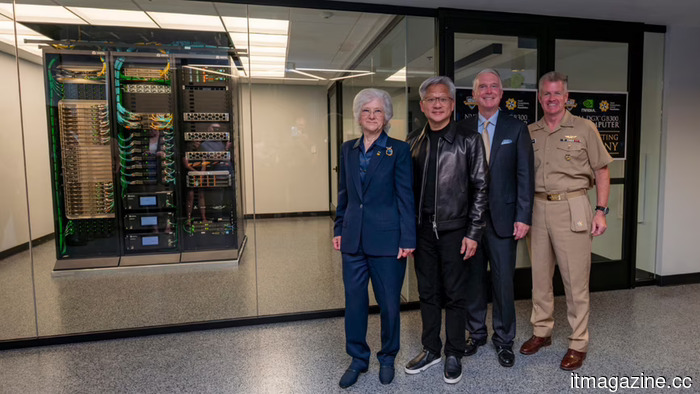 Nvidia передает DGX GB300 ведущей научной школе армии США
Nvidia пожертвовала суперкомпьютер DGX GB300 с искусственным интеллектом Военно-морской аспирантской школе, который стал первой системой такого рода в армии США.
Nvidia передает DGX GB300 ведущей научной школе армии США
Nvidia пожертвовала суперкомпьютер DGX GB300 с искусственным интеллектом Военно-морской аспирантской школе, который стал первой системой такого рода в армии США.
Pichai addresses skeptics, asserting that Google is not falling behind in the AI competition as the cloud sector sees an 82% increase.
Sundar Pichai acknowledged that Google must enhance its coding abilities but dismissed assertions that it is falling behind in the AI competition, noting that Alphabet's Q2 revenue reached $119.8 billion and cloud services expanded by 82%.