
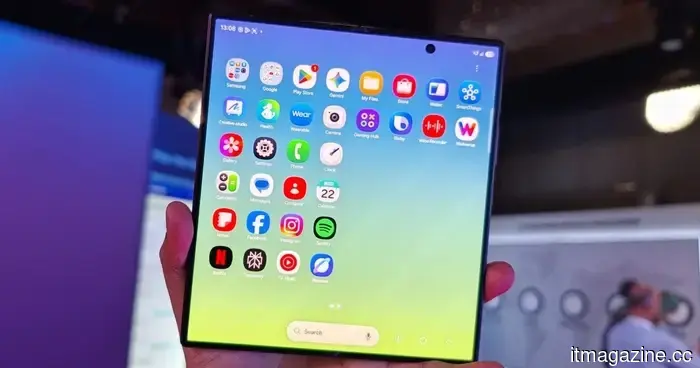
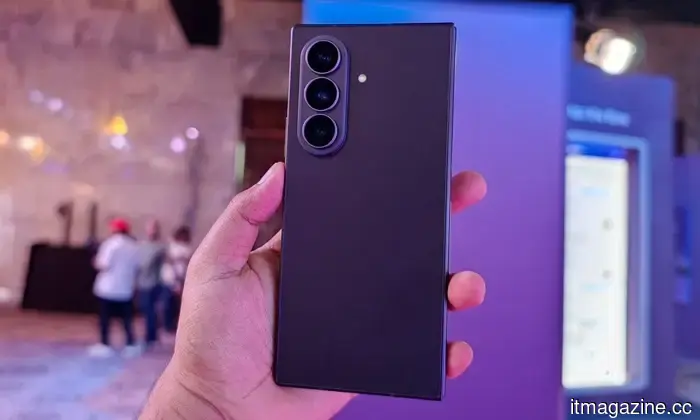
I had the opportunity to try out the Samsung Galaxy Z Fold 8 Ultra. It represents the pinnacle of foldable technology in a classic design.
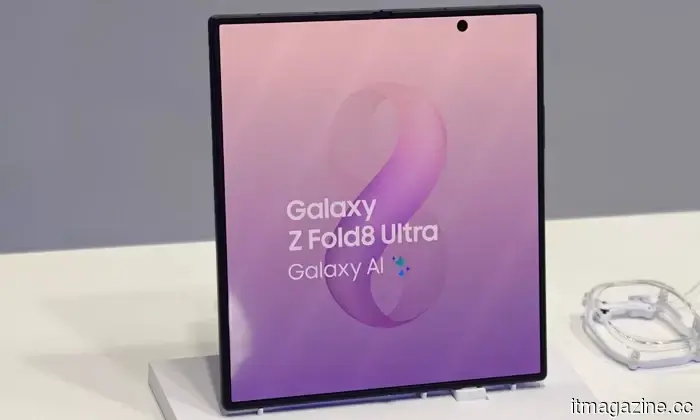
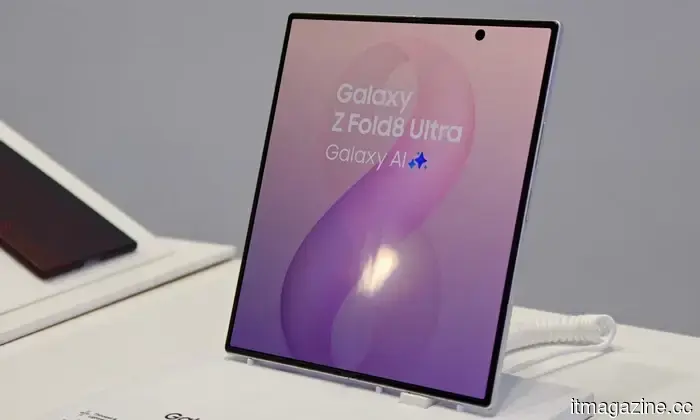
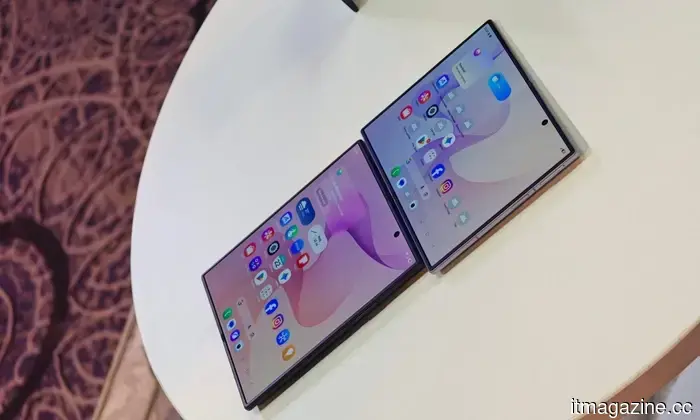
Samsung has just concluded its flashy Unpacked event, unveiling three new foldable smartphones and two smartwatches. While I’m particularly drawn to the portable Galaxy Z Fold 8, it’s the Ultra variant that truly embodies refinement. Interestingly, at first glance, the Galaxy Z Fold 8 Ultra may remind you of the Galaxy Z Fold 7.
The two models look nearly identical, and Samsung hasn’t made any noticeable changes to the Galaxy Z Fold 8 Ultra that would make it stand out from its predecessor. Although the color choices are new this time, several modifications have occurred internally, enhancing the phone’s overall usability.
A story of subtle enhancements
Let’s start with the more significant changes that I noticed right away. When I tested the Galaxy Z Fold 7 last year, I was impressed by its slim and lightweight design. However, it had a practical drawback: the edges were too sharp, causing discomfort in the palm. With the Galaxy Z Fold 8 Ultra, Samsung has smoothed out the corners, making them more rounded and comfortable.
A Samsung executive present at the event shared that the edges have been intentionally softened, and you can definitely feel that change in your hand. It’s more pleasant to hold, especially for those who tend to grip their smartphones firmly.
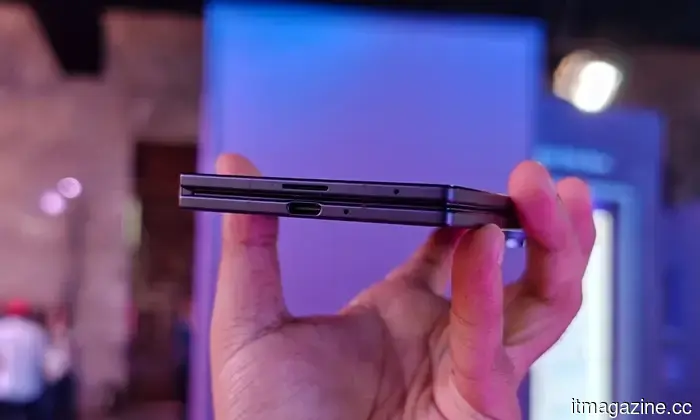
Another subtle engineering enhancement focuses on the opening and closing mechanism. The gap between the two halves of the phone when closed is now slightly deeper. Consequently, the Galaxy Z Fold 8 Ultra is noticeably easier to open compared to the Galaxy Z Fold 7. The hinge has also been improved, requiring less force to open or close the phone with one hand.
Now, regarding the inner flexible display, which has garnered much design attention. The crease is less prominent, although not quite on par with the Oppo Find N6. The difference is quite subtle. When I first switched to the main display on the Galaxy Z Fold 8 Ultra, I struggled to see the vertical crease.
The display appears flat, and the crease is hardly discernible. Only when light hits it from a particular angle, or when the brightness is lowered, does the slight warping become evident in the area where the flexible OLED panel folds. Samsung has also applied an anti-reflective coating to the panel, and its benefits are noticeable, whether indoors or outdoors. For years, Samsung’s foldable screens have had a rather plasticky and shiny feel.
You will only notice the crease when light hits it from an angle.
I faced issues with glare on these panels almost daily. Thanks to the new coating, the Galaxy Z Fold 8 Ultra’s 8-inch flexible display effectively reduces reflection artifacts. Even with display brightness set around the halfway mark, glare and reflection issues that detract from the viewing experience are significantly minimized.
Samsung has completely revamped the hinge and display architecture. A titanium plate is now located beneath the panel, contributing to a flatter profile on the inner OLED screen. Samsung has also indicated that the hardware is now more durable, although Digital Trends was informed that this increased durability hasn’t led to improved ingress protection, commonly referred to as an IP rating.
Numerous hidden enhancements
In addition to a shallower display crease, Samsung has introduced several other important upgrades. The inner 120Hz OLED display still measures 8 inches diagonally, but it is now sharper (422 ppi compared to 376 ppi). Moreover, it’s brighter, reaching a peak output of 3,000 nits, supported by the proprietary Vision Booster technology.
Foldable phones have historically struggled with two main issues: fragile hardware and display limitations. In the Galaxy Z Fold 8 Ultra, Samsung has made strides to address both concerns. While it hasn’t quite achieved the pinnacle of engineering perfection for foldable devices, it comes impressively close.
Beyond the display and hinge improvements, Samsung has made several key enhancements. The battery capacity has increased to 5,000 mAh, and charging speeds have seen a notable upgrade. The wired charging speed has risen to 45W, allowing the phone to go from zero to 67% in just 30 minutes, despite the larger battery.
In comparison, the Galaxy Z Fold 7 could only reach a 50% charge in the same timeframe. The camera system has also been improved. The ultrawide camera is now a more powerful 50-megapixel sensor, joining a 200-megapixel main camera and a 10-megapixel telephoto lens with 3X optical zoom support.
What else?
Of course, a new Qualcomm processor powers the device, accompanied by numerous software upgrades. The AI integration now deeply permeates apps, enabling you to accomplish tasks using just voice commands. Google’s new Gemini Intelligence system supports over 40 apps, while the updated Smart Switch app simplifies the process for iPhone users to transition to Samsung’s Android foldable by scanning a QR code without needing a USB cable.
After spending several hours with the Galaxy Z Fold 8 Ultra, I arrived
Other articles
 Electrified vehicles are driving Europe's automotive market as Chinese brands achieve a record share.
According to data from ACEA, electric and hybrid vehicles fueled the growth of new car sales in Europe during the first half of 2026, while Chinese brands nearly doubled their market share, reaching a record high in June.
Electrified vehicles are driving Europe's automotive market as Chinese brands achieve a record share.
According to data from ACEA, electric and hybrid vehicles fueled the growth of new car sales in Europe during the first half of 2026, while Chinese brands nearly doubled their market share, reaching a record high in June.
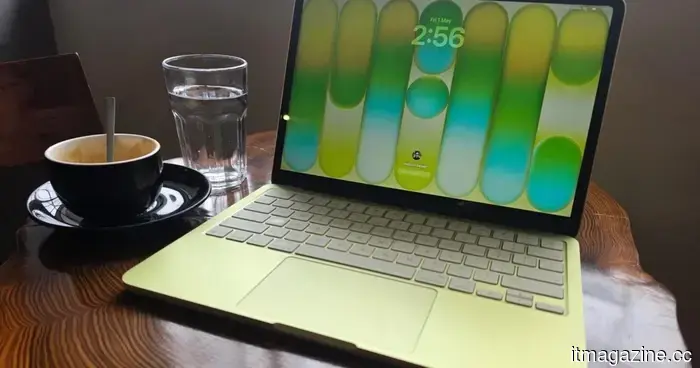 A refresh of the MacBook Neo may currently be in testing and could tackle its main performance limitations.
The initial refresh of the MacBook Neo might tackle two of the primary performance drawbacks of the original model by featuring a quicker chip and increased memory.
A refresh of the MacBook Neo may currently be in testing and could tackle its main performance limitations.
The initial refresh of the MacBook Neo might tackle two of the primary performance drawbacks of the original model by featuring a quicker chip and increased memory.
 Google has been fined €890 million, marking its first penalty under the Digital Markets Act.
The EU imposed a fine of €890 million on Google for search self-preferencing and restrictions in the Play Store, marking its initial penalty under the Digital Markets Act.
Google has been fined €890 million, marking its first penalty under the Digital Markets Act.
The EU imposed a fine of €890 million on Google for search self-preferencing and restrictions in the Play Store, marking its initial penalty under the Digital Markets Act.
 White House: Moonshot utilized prohibited Nvidia chips for Kimi K3.
A White House representative stated that China's Moonshot utilized prohibited Nvidia chips and modified US models to create the Kimi K3. The CEO of Nvidia disagrees with this claim.
White House: Moonshot utilized prohibited Nvidia chips for Kimi K3.
A White House representative stated that China's Moonshot utilized prohibited Nvidia chips and modified US models to create the Kimi K3. The CEO of Nvidia disagrees with this claim.
 Alphabet raises its capex forecast to $205 billion as Google Cloud surges by 82%.
Alphabet exceeded revenue expectations and reported an 82% growth in Google Cloud, but a record capital expenditure guidance of $205 billion and negative free cash flow caused its shares to drop by approximately 5%.
Alphabet raises its capex forecast to $205 billion as Google Cloud surges by 82%.
Alphabet exceeded revenue expectations and reported an 82% growth in Google Cloud, but a record capital expenditure guidance of $205 billion and negative free cash flow caused its shares to drop by approximately 5%.
 Warren claims that AI companies are utilizing trade agreements to avoid regulation.
Senator Elizabeth Warren claims that AI companies are turning disputed regulatory issues into trade agreements that avoid public examination.
Warren claims that AI companies are utilizing trade agreements to avoid regulation.
Senator Elizabeth Warren claims that AI companies are turning disputed regulatory issues into trade agreements that avoid public examination.
I had the opportunity to try out the Samsung Galaxy Z Fold 8 Ultra. It represents the pinnacle of foldable technology in a classic design.
I dedicated several hours to the Samsung Galaxy Z Fold 8 Ultra, and I believe it's a story of subtle enhancements that you can truly appreciate only upon holding it. While it's not inexpensive and doesn't provide an immediate upgrade, it is undoubtedly Samsung's strongest offering in the realm of foldable devices.